On Sept. 11, 1776, British Adm. Lord Richard Howe stood near the shore of Staten Island as three distinguished visitors crossed the narrow strait from New Jersey aboard his personal barge.
He welcomed his guests—Benjamin Franklin, John Adams, and Edward Rutledge—and escorted them to the home of Loyalist Christopher Billopp.
The meeting had been arranged by Gen. John Sullivan. Following his capture at the Battle of Long Island on Aug. 27, Sullivan had been paroled so that he could deliver Howe’s proposal for a peace conference to the Second Continental Congress.
Howe began the meeting by expressing his affection for Americans, citing honors they had given to his brother, Lord George Augustus Howe, following his death in the French and Indian War. He confessed that if America suffered as a result of the war, he would lament it “like the loss of a brother.”
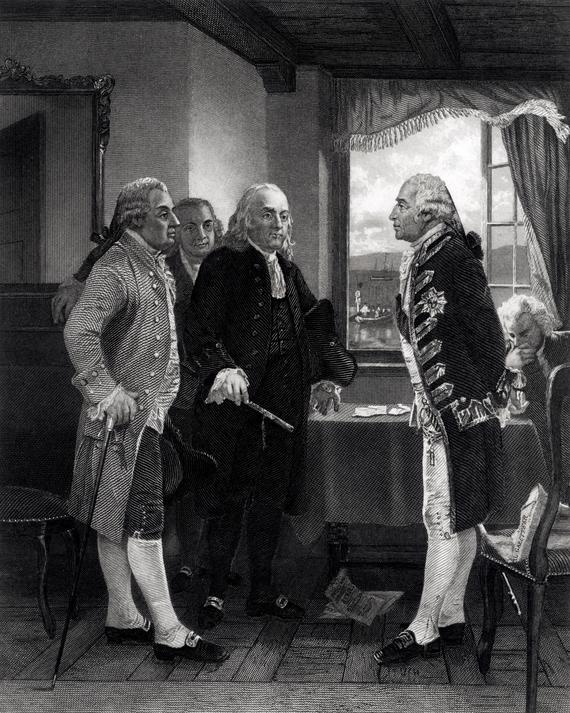
“My Lord,” Franklin responded with his characteristic wit, “we will do our utmost endeavors to save your Lordship that mortification.”
Howe ignored the quip, arguing that the colonies should renounce their independence and return to their allegiance to the Crown.
The Americans flatly refused.
The conference ended without an agreement. The matter would be settled on the battlefield.
The Hangover of Defeat
Two weeks before Adm. Howe’s conference, Continental Army regulars and Patriot militiamen were left reeling following their humiliating defeat on Long Island. It was the first major battle after independence and, despite their miraculous escape from Brooklyn Heights, illustrated just how inadequate American forces were against the British war machine.
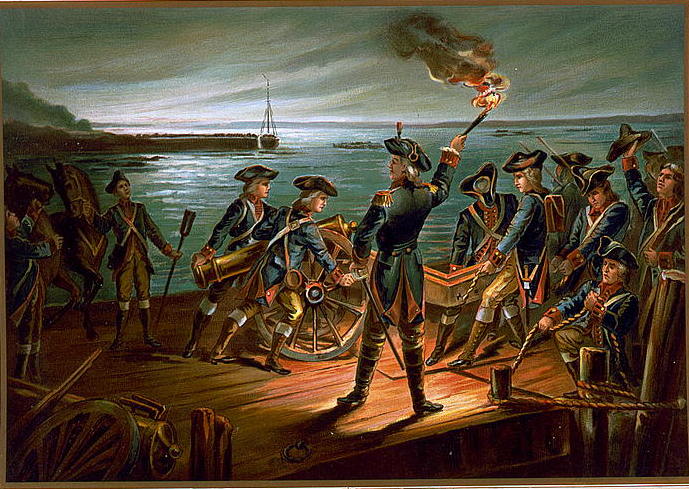
Widespread sickness and mass desertions left the exact number of effective American troops difficult to determine. According to David McCullough’s “1776,” entire militia units “were departing en masse, saying they had had enough. The roads in Connecticut and New Jersey were filled with soldiers heading home.”
Americans openly blamed Gen. George Washington for the debacle. Washington, who had been outmatched and humiliated by Gen. William Howe, saw his leadership questioned by critics who looked to Gen. Charles Lee as a suitable replacement.
But despite the self-doubt and misgivings of his command, Washington knew he carried the weight of America’s fate on his shoulders and refused to shirk his duty. Ignoring his critics, he focused on the perilous situation facing his army.
Britain had seized Long Island and was now poised to take New York City. Manhattan’s 13.4-mile length presented a defensive nightmare. Backed by a powerful navy that traversed the waters virtually unchallenged, Britain possessed the strategic flexibility to strike at almost any point. Without a reliable intelligence network, American commanders were forced into a dangerous guessing game over where the invasion would begin.
Knowing his army could not hold Manhattan, Washington wrote to John Hancock, proposing they burn New York City to deny the British winter quarters. Congress rejected the idea, insisting he defend the city and leave it intact.
Washington convened a council of war. Several generals favored abandoning Manhattan rather than risking the entire Continental Army in its defense.
Constrained by congressional instructions, the council agreed to distribute military units among vulnerable sectors throughout the island while maintaining a presence in the city. But after Britain shifted troops around Long Island and occupied Buchanan’s and Montresor’s islands near Harlem, Congress relaxed its earlier restrictions and gave Washington greater tactical discretion, including permission to abandon the city.
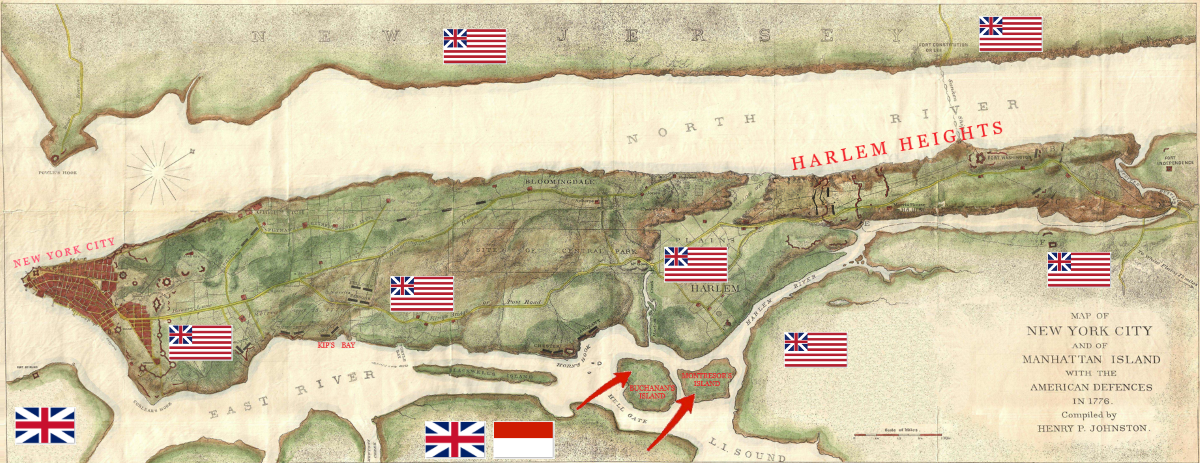
With their restrictions eased, Washington convened another council of war. The generals voted to abandon New York City and redeploy the army northward to Harlem Heights.
The evacuation of men, ammunition, and equipment proceeded slowly. To cover the withdrawal, 3,500 regulars under Gen. Israel Putnam remained in the city. Small pockets of militia were posted along Manhattan’s eastern shore, with regulars deployed inland for support. Among these defenders were Col. William Douglas and 450 Connecticut militiamen stationed at Kip’s Bay.
Britain Strikes
On Sept. 13, four British warships sailed up the East River and anchored near Bushwick Creek on Long Island, across from Kip’s Bay.
At dawn on Sept. 15, Douglas and his militiamen discovered that the warships, now joined by a fifth vessel, had moved during the night and anchored roughly 200 yards offshore. The militiamen hunkered down behind their shallow earthworks.
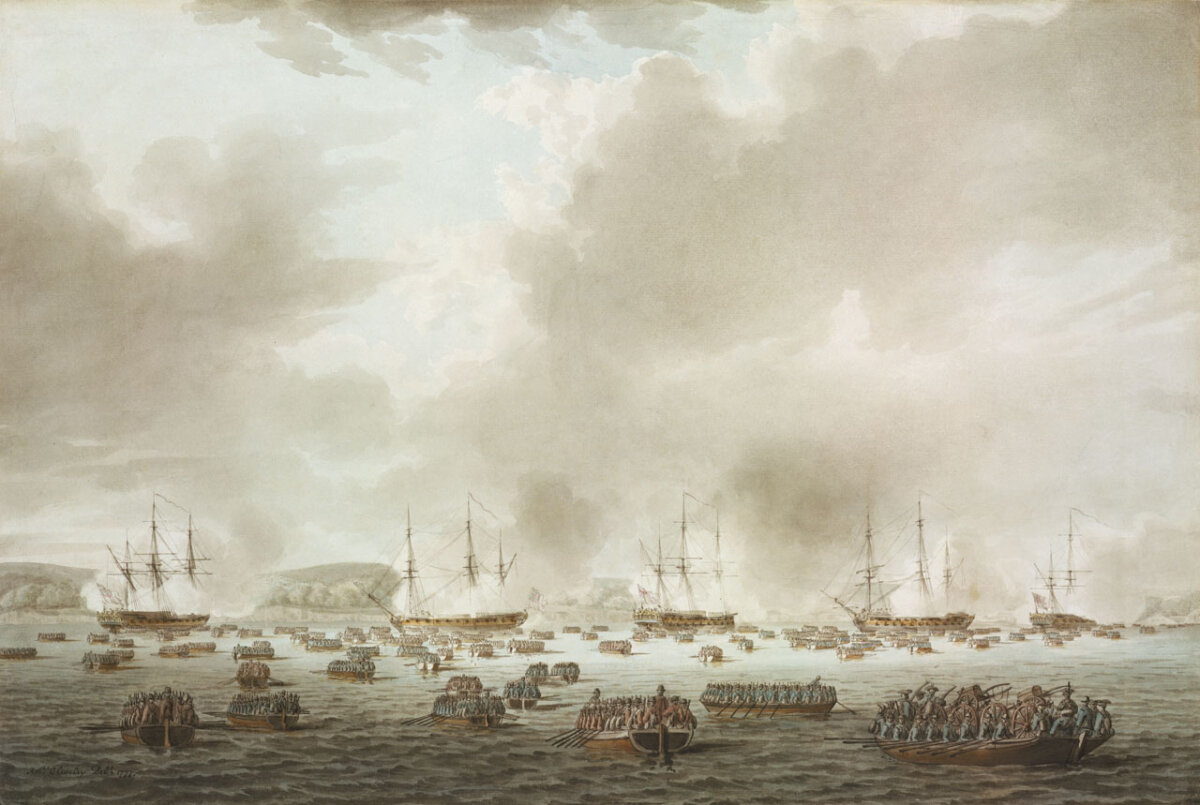
At 10 a.m., a flotilla of 84 flatboats packed with 4,000 Hessians and redcoats emerged from a Long Island cove. Looking across the river, Pvt. Joseph Plumb Martin recalled that the enemy “appeared like a large field of clover in full bloom.”
The militiamen prepared for battle as the enemy slowly approached.
Then, at 11 a.m., the warships opened fire, unleashing a thunderous barrage at the shoreline defenses.
Buildings in the city shook. Washington and his aides felt the seismic shockwaves from the northern end of Manhattan and raced toward the scene. “So terrible and so incessant a Roar of Guns few even in the Army & Navy had ever heard before,” wrote Ambrose Serle, secretary to Gen. Howe.
For 60 agonizing minutes, the militiamen endured sheer terror under the relentless bombardment. The blasts obliterated their defenses, throwing mud and dirt over the men crouched in the shallow trenches.
Then, the firing stopped.
Deafened and traumatized, the militiamen emerged from their battered defenses. Thick smoke hung over the area. Through the haze, they could see the invasion force fast approaching, bayonets fixed.
Panic set in. The militiamen broke ranks and fled, abandoning weapons and equipment as they ran.
As the first wave stormed ashore, British and Hessian soldiers gave chase. The main body, led by Gen. Henry Clinton and Gen. Leopold Philip von Heister, consolidated the beachhead. Clinton then pushed inland before reaching the Inclenberg estate of Robert and Mary Murray, where the British advance paused as additional troops came ashore.
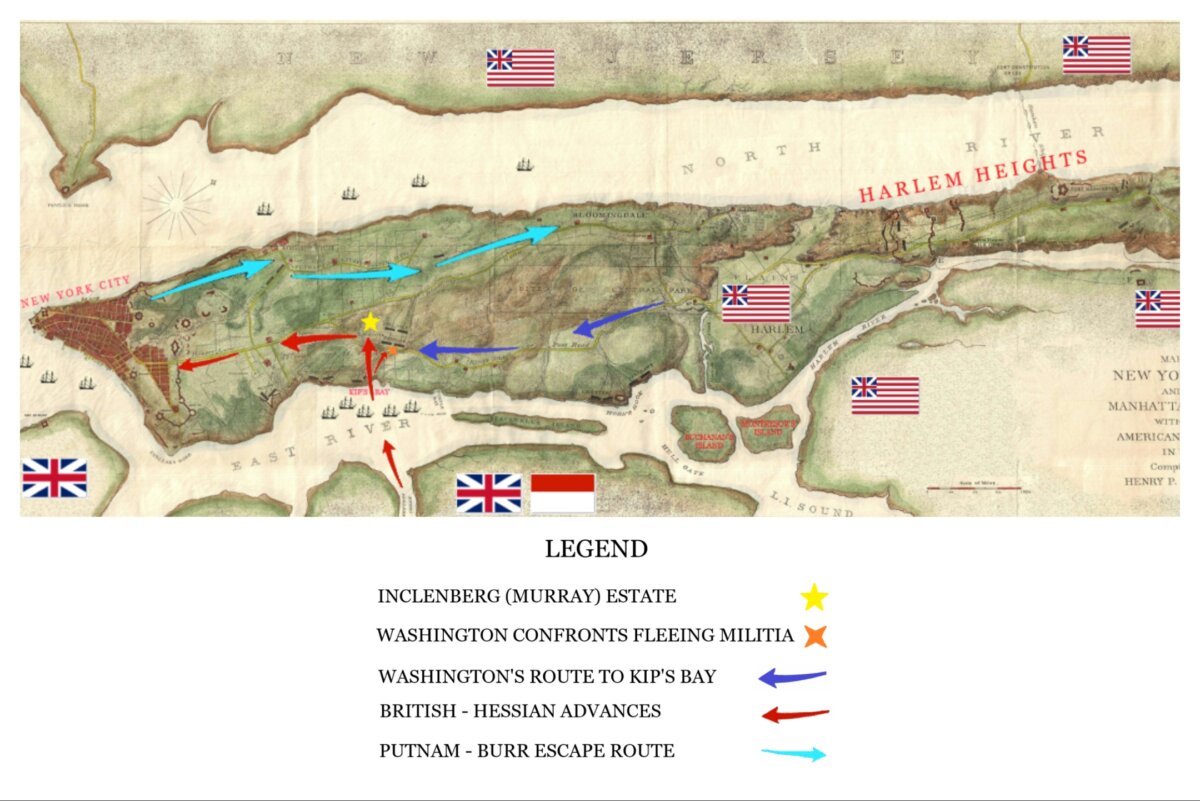
About a mile away, Washington arrived in time to witness the pandemonium as militiamen fled in every direction. He rode frantically among the frightened men, waving his sword and shouting in a desperate attempt to restore order. They ignored him, swept away by the panic.
Washington erupted in fury. He threw his hat to the ground and cried out, “Are these the men with which I am to defend America?”
Enemy troops closed to within 80 yards of Washington before his aides seized his horse’s bridle and pulled him away from danger.
Later that afternoon, Gen. Howe arrived at the Murray estate. Clinton was eager to push westward and cut off the American troops still retreating from lower Manhattan, but Howe insisted they wait for additional forces to come ashore.
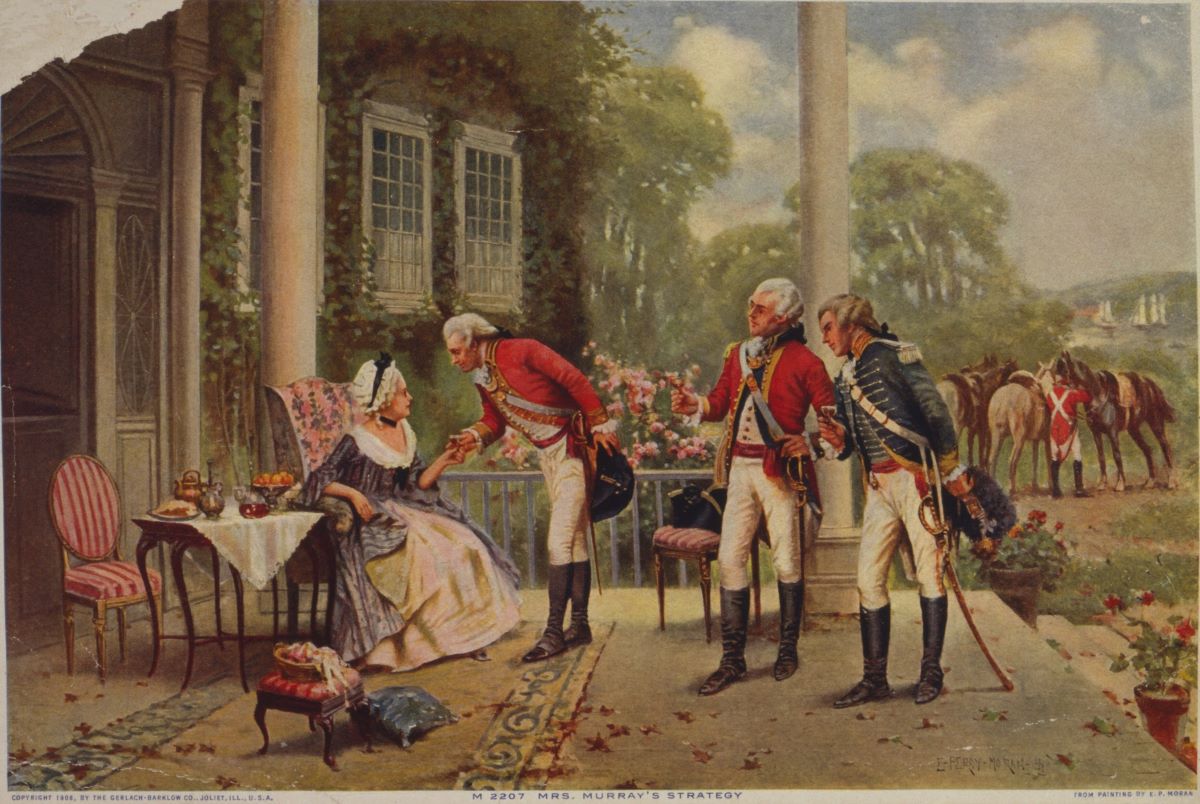
According to a popular legend, Mary Murray and her daughters deliberately helped the Americans by entertaining Howe and his officers with food, wine, and poetry for at least two hours. Whether Murray intentionally delayed the British remains uncertain, but the pause in their advance gave thousands of Americans additional time to escape.
The Escape
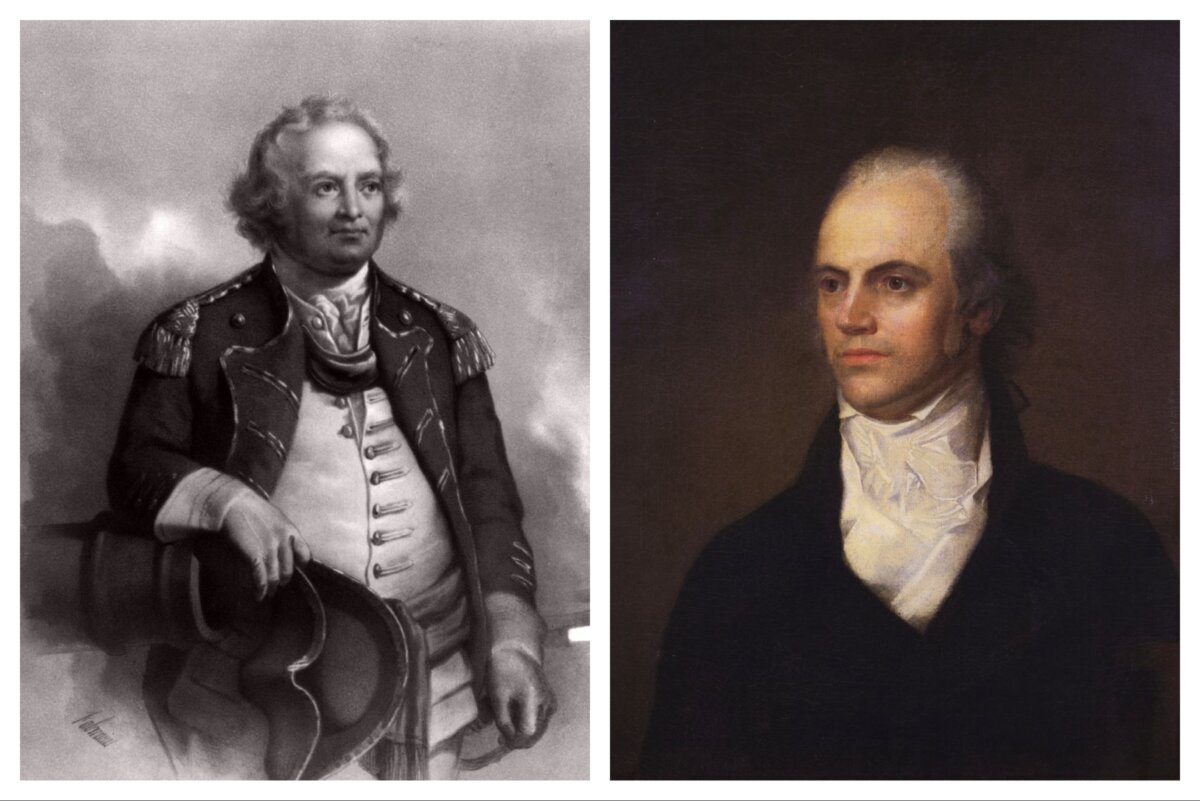
New York City was in chaos. Putnam was ordered to evacuate his 3,500 regulars and move north to Harlem Heights. Maj. Aaron Burr, his aide-de-camp, warned Putnam their planned route might lead them directly toward the British line. He knew the local geography and volunteered to guide the men via an alternate route along Manhattan’s western side.
Col. Henry Knox and his staff, meanwhile, had remained behind to help supervise the evacuation.
At 4 p.m., Putnam’s men, led by Burr, began the rapid march north. The column stretched for two miles as they navigated winding roads and wooded paths.
Among the retreating ranks was Capt. Alexander Hamilton.
By late afternoon, the remaining British reinforcements arrived, and Howe’s forces resumed their advance across Manhattan.
A British force marched south and took New York City with no resistance. Loyalist residents greeted the redcoats enthusiastically. Serle wrote that “nothing could equal the Expressions of Joy, shewn by the Inhabitants, upon the arrival of the King’s officers among them.”
Knox and his staff failed to leave on time. Finding themselves cut off and trapped, they reached the waterfront, seized a boat and slipped past the blockading British warships.
By nightfall, Putnam’s exhausted column reached Harlem Heights.
Knox arrived later that night. Washington, who had feared him lost, rejoiced over his successful escape.
It was among the only good news on an otherwise disastrous day.
Aftermath
The Battle of Kip’s Bay was an overwhelming British victory, achieved at a cost of only 12 men killed and wounded. American losses were higher: Sixty were killed and wounded and another 367 taken prisoner.
In less than three weeks, British and Hessian forces had seized Long Island, New York City, and much of Manhattan.
Once again, Washington had been outmatched and humiliated by Gen. Howe.
The Battle of Kip’s Bay was over. But there was no time for the Continental Army to rest or reflect on the day’s disaster, for the Battle of Harlem Heights was about to begin.
What arts and culture topics would you like us to cover? Please email ideas or feedback to features@epochtimes.nyc.