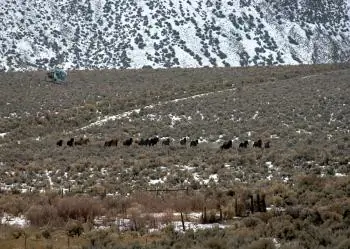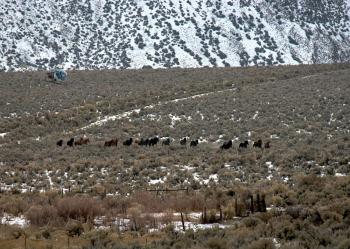
The BLM plans to remove 2,500 wild horses from the 500,000-acre Calico Mountains Complex, leaving about 600 to 900 wild horses and burros. In addition, they plan to impose fertility control on mares to remain in the area, with the goal of bringing the male/female sex ratio of horses to 60/40 percent. The roundup is to continue until late February or early March 2010, according to a press release.
The wild horse gather is projected to cost taxpayers $900,000, according to BLM Nevada State spokesperson JoLynn Worley. Since it’s very difficult to find adopters for the horses, remaining horses will be sent to the BLM’s permanent holding facilities, where the horses will be provided with food and veterinary care for the rest of their lives, said Worley. According to The Cloud Foundation, a wild horse preservation organization, there are already 34,000 wild horses warehoused by the BLM at taxpayers’ expense.
“The BLM is misrepresenting the facts, misrepresenting the statistics—blatantly misrepresenting the truth,” said Dr. Elliot Katz, DVM, president and founder of In Defense of Animals, a California-based international animal rights and welfare agency. He said that according to the 1971 Wild Horse Act, free-roaming horses and burros are “living symbols of the historic and pioneer spirit of the West; that they contribute to the diversity of life forms within the Nation and enrich the lives of the American people.” He said the BLM is acting counter the ideals put forth by Congress in gathering—really “battering,” Dr. Katz said—horses in order to make way for cattle ranching.
The Wild Horse Act was created to prohibit harm and disturbance of wild horses and burros and provide for their transfer to suitable areas when populations became too large, according to The American Mustang Foundation's Web site.
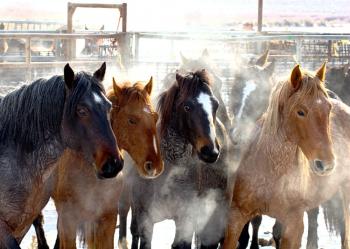
However, the number of horses is far less than “excess,” said Dr. Katz. He said that while the Wild Horse Act stipulated removal or even euthanasia of horses when they become old or extremely starved, that is not the case for horses in the Calico Mountains Complex today. From footage and photographs of the area he has seen, he said that the number of horses in the area is far less than what the BLM has reported. In addition, he said the horses are perfectly healthy. Their roundup by helicopter may cause stampedes, induce injury in the cold weather, and even lead to burst lungs and pneumonia, Dr. Katz said. He added that the act was “very vicious.”
The BLM’s rationale for the wild horse roundup is that overpopulation of horses in the area will cause damage to rangeland resources, such as rangeland vegetation and springs, streams, and seeps. According to a BLM fact sheet, the overwhelming wild horse population would “negatively impact Lahontan cutthroat trout in streams with stream bank trampling, increased sedimentation, reduced vegetation cover, and overall reduced riparian and stream habitat condition.” Moreover, the BLM believes that this action will prevent the need for emergency roundup when water and vegetation become scarce in the area.
 Friends Read Free
Copy
Facebook
Tweet
Friends Read Free
Copy
Facebook
Tweet