
LONDON—Senior clerics in Rome could have hoped for a better Easter. Over the last three months, the Catholic Church has been shaken to its foundations by revelations over the role of its leadership in covering up cases of sexual abuse by its priests.
In Ireland, Germany, Rome, the United States and now in Britain, over 700 harrowing stories of abuse dating back decades have come to light. In many of the cases, serious failings have emerged in how senior priests balanced the need to protect victims against the fear of negative publicity.
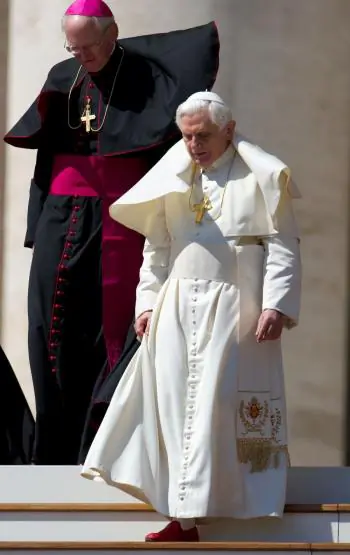
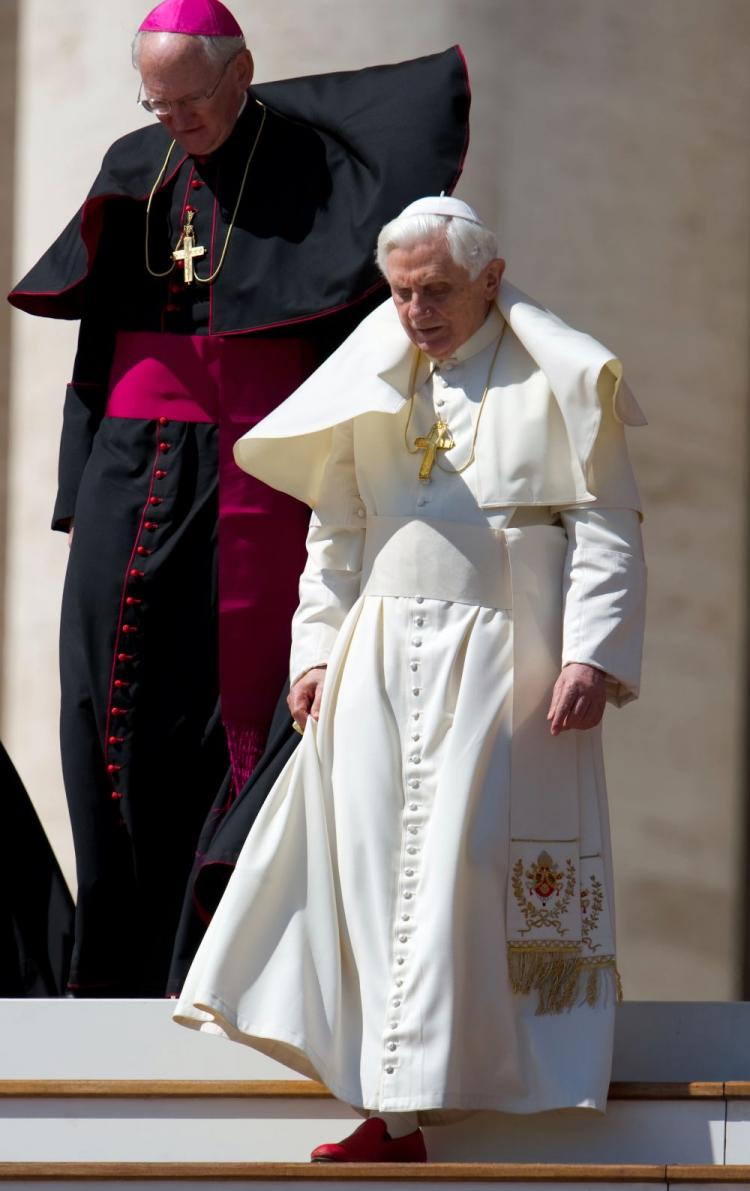
Following a series of recent revelations, a question mark now hangs over Pope Benedict XVI himself for allegedly failing to act swiftly in disciplining priests who have been convicted of child abuse.
In a sign of mounting public anger, the pontiff faces the threat of arrest during a pastoral visit to Britain in September this year.
Richard Dawkins, the atheist campaigner, and author Christopher Hitchens are preparing a legal ambush for the pontiff on charges of crimes against humanity.
It is believed that the pope can be arrested on the same legal principle that was used to arrest the late Chilean dictator Augusto Pinochet, when he visited the U.K. in 1998.
Hitchens, an avowed atheist and author of the book “God Is Not Great,” said that the pope is “not above or outside the law.”
“The institutionalized concealment of child rape is a crime under any law and demands not private ceremonies of repentance or church-funded payoffs, but justice and punishment,” he said in a statement.
The pair has commission barrister Geoffrey Robertson and solicitor Mark Stephens to find a legal justification for arrest.
They believe that the Vatican is not a sovereign state under international law, despite being recognized as such by 119 countries.
“There is every possibility of legal action against the pope occurring,” said Stephens.
“Geoffrey and I have both come to the view that the Vatican is not actually a state in international law. It is not recognized by the U.N., it does not have borders that are policed and its relations are not of a full diplomatic nature.”
However, the statement has already come under attack from leading catholics. Tom Craven, president of The Catholic League said the proposed legal action was an “attack on religion” and that the allegations against the pope were “baseless and wrong.”
Many of the allegations against the pope refer to a time when he was known as Cardinal Joseph Ratzinger, and was serving as the head of the Congregation for the Doctrine of the Faith, which has responsibility for tackling abuse by clerics.
Delayed Discipline in San Francisco
Stephen Kiesle, a San Francisco priest, was in 1978 sentenced to three years probation on charges of lewd conduct after he abused two young boys in a church rectory.
After returning to pastoral work in 1981, Kiesle asked to be removed from the priesthood. At the time, all such requests required approval from Ratzinger’s office.
A letter obtained by the Associated Press from Ratzinger in 1985, acknowledged that the matter was of “grave significance,” but Ratzinger suggested that the case needed careful review.
It was not until 1987—five and a half years after Kiesle’s original application—that he was formally defrocked.
In the interim, he had volunteered as a youth minister at a suburban church. No abuses are believed to have occurred during this time.
Concerned with the time it was taking to approve the laicization, California church officials wrote at least three times to Ratzinger to check the status of Kiesle’s case. According to AP, at one point a Vatican official wrote to say that the file may have been lost. He suggested resubmitting the material.
Officials have denied that the case shows any evidence of a cover-up. Vatican attorney Jeffrey Lena said the matter proceeded “expeditiously, not by modern standards, but by those standards at the time.”
Kiesle was sentenced to six years in prison in 2004 for molesting a girl in 1995.
Church Trial Canceled After Letter to Ratzinger
Ratzinger served as head of the Congregation for the Doctrine of the Faith from 1981 until 2005, where he was charged with monitoring any accusations of abuse.
In the post, he was accused of failing in his duty to bring Lawrence C. Murphy, a Wisconsin priest, to justice for allegedly abusing up to 200 children at a school for the deaf, in the years between 1950 and 1974.
While Rembert G. Weakland, archbishop of Milwaukee at the time, tried to push the case forward, the process was ultimately halted by Ratzinger’s deputy, Cardinal Tarcisio Bertone, after Murphy wrote directly to Ratzinger to appeal his case.
“I simply want to live out the time that I have left in the dignity of my priesthood,” Father Murphy wrote near the end of his life to Ratzinger. “I ask your kind assistance in this matter.”
Jeff Anderson, the lawyer who obtained the internal church documents on the victim’s behalf, said that it “shows a direct line from the victims through the bishops and directly to the man who is now pope.”
 Friends Read Free
Copy
Facebook
Tweet
Friends Read Free
Copy
Facebook
Tweet