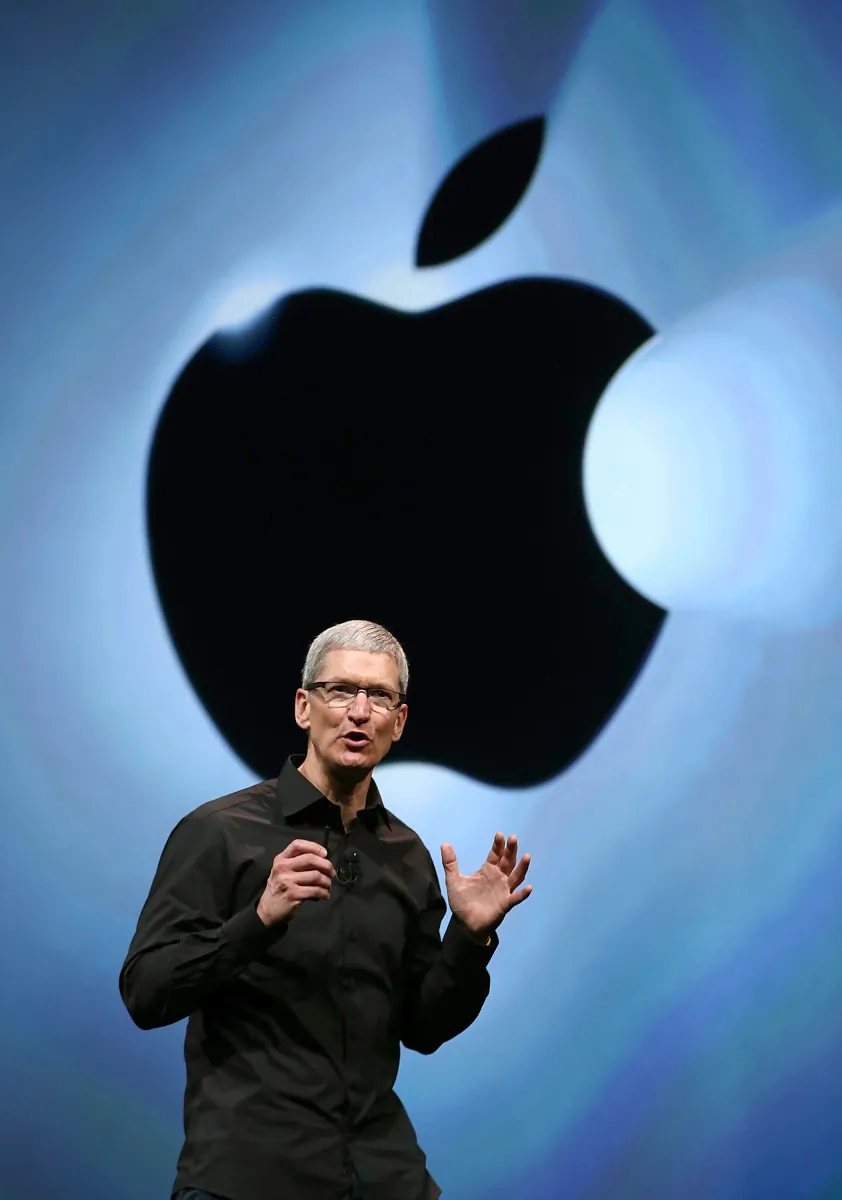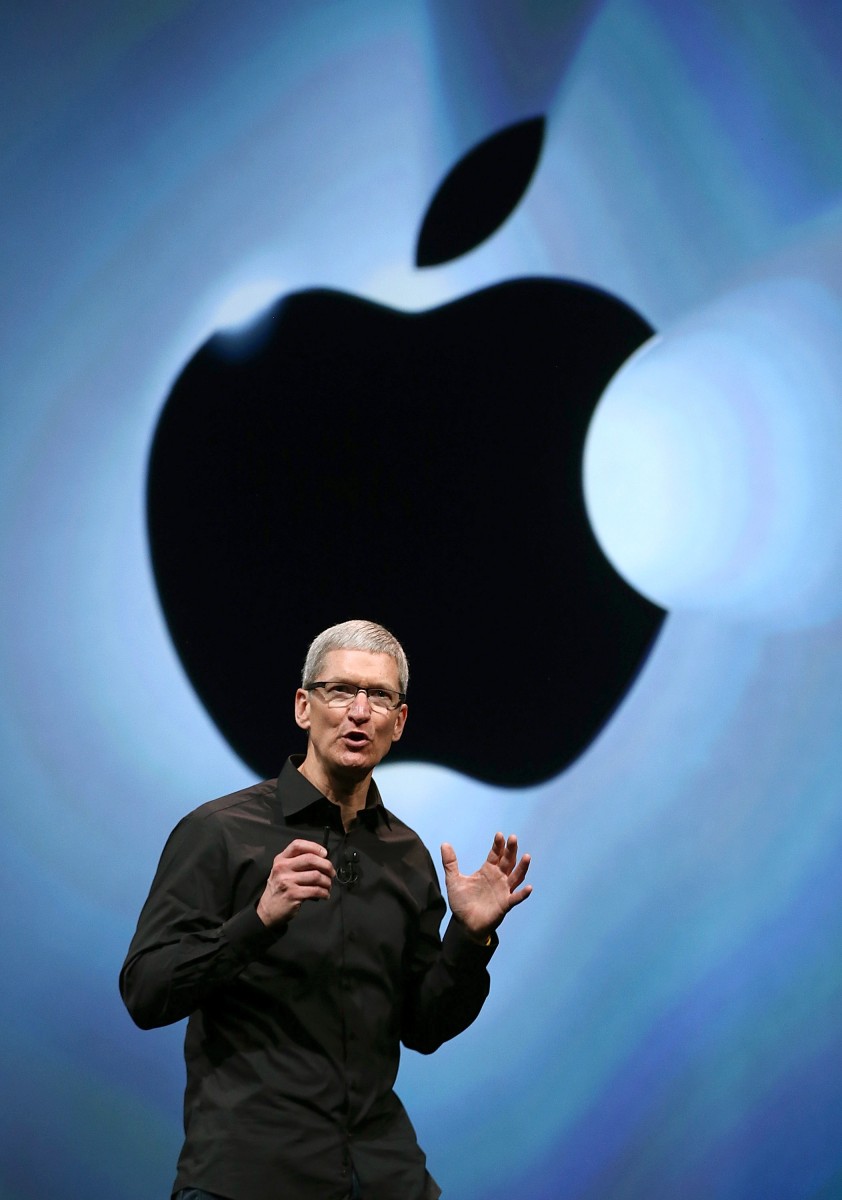


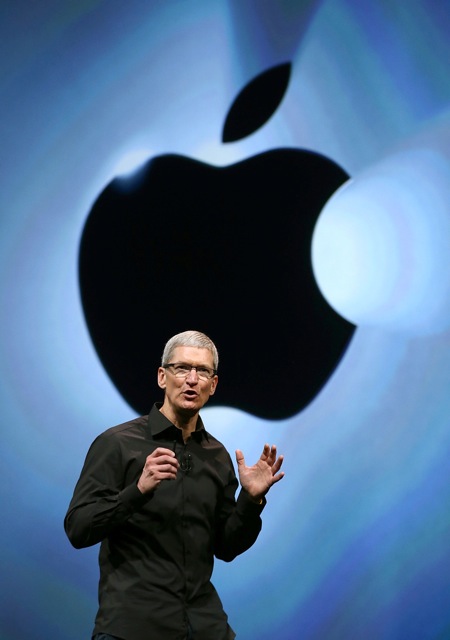
Apple Inc. unveiled the long-awaited iPhone 5 at another sensational event in San Francisco Wednesday. The phone is completely revamped in design and technology, and analysts expect it to continue the iPhone’s best-selling legacy.
“iPhone 5 is the most beautiful consumer device that we’ve ever created,” said Philip Schiller, Apple’s senior vice president of Worldwide Marketing in the company’s press release. “We’ve packed an amazing amount of innovation and advanced technology into a thin and light … device.”
The new iPhone, which is Apple CEO Tim Cook’s first big release, will come with significant improvements over the iPhone 4S, which will continue to sell, but for a reduced price of $99. The iPhone 5 will start at $199, but cost between $649 and $849 in the United States if purchased without carrier subsidies. The screen is now 4 inches instead of 3.5 inches, but by increasing its size vertically and not horizontally, customers can still use it with one hand.
The new A6 chip is supposed to be twice as fast as the Samsung-made A5, which the iPhone 4S employs. Speculation on the Internet abounds that the new chip is not being produced by Samsung because it has a big Apple logo on it. Samsung produces the rival Galaxy smartphone and currently leads the market in smartphone sales volume.
The new phone will also have a comparable eight hours of battery life talk time, but will support the much faster wireless standard 4G LTE on AT&T, Verizon, and Sprint in the United States and carriers abroad. The phone also features an updated iSight 8MP camera with an upgraded, more scratch-resistant, sapphire lens cover and new panorama feature.
Despite its increased screen size, the iPhone 5 is 18 percent thinner and 20 percent lighter than the 4S, making it the lightest phone Apple has made to date, which according to Apple, is the thinnest smartphone in the world. Apple prides itself on continuously evolving its designs to make its products faster and more powerful, yet thinner and lighter at the same time. To accomplish this, Apple used new materials, and it had to design a smaller, digital docking connector for the iPhone 5, which means that consumers may have to buy a converter from Apple if they want to plug the new iPhone into their old accessories.
Shares Up Modestly as Market Expectations Met
Apple shares closed at the day high of $669.79, up a modest 1.4 percent on two times average volume, as the announcements were largely expected: “Many of today’s announcements were expected, but we believe that this launch will be very successful,” writes Ben Reitzes of Barclays in a note to clients.
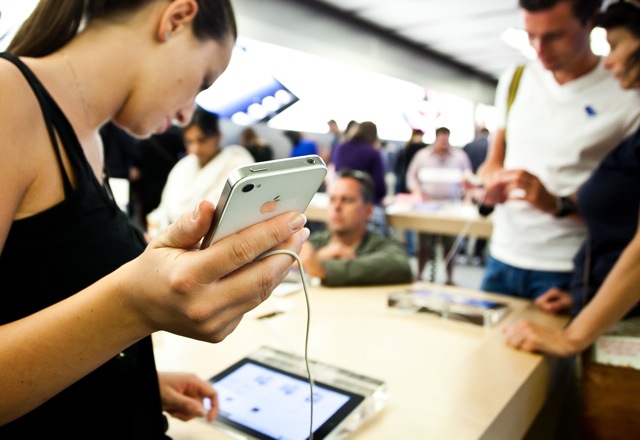
A Wall Street insider told the Epoch Times: “Biggest news on the street is Apple … shares flat but likely to pop with traders long equity options with a $670 strike price,” he said prior to the close.
The new iPhone will be ready for preorder Sept. 14 and will go on sale in stores on Sept. 21. Data compiled by Bloomberg shows that the average estimate by analysts is for the phone to sell 48.2 million units by the end of December. In total, the company has sold 244 million since the first iPhone debuted in 2007.
J.P. Morgan chief U.S. economist Michael Feroli thinks that the iPhone 5 can boost the country’s GDP by up to 0.33 percent on an annualized basis, he writes in a report. Based on previous iPhone launches he says, “The recent evidence is consistent with this projection.”
Competitors Wait for Apple Slip
Judging from the excitement surrounding the event Tuesday in San Francisco, one can expect the new iPhone 5 will be another success story. It is becoming apparent, however, that Apple is relying on big events like these to hold its edge in the market and maintain its record profitability. Apple is the world’s largest company as measured by market capitalization.
Meanwhile, competitors such as Google, which provides the software for 50 percent of the world’s smartphones, and the competing device makers like Samsung and HTC also improve continuously without relying on big one-off events.
Google, which has also made a foray into selling its own hardware—smartphones and tablets—will no longer have its Google Maps software featured as the default map software on the iPhone 5. Instead, Apple has for the first time created its own native map software, which includes turn-by-turn direction capabilities and a new aerial 3-D viewing option it calls Flyover, presumably to rival Google’s Street View. The speculation reported by some media is that Apple is interested in keeping to itself the massive volume of consumer location information this provides, with the potential of harvesting it for marketing dollars in the future.
The fallen cellphone giant Nokia, after years of trying to come up with a competitive product, last week introduced its brand new smartphone using the new Windows mobility platform. Amazon launched a completely new Kindle line of products with an emphasis on selling associated services. Google and its subsidiary Motorola also announced new product launches last week.
“From a competitive standpoint, we feel that Amazon’s announcements were the most interesting since the company introduced new tablet products with services at very compelling price points,” Barclays said in a research note.
Ultimately, competitors will only be able to dethrone Apple if they manage to come up with a similar seamlessly integrated solution for hardware, software, and payment. That’s where the biggest Apple investors see its main strength.
“The value comes from iOS, the App store, iTunes, and iCloud. A Motorola RAZR phone was a one-time winner because when someone else made a phone that was just a little better, RAZR sales stopped. In contrast, a consumer with one AAPL product tends to want more AAPL products,” writes David Einhorn of Greenlight Capital—the hedge fund owned $850 million worth of Apple shares at the end of Q2—in his latest report to investors.
Given this analysis, investors should react positively to the news that Apple also updated its iTunes software Tuesday and will be releasing the latest version of its mobile operating system—iOS6—next week.
The Epoch Times publishes in 35 countries and in 19 languages. Subscribe to our e-newsletter.
 Friends Read Free
Copy
Facebook
Tweet
Friends Read Free
Copy
Facebook
Tweet