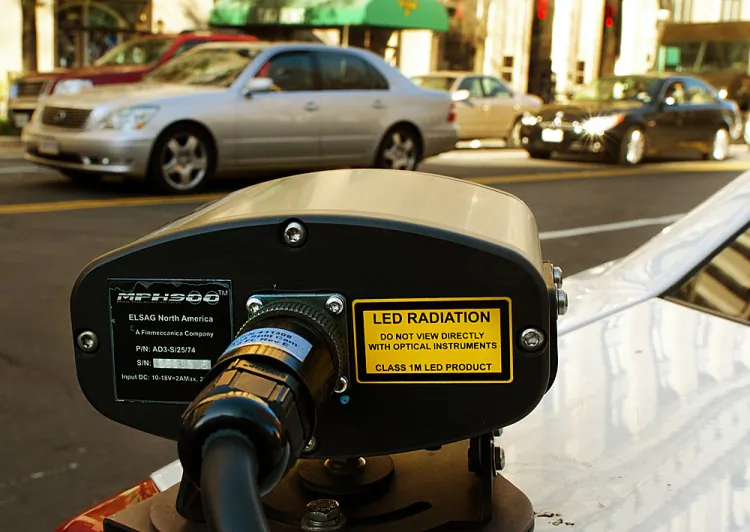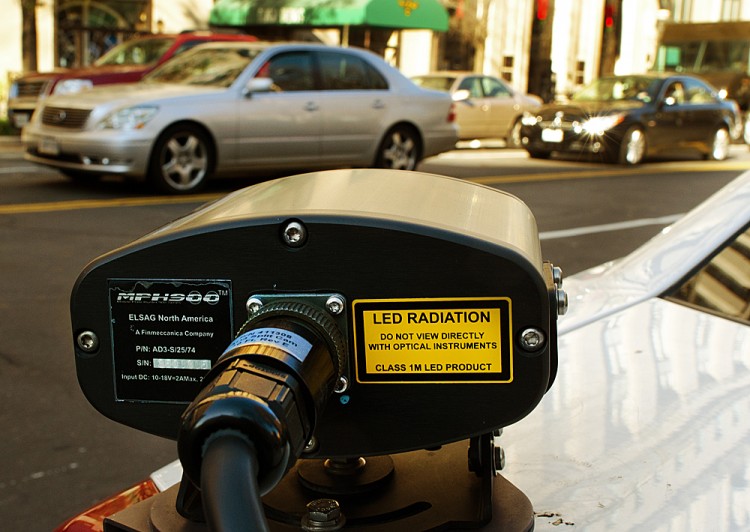

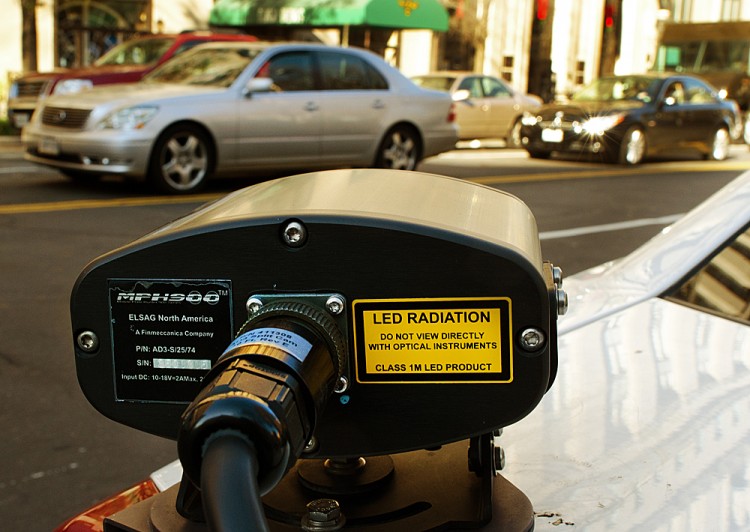
They are easy to miss, but behind buildings and bridges you will find a growing number of special cameras. As you drive through town and across the country, a snapshot of your license plate gets caught on film. This technology helps police catch criminals, but one group says there may be cause for concern.
This week, the American Civil Liberties Union (ACLU) sent requests to several state and federal law enforcement agencies seeking details about license plate photography programs. The group said that although the use of automatic license plate readers (ALPRs) is growing fast, the public has been kept in the dark about how the technology is used, how long the data is stored, and to what extent different agencies share information.
Police began implementing the technology about six years ago as a more efficient way of conducting random checks. With ALPRs, officers no longer have to type in each digit. Instead, high-speed cameras can check virtually every plate that passes by, and at a speed that manual number punching could never match. Special software converts the plate images into machine-readable text that is compared against a police hot list.
Police say ALPRs have significantly increased the number of “hits,” or wanted individuals they catch, through plate checks. They say the cameras give them a better chance of finding people who are driving on a suspended license, have a warrant out for their arrest, or who are connected to other crimes.
But the ACLU said that plate reader systems also present the potential for abuse. The organization warns that, as law enforcement agencies increasingly move toward a protocol to share and save all ALPR data, any motorist who drives by these cameras could become a victim of warrantless tracking.
The ACLU is requesting that 38 states—as well as the departments of Justice, Homeland Security, and Transportation—share details about how ALPR expansion is funded and explain any other uses they may have for the technology.
The big concern, according to ACLU staff attorney Catherine Crump, is that ALPRs will allow authorities to track our private and sensitive movements—from doctor’s visits to political protest rallies—and store the information forever.
“The American people have a right to know whether our police departments are using these tools in a limited and responsible manner,” said Crump in an article on the ACLU website.
Police have previously demonstrated that they are sensitive to public privacy fears associated with ALPRs. In a 2009 privacy impact assessment report, the International Association of Chiefs of Police examined various concerns, and made several recommendations for protecting against them.
But authorities stress that the technology is more limited than privacy invasion fears imply. The system isn’t connected to the DMV, and it does not trace any other identifiable information—it simply snaps a picture and then checks the plate number against a list of wanted persons. The machine helps make the match, but officers still need to verify that the person they are looking for is actually driving the vehicle.
“Absent this extra step, the license plate number and the date, time, and location data attached to it are not personally identifying,” states the Chiefs of Police report. “Thus, even though LPR systems automate the collection of license plate numbers, it is the investigative process that identifies individuals.”
In 2009, police acknowledged that recording driver habits could present First Amendment concerns, but authorities said they could create systems to restrict ALPR data and conduct regular audits to mitigate misuse.
Privacy protection advocates insist that self-policing efforts have not been as strict as they should be. Only two states prevent police from saving “non-hit” data for too long, and the ACLU said that they “know for certain that some departments are eagerly engaging in this surreptitious data collection.” The group is calling for a law to limit plate data collection.
The Epoch Times publishes in 35 countries and in 19 languages. Subscribe to our e-newsletter.
 Friends Read Free
Copy
Facebook
Tweet
Friends Read Free
Copy
Facebook
Tweet