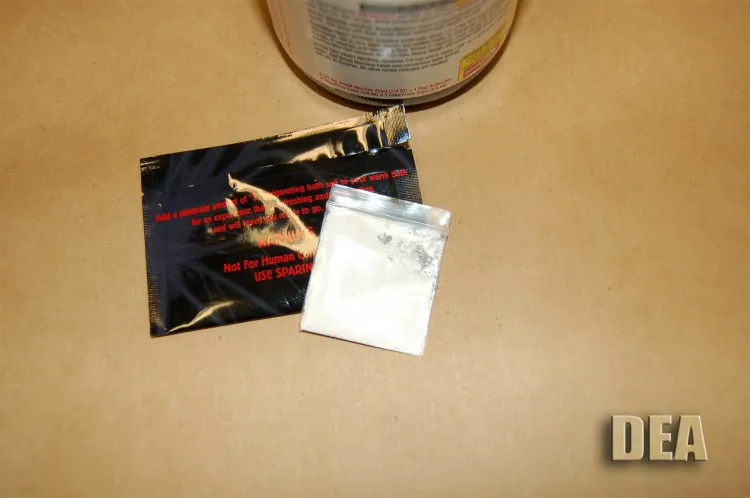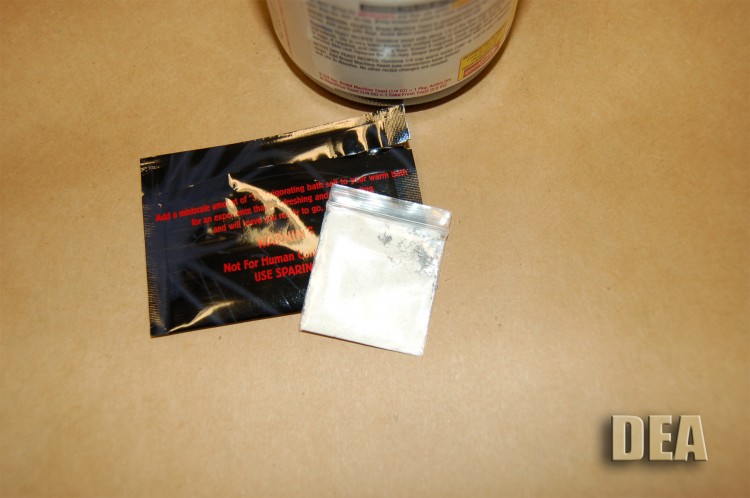

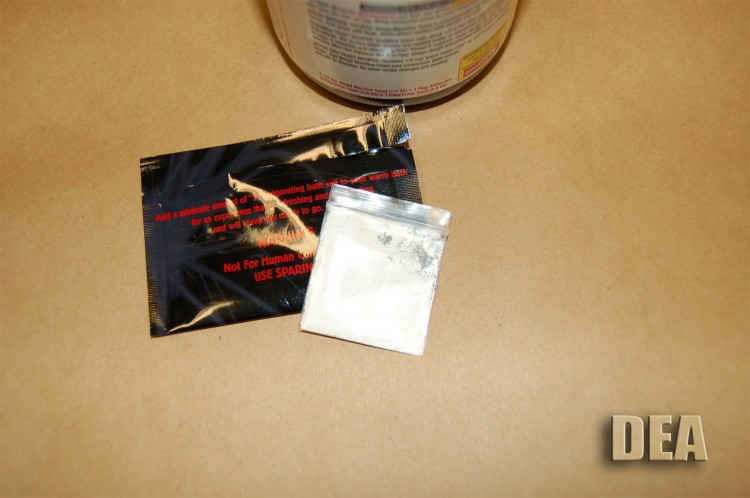
Convenience stores across the country are selling small foil packets containing a substance known as ‘bath salts.’ But despite the name, the product has nothing to do with a soothing soak. In fact, its effects can be quite the opposite.
“We’ve been through hell,” said Jennifer Batson of Wilmington, N.C., whose son is battling a two-year addiction to bath salts. “He’s tried to commit suicide multiple times. And the thing that gets me is they’re still selling it.”
According to the U.S. Drug Enforcement Administration (DEA), the active ingredients in bath salts include three synthetic, psychoactive stimulants: mephedrone, a white powder often found in tablets or capsules; MDPV, which acts as a norepinephrine-dopamine reuptake inhibitor; and methylone, a euphoric originally designed as an antidepressant.
In October 2011, the DEA put an emergency ban on these chemicals, but the measure runs out later this year. As addictions and violent incidents associated with the drug continue to grow, lawmakers are looking to make the ban permanent. Last week, the U.S. Senate passed a bill that would classify bath salts, and similar synthetic drugs, as Schedule I controlled substances, placing them among the ranks of heroin and methamphetamine.
Bath salts are snorted, smoked, and even eaten straight from the package. Batson’s son used a needle. “He had these horrendous burn marks,” she said, referring to injection sites. “He had scars all over his body. It burnt him from the inside out.”
While Batson admits that her son has an addictive personality, bath salts can be particularly sinister. Authorities say the drug has a high potential for abuse.
“He used to smoke pot in high school, and all of a sudden they were advertising this legal weed,” Batson recalled. “He thought it was harmless, but once he started doing it, he craved it nonstop.”
Batson’s son admitted to consuming as many as 9 or 10 packets a day at the peak of his addiction. When he started having psychotic episodes, Batson sought medical attention for her son, but it was difficult to find the cause of his problems. She said that until recently, local hospitals were not sure how to identify or treat for the relatively new drug.
“They didn’t have a clue,” she said. But things have changed. According to Batson, all of the Wilmington hospitals are now full of bath-salts addicts. “There are actually waiting lists because of the bath-salts epidemic,” she said.
Although 38 states have already outlawed bath salts, and others are considering doing so, legislators say that a national ban is still necessary. Drug manufacturers have been able to skirt state laws by making small changes to the specific chemical composition targeted by legislation. While some states have laws that close this loophole, critics say that enforcement still isn’t strong enough.
In Batson’s state, North Carolina, bath salts have been illegal for a year. Despite the state ban, however, she says that they’re still easy to get.
“I actually found eight convenience stores here in Wilmington that were selling it,” she said. “It’s a way to make a lot of money if you don’t care about the effects that it’s having on kids.”
When Batson discovered that her son’s problems were linked to bath salts, she began to raise awareness in the local community. She says that while her warnings initially grabbed a lot of attention, enthusiasm didn’t last.
“It has pretty much died off now because everyone assumes that since it’s illegal, everything is okay,” she said. “But these stores didn’t get rid of their inventory. I even had one store owner say that he made too much money to stop selling it. I told him people were dying, but he just really didn’t care.”
In Wilmington, the drug sells for between $7.50 and $25 per packet, and there are dozens of varieties available for purchase. The basic chemical compound is a stimulant, but bath salts can also be formulated to mimic the effects of other drugs, such as LSD or cocaine. Packages are labeled “not intended for human consumption,” but Batson says it’s clear that no one is buying the product as incense.
“This is so much worse than crack, and I thought crack was the worse I had ever seen,” she said.
Bath salts may no longer be spotted in a display by the register in Wilmington, but they’re still found close by. Earlier this week when Batson was visiting her son in rehab, they discussed how he got the drug once the state ban took effect.
“Basically you go in, put your money on the counter, and get a bottle of water,” she said. “That’s the little code that everybody knows.”
According to Batson, sellers of bath salts target teens. She said that her son was initially given free packets and told to share them with his friends.
“I’ve seen so many kids where it is so obvious that they’re on bath salts,” she said, adding that a Wilmington driver recently hit and killed two kids on bicycles. Several packages of the drug were found stashed in the vehicle.
Fortunately for Batson’s son, things are turning around. As one of Wilmington’s first reported cases related to bath salts, Batson says that her son has been beneficial to the hospital and local authorities in their struggle to deal with the problem. “So there’s a positive in all of this,” she said.
“He’s in a good place now, thank God,” Batson said, adding that after he finishes his 30-day program, he will be moving into a long-term facility. “Now that he’s not on bath salts, his mental state is completely fine.”
The Epoch Times publishes in 35 countries and in 19 languages. Subscribe to our e-newsletter.
 Friends Read Free
Copy
Facebook
Tweet
Friends Read Free
Copy
Facebook
Tweet