
Israel, Hamas agree to hostage and prisoner release deal. Read more here.
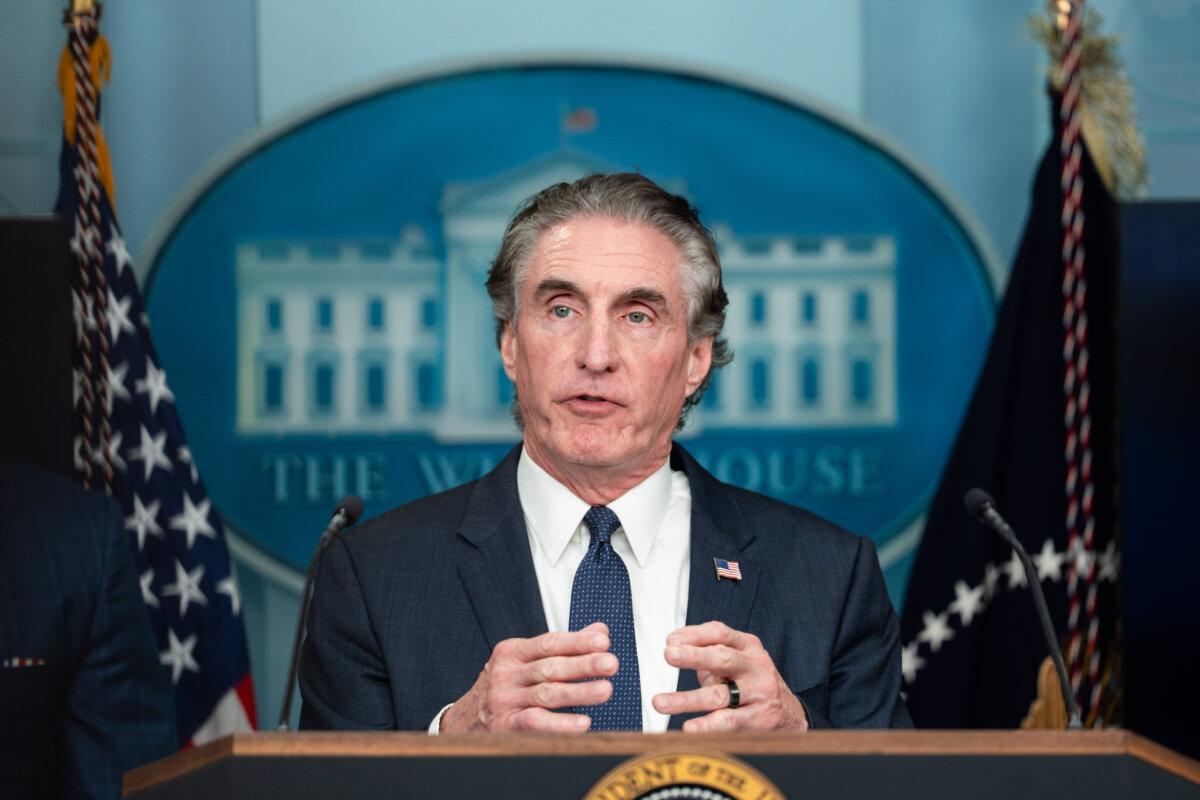
Chinese Communist Party (CCP) export restrictions on seven heavy rare earths used to manufacture industrial magnets nearly shut down key industries in the West, according to United States Secretary of the Interior Doug Burgum.
“We were going tit-for-tat” in renegotiating trade pacts, he told “American Thought Leaders” host Jan Jekielek in an Oct. 7 interview.
Burgum recalled the CCP’s April 4 response to President Donald Trump’s April 2 executive actions that boosted tariffs on Chinese imports to 145 percent.
“They withheld shipping a certain type of magnet to all Western countries, not just the United States,” Burgum said. “We were facing, within weeks, every auto plant in the world being shut down.”
The Trump administration exempted electronics from boosted tariffs, and the CCP lifted the restrictions, but the episode underscored how vulnerable the United States and its trading partners are to China’s global dominance in critical minerals.
Chinese processors produce 85 percent of the “20 most important rare earth minerals” sold on global markets, Jekielek said.
The CCP’s import restrictions are “a wake-up call” for the West to secure its supply chains, Burgum said.
On his first day back in office, Trump issued executive orders to declare an energy emergency and increase domestic energy production to “help ensure a more secure, predictable, and affordable supply of critical minerals and materials.”
He followed with a March executive order requiring agencies to expedite projects by streamlining permitting, opening more public lands for mining, and including critical mineral development under the Defense Production Act
China, however, will still dominate the global minerals market for years.
When its processors’ market shares are challenged, the CCP simply subsidizes them to upscale production and crash prices, making it unprofitable for competitors.
Burgum said China overtly tried to knock MP Materials’ Mountain Pass Mine in California out of business, despite the establishment of a Department of Defense (DOD) fund more than a decade ago to subsidize its reopening.
The company was successful and had plans for an IPO, Burgum said, but “boom, the next year, they’re losing $200 million because China’s dumping in the market.”
“This is just a playbook that China’s used to avoid market forces and just strategically, as a country, subsidize certain industries to gain control.”
Premature, Overplayed Hand
Burgum said the CCP’s minerals market manipulation has spurred the administration to take an “extraordinary step.”
The government’s investment in key minerals can help markets weather CCP manipulation and, with select tariffs, encourage private investment to “create, again, a measure of protection for U.S. companies to be able to restart this mining industry.”
“In this case, we can come in, take a minority position, send a signal to the market that there’s going to be a partnership here,” he told Jekielek.
The “exposure” Western industries saw last spring remains a threat, he said.
Burgum said China agreed to start shipping magnets again, but required buyers to fill out an export form describing “how they use the magnet, what product it goes into, [and] what are the dimensions. Is it for commercial or military use?”
“It is essentially a giant intelligence-gathering capability, Burgum said.
The CCP, however, may have overplayed China’s advantages, exposing its own vulnerabilities, Burgum said.
“In my view, China played their card too early. They played it at a time when we were not involved in any kind of kinetic war … we’re in a cold war, essentially, a trade war,” he said.
“They played it early, and that woke up America. Certainly woke up this administration.”
—John Haughey; Stacy Robinson
BOOKMARKS
Donald Trump held a roundtable at the White House on Wednesday, featuring journalists who have experienced violence at the hands of Antifa. “That was my only near-death experience in my life, and I’m quite shaken when I think about it now,” journalist Andy Ngo said, recounting a beating that left him bleeding from the eyes and ears.
A recent survey of Federal Reserve officials shows that around half of them expect another interest rate cut in October. Read Andrew Moran’s latest report to find out how markets reacted to the news.
Two men, Frank Andrew Waszut and Anthony Patrick Noto, have been charged with making threats against an Immigration and Customs Enforcement (ICE) officer and his wife on social media. “Federal agents deserve to perform their duties free of harassment from keyboard warriors and other agitators,” U.S. Attorney Theodore Hertzberg said in a statement announcing the charges.
The Supreme Court heard arguments on Wednesday about whether Rep. Michael Bost (R-Ill.) can challenge Illinois’ law allowing the counting of mail-in ballots after election day. Weigh the arguments in Matthew Vadum’s latest report.
House Speaker Mike Johnson (R-La.) said on Wednesday that he has no plans to hold a vote to pay military personnel during the government shutdown. “Of course, we want to pay our troops and our air traffic controllers and our Border Patrol agents, TSA, and everybody else,” Johnson said, but he said the best way to do that is to reopen the government.
Nineteen Chinese companies have been added to a list of companies that have supported or supplied drones to terrorists. Find out which ones in Catherine Yang’s latest report.
—Stacy Robinson
 Friends Read Free
Copy
Facebook
Tweet
Friends Read Free
Copy
Facebook
Tweet