
Canada seeks to join controversial Chinese infrastructure bank
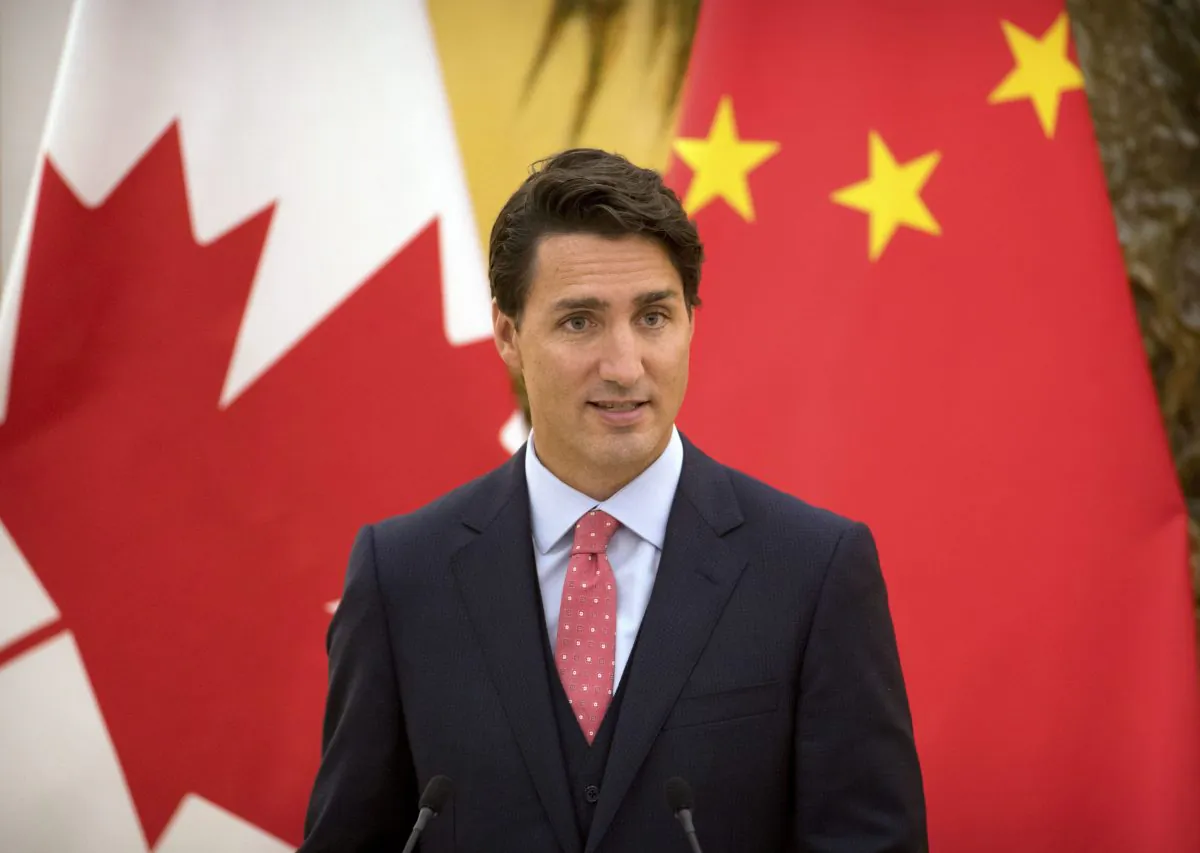
BEIJING—Prime Minister Justin Trudeau has officially submitted Canada’s application to join a controversial new international infrastructure bank led by China—an initiative Beijing hopes will help build its economic credibility around the world.
China founded the US$100-billion Asian Infrastructure Investment Bank to provide other countries in the region access to capital for investments in projects in areas such as transportation, power, and telecommunications.
The Canadian government made the announcement after Trudeau met with Chinese Premier Li Keqiang on Aug. 31 in Beijing, but did not immediately specify how much money it would put into the new bank.
The government said in a statement that joining the bank will help Canada further engage in multilateral infrastructure efforts, and help pave the way for Canadian companies looking for new business opportunities.
Canada Post, postal union avert job action, reach tentative deals
OTTAWA—Canada Post and the Canadian Union of Postal Workers have reached tentative agreements, averting the prospect of a labour dispute that has loomed over the talks for months.
Under the agreements, an independent body will study the pay equity issue that was at the core of the months-long labour dispute that had seen threatened job action. The two sides also agreed to leave the corporation’s defined benefit pension plan untouched.
Canada Post had sought changes to the plan for new employees as it deals with an estimated $8 billion deficit, but the Canadian Union of Postal Workers balked, calling it a two-tier pension system.
The tentative agreements are for only two years, while four-year contracts were typically negotiated in the past.
Health Canada plans to restrict chemicals used to make fentanyl
VANCOUVER—Health Canada plans to restrict six chemicals used to make fentanyl as part of Ottawa’s attempt to address what it calls the national opioid crisis.
Health Minister Jane Philpott says a bill brought in by Sen. Vern White means the federal government can act quickly to make the unauthorized importation and exportation of the chemicals illegal.
In a news release, Health Canada says its regulatory proposal expeditiously achieves the intent of White’s bill.
Philpott says she is also planning a summit to take place this fall to address the opioid crisis.
Vancouver has biggest decline in housing affordability since early 1990s
TORONTO—Royal Bank says the first half of this year marked the biggest six-month drop in housing affordability in the Vancouver area since at least the early 1990s.
The bank says its cost-of-ownership measure for Vancouver rose to 90.3 percent of a typical family’s pre-tax income after rising 6.1 percentage points in the second quarter and 6.6 percentage points in the first quarter.
The lender says that’s the biggest back-to-back deterioration in affordability for the Vancouver area in 26 years of record-keeping.
Its latest report says the Toronto area had the country’s second-biggest deterioration in housing affordability during the quarter, with its index of home ownership costs rising by 2.1 percentage points to 60.2 percent of median pre-tax income.
Free DNA tests offered after two Manitoba switched-at-birth cases
NORWAY HOUSE, Man.—Health Canada says it is offering free DNA tests following the discovery of four men who were switched at birth at a hospital in northern Manitoba.
The tests are being offered to anyone who was born at the federally run Norway House hospital in the mid-1970s.
Health Canada spokesman Eric Morrissette says the department has started reviewing the hospital’s historical files and an independent third party will soon be tasked to investigate the mix-ups.
Two men from the Norway House First Nation announced last week—and two men from nearby Garden Hill revealed late last year—that they had been switched at birth at the same hospital in 1975.
With files from The Canadian Press
 Friends Read Free
Copy
Facebook
Tweet
Friends Read Free
Copy
Facebook
Tweet