

“However, time after time, local entrepreneurs, either with or without the tacit support of the Chinese government, have found ways to fleece American companies bare,” according to an article on the VentureBeat website.
Apple was fleeced when a factory manager in China stole the blueprint to its latest iPhone model a few years ago, produced it, though not quite in the format as the Apple iPhone, and put it on the market before Apple introduced its latest model.
General Motors (GM) ran afoul of Chinese ingenuity. Chery Automobile Co., Ltd. cloned GM’s Chevrolet Spark, with the body, design, and components being almost identical.
“Deputy Commerce Minister Zhang Zhigang claimed that General Motor[s] has not provided enough evidence. … The main point of the whole argument was that
General Motors did not register that particular model in China,” said Isola Oluwabusuyi in a paper published in February by the Journal of Economics and International Finance.
The Cap Times, a Wisconsin newspaper, tells of Manitowoc Co., Inc., a business formed in 1902 in Wisconsin. This company has done business with China, bought Chinese plants, and maintained a workforce in the U.S. and China.
“Yet the company has also had its designs and ideas spirited away by Chinese competitors, with little available recourse,” according to a 2011 Cap Times article.
China’s Indigenous Innovation Policy
China is very innovative when it comes to outdoing competitors and keeping its goal to achieve leadership in global competition.
For example, a government policy demands the sharing of technological secrets under the guise of indigenous innovation policy (promoting local over foreign produced goods). This directive, in hidden form, gives the Chinese the incentive to steal trade secrets and bring a similar but cheaper product to the market, according to expert discussion.
Also, international trade policy has established common product standards, which are followed by most export-oriented countries. However, China has established its own product standards, which is a slight modification of the common product standards, but enough to keep foreign competitors at bay.
“The Chinese standards setting system tends to be nontransparent and to exclude meaningful opportunities for foreign companies to provide input and comment,” testified Karen Laney, acting director of operations at the U.S. International Trade Commission, before the U.S. House of Representatives Subcommittee on Terrorism, Nonproliferation, and Trade this month.
By setting its internal standards and disregarding internationally accepted standards, China runs afoul of anti-monopoly laws. This scheme has become another roadblock for foreign businesses doing business in China.
There are several reasons. First, unless the U.S. exporter produces its products as prescribed by Chinese standards, it can’t be sold in the Chinese market or to China’s government. Secondly, international standards will make for higher royalty payments for intellectual property rights (IPR) by the Chinese manufacturer. If the product is produced according to Chinese standards, it requires modification, so the Chinese manufacturer pays far lower IPR royalties.
Ed Royce, chairman of the Subcommittee on Terrorism, Nonproliferation and Trade, quoted an influential government official in his published testimony during a March subcommittee hearing, “China’s indigenous innovation policies threaten global intellectual property protections, fair government procurement policies, market competition, and innovators’ freedom to decide how and when they transfer technology.”
China Saying One Thing and Doing Another
“China has a history of promises made, promises broken,” said Royce during his testimony.
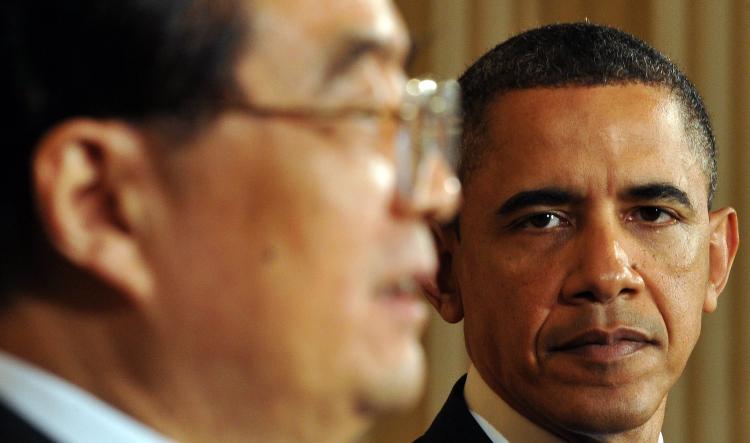
Just a few months ago, Hu Jintao, China’s president, met with U.S. President Barack Obama, promising in a signed document that product acquisitions by the Chinese government would not be subject to the indigenous innovation policy.
Read more… China experts have said that this promise isn’t worth the paper it is written on
 Friends Read Free
Copy
Facebook
Tweet
Friends Read Free
Copy
Facebook
Tweet