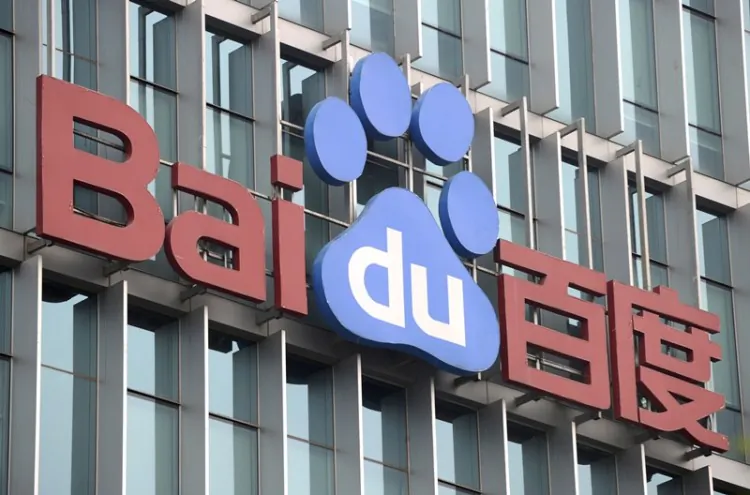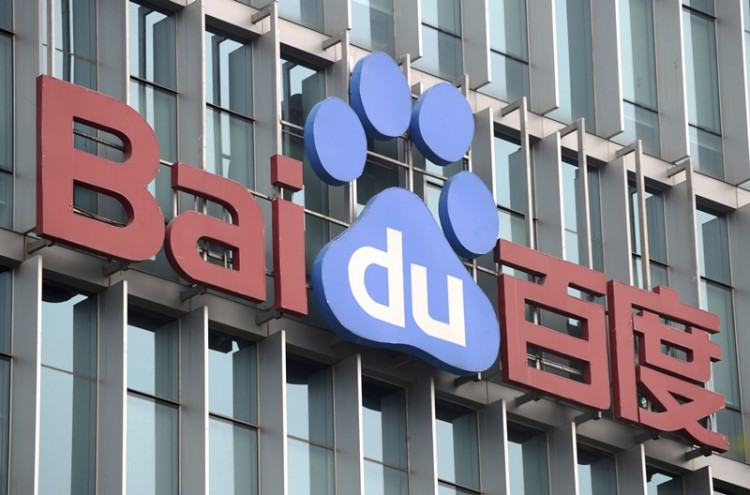

On the eve of the 23rd anniversary of the June 4 Tiananmen Square Massacre, China’s largest search engine, Baidu, lifted the ban on False Fire, a documentary produced by the New York-based New Tang Dynasty Television, an independent, primarily Chinese-language broadcaster.
The documentary is related to an incident on Tiananmen Square in January 2001, where five people set themselves on fire. CCN also recorded the incident but had its footage confiscated by Chinese security.
A week later, Chinese state-run media broadcast footage of the incident nationwide. State-run media told Chinese citizens that the people who had self-immolated were Falun Gong practitioners.
The False Fire documentary says the incident was an attempt by the Chinese regime to incite public hatred against members of the Falun Gong spiritual practice. The documentary also questions why the people were left to burn for so long, when security is so tight on Tiananmen Square.
Searching Baidu in Chinese using the key words “Self-immolation Truth” on May 3, the results: “United Nations Conference ‘Tiananmen self-immolation’ is a hoax orchestrated by the Chinese Communist Party (CCP),” appeared.
In late May, Baidu lifted the ban on video reports of the “300 Brave Hebei Villagers’ Signatures” and “Human Rights Lawyers Advocate Bringing Jiang’s Bloody-Hands Faction to Trial in Beijing”—two other issues related to Falun Gong.
On March 20, when China’s firewall was partially unblocked, Chinese netizens were able to google sensitive words such as “Falun Gong,” “June 4,” and even “Zhuan Falun,” (the principle text of the Falun Gong spiritual practice—banned in China for more than a decade).
Search results for Zhuan Falun on March 20 listed Falun Gong’s official website at the top. Chinese netizens could freely access information about Falun Gong, including photos of the teacher, Master Li Hongzhi; teachings in China and abroad; and photos of practitioners doing the Falun Gong exercises in China and abroad.
Wen Zhao, a Canada-based political commentator for New Tang Dynasty Television, said that allowing mainland Chinese access to websites relating to Falun Gong is related to changes taking place inside the upper levels of the Chinese regime.
“It should not be seen as an accidental phenomenon. This means that some of the CCP’s leaders really want to have a breakthrough on the Falun Gong issue. This is a key point to distinguish themselves from the bloody-hands faction of Zhou Yongkang,” Zhao said.
The Tiananmen Square self-immolation incident occurred on Tiananmen Square on Jan. 23, 2001, and was filmed by China Central Television (CCTV).
Falun Gong said the five self-immolators were not adherents of the spiritual practice, which forbids suicide. The Falun Dafa Information Center holds that the incident was orchestrated by the CCP to build a climate in China to persecute the group.
Read the original Chinese article.
Click www.ept.ms/ccp-crisis to read about the most recent developments in the ongoing crisis within the Chinese communist regime. In this special topic, we provide readers with the necessary context to understand the situation. Get the RSS feed. Get the new interactive Timeline of Events. Who are the Major Players? 
The Epoch Times publishes in 35 countries and in 19 languages. Subscribe to our e-newsletter.
 Friends Read Free
Copy
Facebook
Tweet
Friends Read Free
Copy
Facebook
Tweet