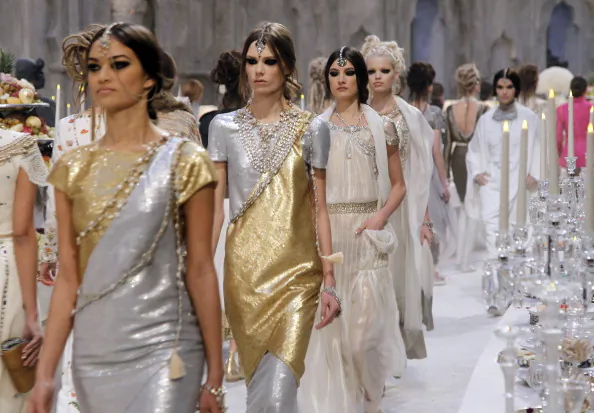
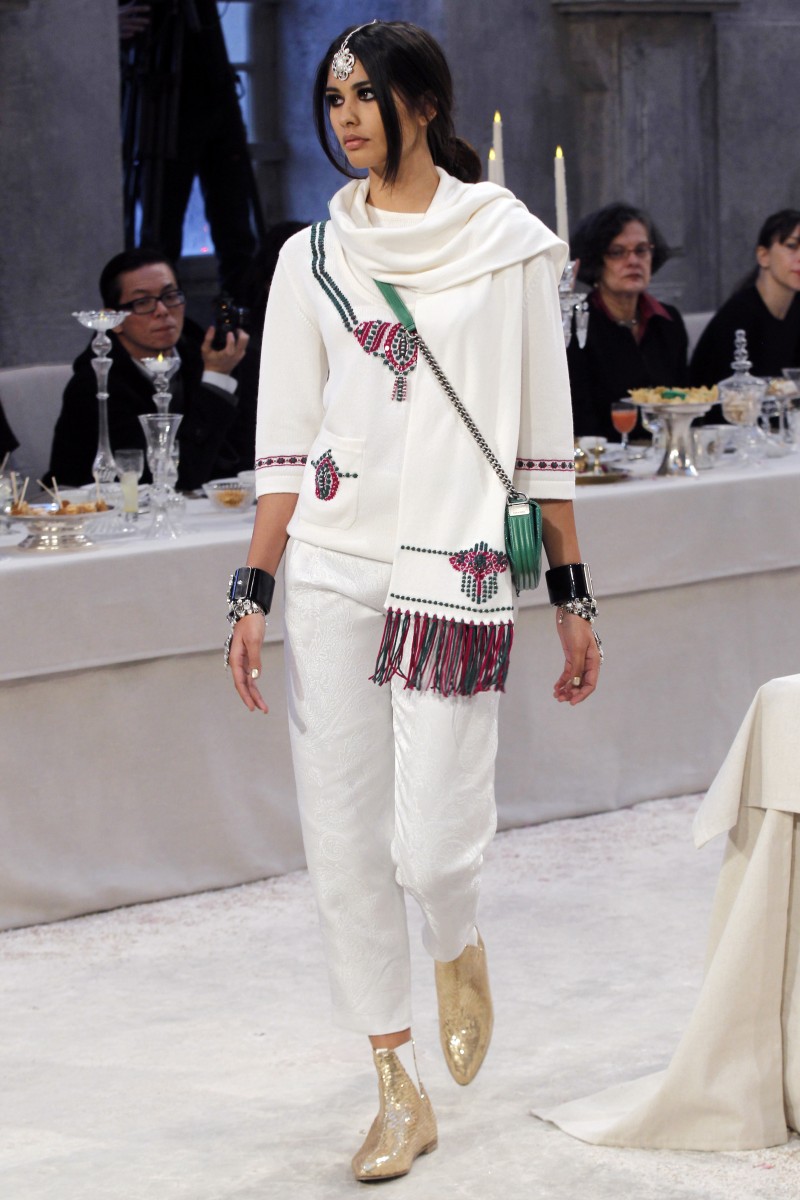
Kurtis, tunic-style garments, are extremely comfortable and light and can be paired with jeans, making them the perfect blend of Indian and Western fashion. The trend this season is frock-styled kurtis that are well-fitted from the top of the shoulders and then flow freely from the chest to the waist, as shown on the model. (FRANCOIS GUILLOT/AFP/Getty Images)
The Indian sari represents the traditional clothing of Indian women. It has a lasting charm since it is suitable for all sizes and shapes and can be worn in several ways. The way this graceful feminine attire is worn, as well as its color and texture, is indicative of the status, age, occupation, region, and religion of a woman. The choli worn underneath is a tightly fitted blouse. Using gold or gold ornaments is popular because the metal is believed to have the power to purify anything it touches, according to Indian traditions. (FRANCOIS GUILLOT/AFP/Getty Images)
At a time when modernization seems to be sweeping through most cultures, one bold designer artfully weaves ancient traditional wear with modern flair on the Parisian runways.
At the Dec. 6 Chanel Metiers D’Art Pre-Fall collection show titled “Paris-Bombay” in Paris, German-born fashion designer Karl Lagerfeld channeled Indian culture with its traditional styles, its jewels, its vibrant colors, and its precious fabrics.
The show also made an impact in choosing an unusually high number of models from South Asian origin.
“These women have enjoyed less visibility on runways and in fashion editorials than models from Korea, China, and Japan,” NYmag.com said in a recent post about the show.
A culturally diverse nation, India is known as the birthplace of many early religions, among them Buddhism and Hinduism, with some of the most deeply rooted societies and cultures.
It follows that the clothing portrays many traditional symbols and ideologies established in ancient history and recaptured here on the Parisian Runway.
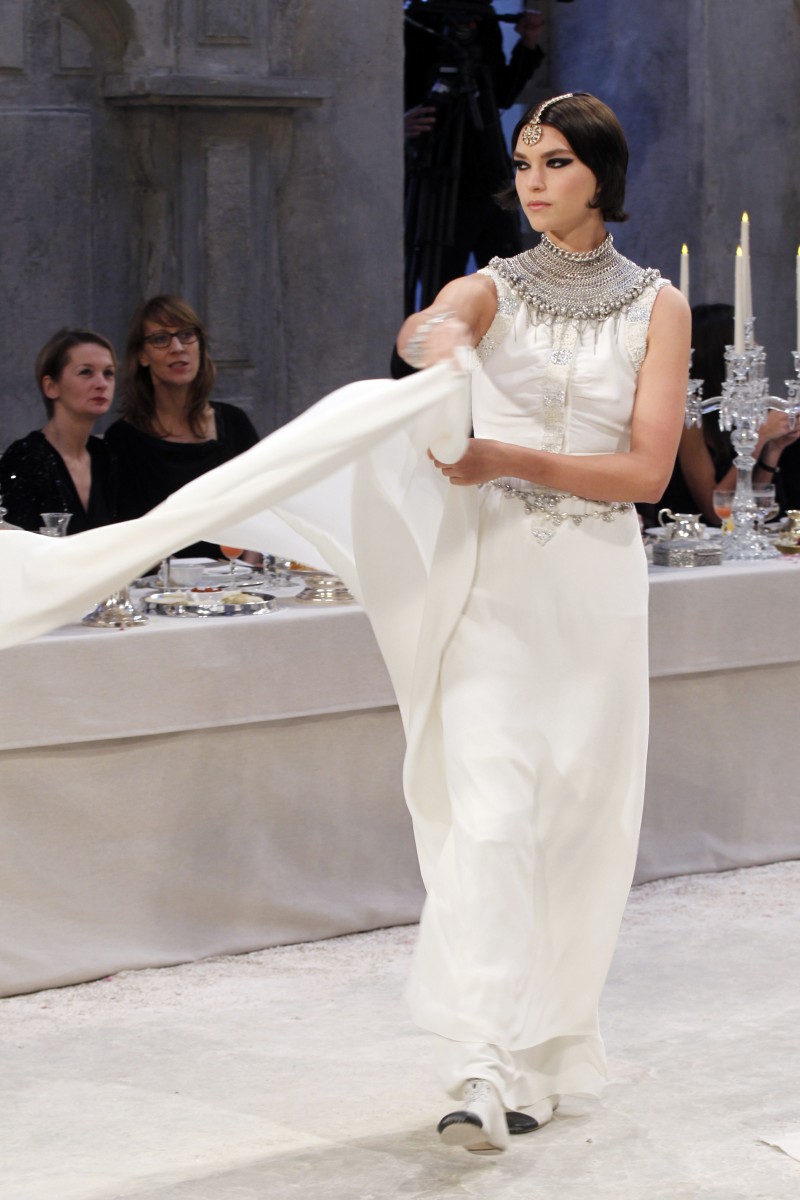
According to Indian color symbolism, white is the predominant color for the clothing of upper classes. It is customarily believed that any form of dyeing is impure. The gown shown here is feminine, graceful, and flowing. (FRANCOIS GUILLOT/AFP/Getty Images)
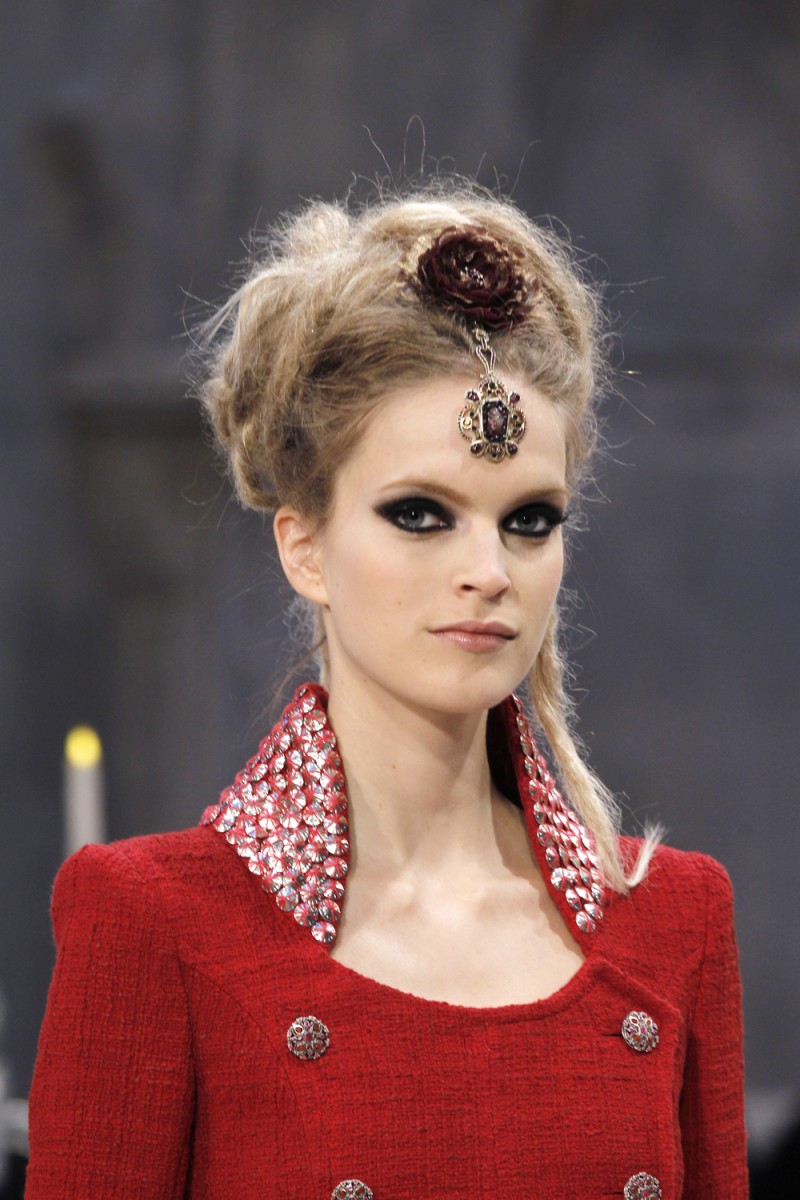
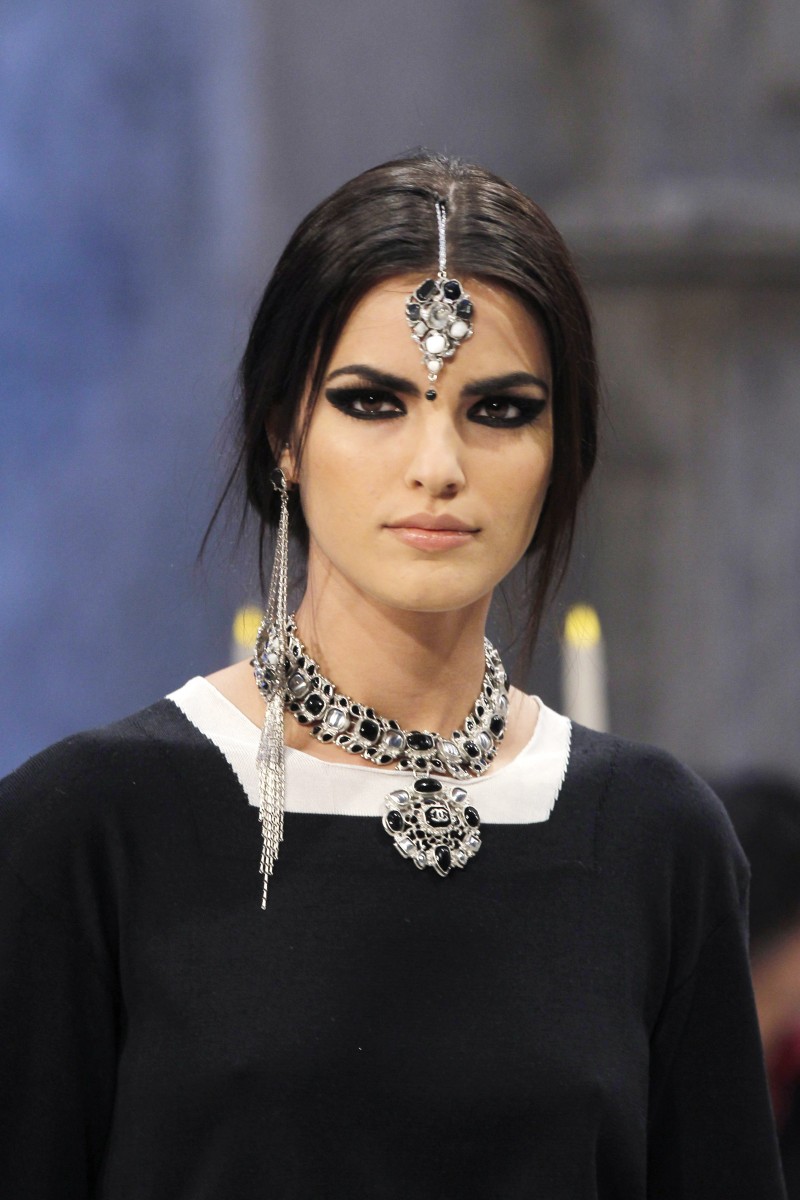
Considered to be a highly auspicious mark, the bindi is worn by women on their forehead and is representative of the Third Eye, according to some Indian traditions. (FRANCOIS GUILLOT/AFP/Getty Images)
The dark eyeliner around the model's eyes, or kajal, is said to protect from evil. (FRANCOIS GUILLOT/AFP/Getty Images)
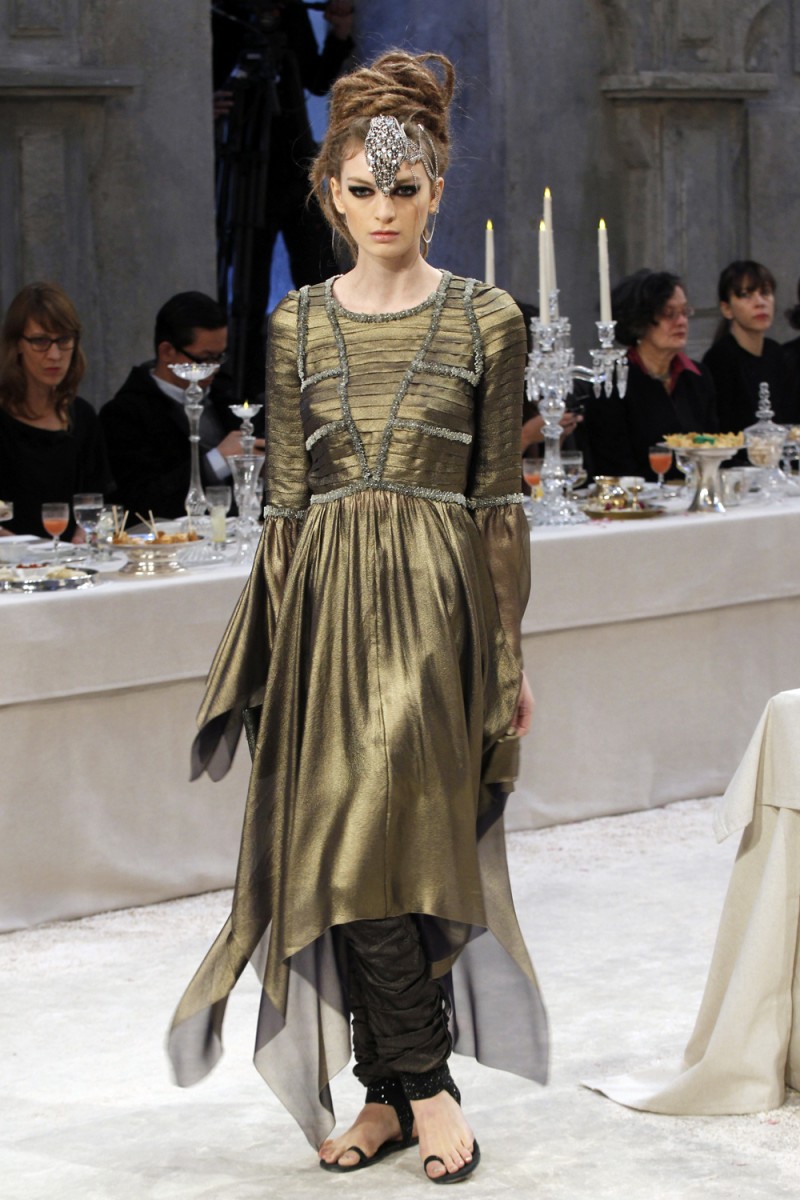
A modern take on Indian churidaars, pajama-like trousers drawn tightly at the waist and the ankles. They are also longer than the leg and made of a stretchy fabric for movement, sometimes finished with a tightly fitting buttoned cuff at the ankle. Over the churidaars, women wear long and loose kameez or tunics. As seen here, the look is elegant and festive. (FRANCOIS GUILLOT/AFP/Getty Images)
Kurtis, tunic-style garments, are extremely comfortable and light and can be paired with jeans, making them the perfect blend of Indian and Western fashion. The trend this season is frock-styled kurtis that are well-fitted from the top of the shoulders and then flow freely from the chest to the waist, as shown on the model. (FRANCOIS GUILLOT/AFP/Getty Images)


 Friends Read Free
Copy
Facebook
Tweet
Friends Read Free
Copy
Facebook
Tweet