Imagine urban sprawl in reverse, where abandoned real estate is cleared to plant trees—that is the idea behind a proposal for Detroit’s east side, which may soon become the site of the nation’s largest urban farm.
Detroit millionaire John Hantz first pitched the unusual development strategy four years ago. Since then, his company has been negotiating with residents and city officials to hammer out a plan that almost everybody can live with.
According to Hantz Farms president Mike Score, the original proposal called for a pick-your-own fruit and vegetable farm, but fears that hundreds of city acres devoted to food would attract rodents prompted the company toward planting hardwood trees.
While the slow-growing saplings will not turn a profit nearly as fast as produce, Score says the company is flexible about crop choice because there is much more to their investment than just making money.
“The purpose behind the project is basically to make the neighborhoods more livable, and agriculture is just a cost-effective tool to do that,” said Score. “So we started exploring ideas with neighbors, and one type of agriculture that still works for us, and is more agreeable for neighbors, would be focused on forestry.”
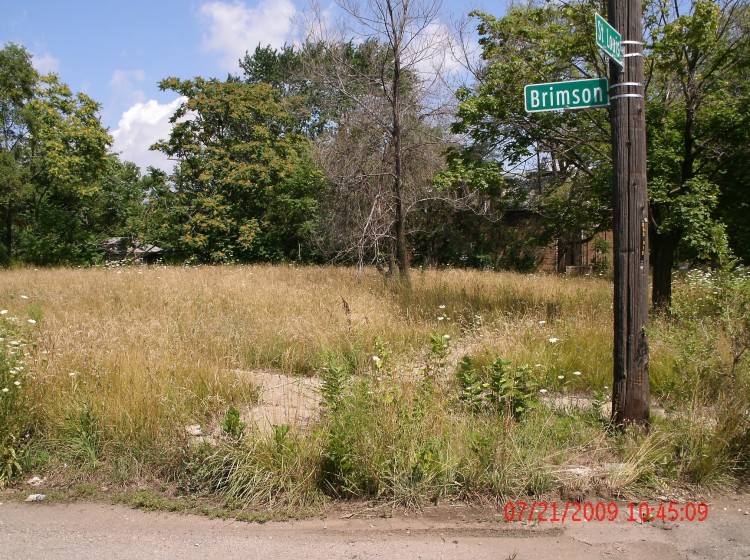
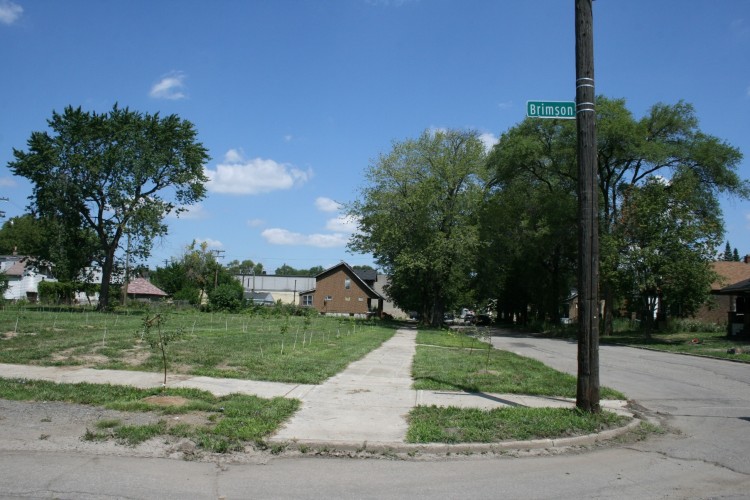
Businesses and officials have employed a variety of urban renewal projects over the years, but Detroit remains synonymous with urban decay, with almost one-third of the city now publicly owned due to mass foreclosure. The growing pockets of ghost town neighborhoods have become an overwhelming burden for city services, and an eyesore for the people who live nearby.
But while many see the Hantz Farms proposal as a real solution for tackling urban blight, the plan has also aroused a variety of suspicions and grievances.
Last March, Occupy Detroit accused the Hantz Group of joining forces with biotechnology giant Monsanto. MoveOn.org picked up the story, and began circulating an email petition warning that Hantz Farms would inundate Detroit with harmful pesticides and genetically engineered crops if the deal with the city went through.
The claims alarmed some Detroiters, but none of it was actually true. The young man who started the rumor told Deadline Detroit that he was “just a kid who started a petition” and that “the true connection between Hantz and Monsanto has yet to present itself.”
“We don’t have an agreement with Monsanto,” assured Score. “We’re planting hardwoods, which we don’t have to fertilize or spray.”
More recently, critics accused Hantz of using the farm idea as a ruse to buy up cheap land and turn it into a more conventional development project once the purchase is complete.
Score insists this is also not true, and he says that carrying out such a scheme would actually be a lot of unnecessary hassle.
“John Hantz has been working toward the Detroit farm for four years, and has already spent millions in development costs,” said Score. “Why would you take that approach when land is already packaged for residential development? What they’re accusing us of just doesn’t make sense.”
Since city zoning laws currently restrict the sale of agriculture, Hantz does risk spending millions on a tree farm that may never see a monetary return. But while an ordinance is in the works to change this, other Detroit community agriculture projects are already accusing the city of giving the Hantz company preferential treatment.
Detroit’s other urban farmers say that in several instances the city has prevented them from buying even one or two nearby lots, making a large purchase by Hantz extremely unfair. Though they work at a much smaller scale, these community fruit and vegetable growers argue that they should get the same $300-per-parcel ($3,600-per-acre) sale offered in the Hantz proposal.
Of course, along with Hantz’s low price is an agreement that comes with other costs. The proposal describes a public-private partnership that would “demolish more than 100 abandoned structures” where Hantz would take on what are normally the city’s project overhead responsibilities and recover the costs through tax credits.
In addition, the company would clean, maintain, and pay taxes on land that currently costs the city more than it can afford.
“Isn’t it odd that something has a positive effect on other people’s lives and we’re being criticized for it?” asked Score. “What’s John supposed to do in the arena of public opinion? I mean, you’re damned if you do, and damned if you don’t.”
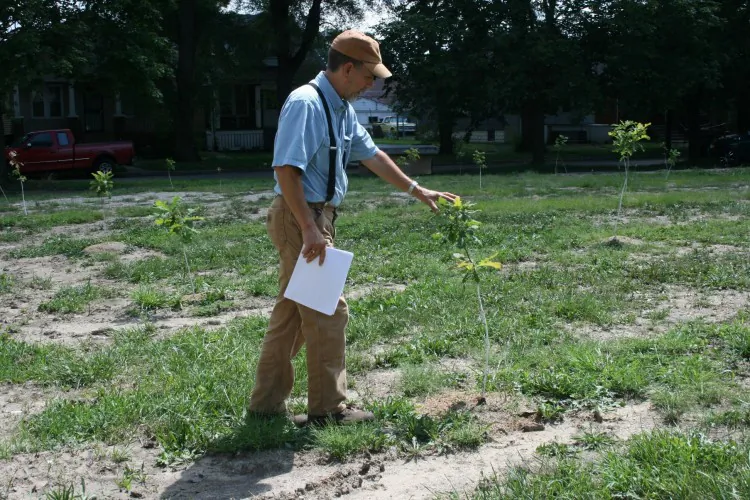
Score says that, despite the critics, over 90 percent of the local community backs the project. He says the company is proud of its open-door policy, and encourages tours of its small but well-maintained demonstration area—a 3.5 acre plot once strewn with trash and weeds, which now sprouts several rows of oak saplings.
Hantz Farms plans to devote as much as 5,000 acres of abandoned Detroit land to forestry, but concerns about size have forced the company to develop in stages.
The Detroit City Council could decide as early as this fall to sell the company its first 170 acres.
Despite the rumors and accusations, Score believes that there is enough community support to make it happen.
“We’re comfortable when people ask what we’re doing and why we’re doing it. We can answer the question honestly,” he said. “The City Council is going to have to vote on our intention.”
The Epoch Times publishes in 35 countries and in 19 languages. Subscribe to our e-newsletter.
 Friends Read Free
Copy
Facebook
Tweet
Friends Read Free
Copy
Facebook
Tweet