
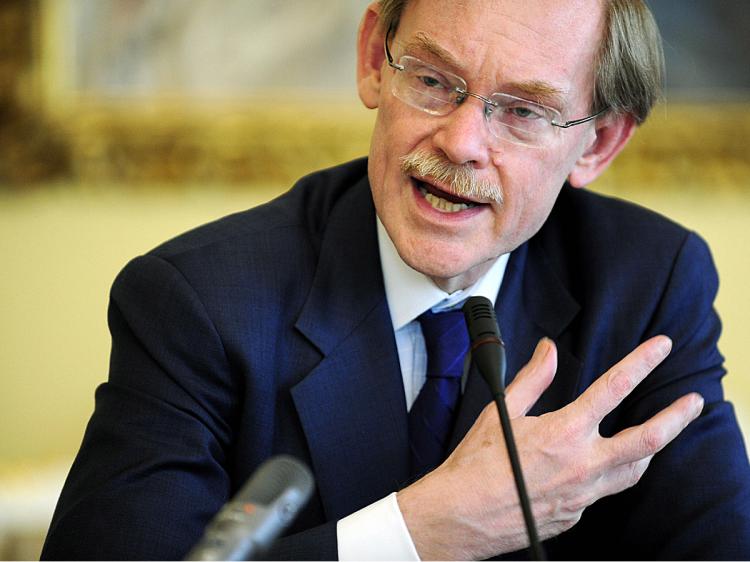
"If we don't take measures there is a risk of a great humanitarian and social crisis, with major political implications," he said in an interview with Spanish newspaper El Pais.
Conditions in Central and Eastern Europe warranted particular attention, Zoellick noted, but added “it was important to differentiate among countries.”
He predicted the economic recovery in Eastern Europe will be slower than expected, according to El Pais. He said Romania, the Baltic States, and some other countries in the region are in a "delicate situation” and prone to a dramatic human and social crisis with serious political implications.
Mr. Zoellick based his statement on the fact that production capacity in these countries continues to be very low which could lead to a job crisis, despite the fact that capital markets have slightly recovered.
His remarks appear to contradict the optimism shown recently by global financier George Soros, media mogul Rupert Murdoch, and the Italian minister of Economy Giulio Tremonti, who all believe that the world has already seen the worst of the current economic crisis.
 Friends Read Free
Copy
Facebook
Tweet
Friends Read Free
Copy
Facebook
Tweet