Economics 101: Economics Explained to Non-Economists

By Gary Feuerberg
Gary Feuerberg
Gary Feuerberg
February 10, 2011Updated: February 10, 2011

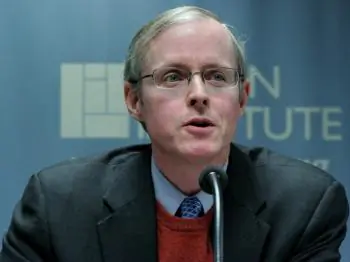
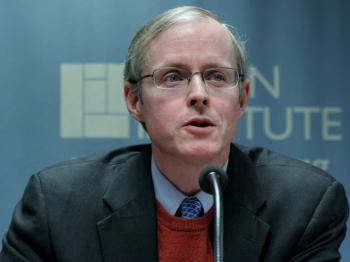
Donald Marron has been director of the Urban-Brookings Tax Policy Center since May 2010. He was a member of the Council of Economic Advisers (2008-2009) and deputy director of the Congressional Budget Office. He is the editor of '30-Second Economics.' Dr. Marron spoke Feb. 1 at the Urban Institute, 'What Policymaker, the Public, the Press, and Parents Need to Know about Economics---in 90 Minutes or Less.' (Gary Feuerberg/ Epoch Times)
Economic journalist Greg Ip likes to explain the inside jargon and abstruse economic theory used in the economic news reporting. Formerly a reporter for the Wall Street Journal, he is the U.S. economics editor of the Economist and author of 'The Little Book of Economics: How the Economy Works in the Real World.' He spoke Feb. 1 at the Urban Institute. (Gary Feuerberg/The Epoch Times)
WASHINGTON—The debates in Washington on almost everything—health care, taxes, education, college loans, and housing—are heavily laden with economic terms and concepts.

Few Americans have the training to understand the meaning of inflation, deflation, federal deficit, tax subsidies, liquidity, and debt limit, yet politicians use these terms frequently.

To address the gap between lay people, including most elected officials, and economists on the use and misuse of economic theory, think tank Urban Institute convened a panel of five scholars last week titled "What Policymakers, The Public, The Press, and Parents Need to Know about Economics … in 90 Minutes or Less."

Each panelist has written extensively in books, articles, and blogs on economic fundamentals, attempting to reduce the arcane science of economics to common sense principles.

Robert Reischauer, president of the Urban Institute and former director of the Congressional Budget Office, noted that only 40 percent of adults who have a 4-year bachelor’s degree have ever taken an economics course. He estimates that less than one in five in the overall population has had any kind of formal economics training.

‘Investments’ or ‘Spending’?

President Obama in the State of the Union speech introduced what he called investments, or tax incentives intended to promote economic growth. He spoke of “investment in American technology, infrastructure, and education,” as “our Sputnik moment.” Republicans countered the president’s investments by saying it simply is a euphemism for more spending.