
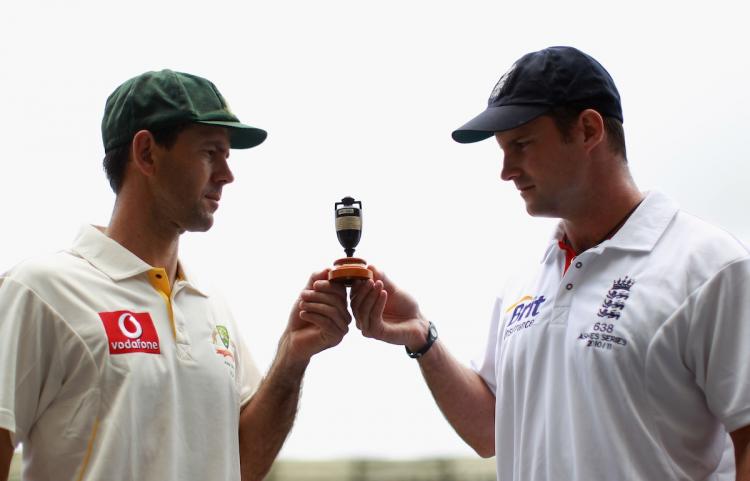
Having won six series, in all formats, during the English summer this year against Bangladesh and Pakistan, England are understandably optimistic and deserve those experts’ opinions. Despite this, the current team have not yet won an Ashes series on tour and it’s been almost a quarter of a century since their English predecessors’ triumph.
Winning form is good form however, and England, who currently hold the Ashes, have that in spades. While they will be out to win, they need only draw the series to retain them.
While their preparation to retain the Ashes couldn’t have been much better, facing Australia in the first Test at the Brisbane Cricket Ground (Gabba) and winning is a tough ask.
Firstly, they haven’t won a match at the Gabba since the 1986-87 tour when they last won the series on Australian soil – six tours ago.
Secondly, Australia hasn’t lost in 21 Test matches since 1988 at the iconic venue.
Thirdly, there’s the unsympathetic crowd to contend with.
And then there are even concerns over the variance between an Australian Kookaburra cricket ball and an English Dukes one – and there are differences between shape, durability and seam stitching that cause them to have dissimilar behaviour.
These facts having an impact at the crease may seem as intangible as the never-say-die fighting spirit of the Australians, but these thoughts have certainly passed through both team’s camps.
How much that winning streak benefits the Aussies is debatable. England is focussed and ready. There is said to be steeliness about their approach. Still, there’s no room for complacency for both teams – what’s happened is in the past and they’re out to write their own history.
England settled
England enter the Ashes Series with a settled first-choice team and no injuries – they’ve had two wins and a draw (due to rain) from their three first-class matches since arriving in Australia around a month ago.
With a few short hours before the first delivery, eyes from around the world will be on the crucial decision that will play a major role in victory or defeat. Deciding to bat or bowl, for the winner of the coin toss, will come down to psychology, pitch conditions and who can best predict the weather.
While they will be trying to break the metaphorical drought there has been no sign of a literal one.
Brisbane has been experiencing showers of late, with more expected in the next few days. While there may be a few brief showers – they shouldn’t interrupt play too much – the team who bowls first should have an advantage. Overcast days have meant the pitch hasn’t been baked, which will suit fast bowlers as the Kookaburra will seam well causing a greater deviation on the bounce.
Short or long
Bowling to the feet of the batsmen, where the unpredictability of the fast-ball seamer captures wickets, seems like the obvious approach.
But, for some reason, teams often decide to bowl short at the Gabba in conditions that would usually favour balls pitched nearer the bat – or even a full-pitched attack. Perhaps it’s a tactic born from expecting the unexpected; but, for whatever reasons, the psychological battle is as much a part of winning as form, skill and home advantage.
Often England’s method, that traditionally puts Australia on the back foot and has led to success, is the short ball that pitches above the waist or even at the head – putting fear and uncertainty into the batsmen. There doesn’t appear to be anyone in their current bowling line-up that has that fierceness.
Four or five
England are entering the series with a four-pronged bowling attack, which the Australian’s will be looking to break down, believing that it leaves them vulnerable – off-spinner Graeme Swann and fast bowlers Stuart Broad, Jimmy Anderson and Steve Finn (a newcomer to Australian wickets). They’ve left out seamer Tim Bresnan who is an aggressive bowler and low-order batsman with a good average of 35 runs in his five Tests.
Historically tougher on bowlers, Australian wickets are many degrees harder than English ones. Australia will aim to grind down England across the five Tests as they are unable to share the load as well.
Meanwhile, Australia has included five bowlers. The inclusion of all-rounder Shane Watson gives Australia an advantage that may see them take the early ascendancy in the series. With the pace trio of Mitchell Johnson, Peter Siddle and Ben Hilfenhaus, medium-fast Watson is also joined by spinner Xavier Doherty who has been called up to play his first Test.
While tension mounts as both teams are looking to start well – to attain the ascendancy that confidence of a good score or wicket-fall can bring – a Test is won across five days and two innings. If the clouds clear and sun belts down drying out the wicket the game could swing dramatically by the fourth or fifth day.
 Friends Read Free
Copy
Facebook
Tweet
Friends Read Free
Copy
Facebook
Tweet