
The stirring uplifting strains of the Stars and Stripes that suffers no stain of the underdog and claims the present as its own, gave notice that England would have to pass muster the challenges that the American mix of verve and tenacity would throw at them in order to maintain the authority of their pedigree.
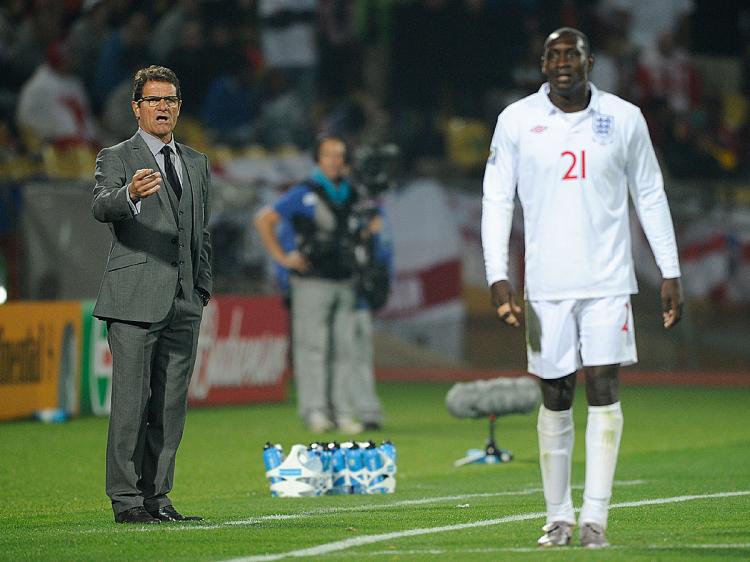
England manager Fabio Capello’s anger at the premature celebrations following Steven Gerrard’s early goal appeared to signal what was to follow. Capello’s anger was justified as he knew that the early shock goal should have been followed with a quick, urgent response by the English.
The ball should have been recovered smartly from the net while the shock was still potent, so that momentum could be kept instead of engaging in an extensive celebration that gave time to the Americans to settle things down. Then again, that was probably too much to expect from a bunch of seasoned professionals.
That was somehow a defining moment signaling England’s lack of intelligent gamesmanship. A celebration after only four minutes of play does not only send the wrong message to the system but it reverts to complacency mode.
After all, come on, this is the World Cup and if players are not playing with all their lights on, then they enter the drowsy space of comatose that England is well known in the past to need treatment for.
It’s not just all about winning either. It goes beyond that. It’s about artistry, class, and the polished professional at the top of his game, which goes far beyond human creative skill.
It’s tragic to see world class players lose their edge and become ineffective when placed with the opportunity to weave something magical only to run into a repetitive dead end and collapse in failure.
Why was tornado Rooney lost in the maze with no sign of his engines running for so long and only appeared to take off in the last 15 minutes? When Emile Ivanhoe Heskey was clean through on Tim Howard, what doubts appeared in the minds of the many before he tucked the ball into the arms of the keeper? “I am going to miss this one folks, and I don’t know why?”
Why was Sean Wright Phillips’s contribution so ineffective and laced with meekness? Was Frank Lampard able to convince himself that he had actually been taking part in a World Cup game of some significance, entering and leaving the field of play unnoticed?
Leaving the unlucky Robert Green aside, there were others who were more culpable. Was Heskey’s fluffed gift to Tim Howard not worth a few front pages? Where were the playmakers? Where were the football skills that the packed London pubs heaving with expectancy and excitement were waiting to see and sadly had to be content with a disappointing offering of the withering sobering mundane?
But then when the late great Sir Stanley Matthews was asked his opinion about the English Premier League he said, “It’s easy to pass the ball isn’t it?”
 Friends Read Free
Copy
Facebook
Tweet
Friends Read Free
Copy
Facebook
Tweet