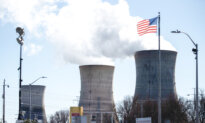

Towns in south of Fukushima Prefecture, within 25 miles of the contaminated nuclear plant, were cutoff until last Monday when the Tokiwa Road reopened. Because of the closure, neither goods, nor reporters were able to reached the people there, and because of radiation concerns, volunteer aid teams had not come either.
Shelter Life
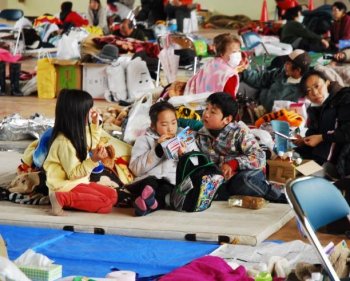
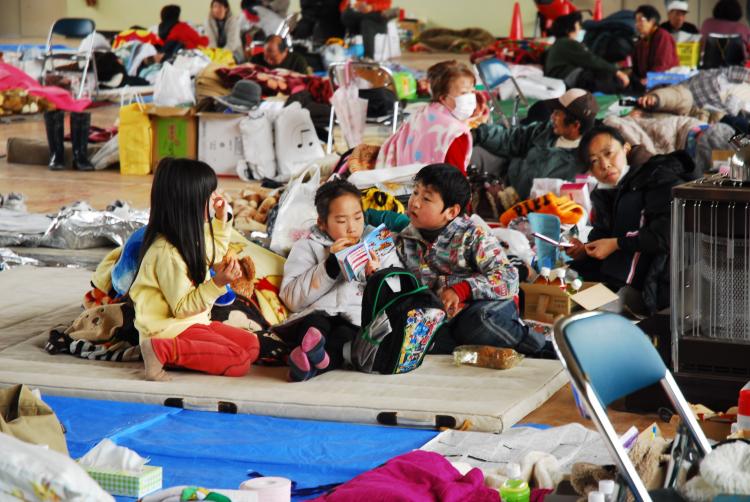
Just 28 miles away from the crippled Fukushima Daiichi nuclear power plant, about 120 survivors now live in a city-owned gymnasium in the southern city of Iwaki, in Fukushima.
With each aftershock, the whole structure of the Taira Gym shakes from the floor to the ceiling with loud cracking noises. It sounds louder at night. One of those sheltered in the gym, Mrs. Yoshiko Date, 65, said, "Each time it shakes, someone shouts loudly. I have been awoken by that scream many times."
Physical comforts are scarce in the shelter, evacuees sleep on the floor with only a few thin layers of felt between their heads and the ground.
And they are cold. Although equipped with a heating system, the shelter is not heated because the surrounding roads have been destroyed and there is no way to bring more fuel oil.
The rough physical conditions are compounding the mental trauma suffered by shelter residents. Illustrating the tensions, one of the evacuees muttered, “Useless heating equipment, which we cannot switch on, makes us feel even colder just by watching it."
Eighty percent of residents in the vicinity of Iwaki still don't have water. It is not easy to wash clothes and other utensils, and staying clean is difficult.
Water is so limited there is not even enough to flush. A notice in the bathroom of the shelter reads, "After using the toilet, put the water in the tank by yourself." Out of disgust, some have people have stopped using the toilet and are trying to avoid drinking.
Even fresh air is becoming a luxury for the disaster survivors. More and more people have stopped going outdoors and people are afraid to open their windows for fresh air. On March 21 it rained all day in Fukushima and Japan’s Nuclear and Industrial Safety Agency warned people to try "not to get wet" to avoid contact with radioactive material in the rainwater.
Volunteer Stress
Human relationships in the shelters are complex as volunteers and evacuees are adjusting to a lifestyle that requires them to share unusual amounts of time and space with strangers.
In their efforts to care for people in the shelters, volunteers and managers are also experiencing their share of stress. One volunteer from another shelter in Iwaki reported that relief aid was being poorly handled and those in charge were not managing things well according to the people in the shelter. Mr. Fukuji Hikariyama, 60, who came from Tokyo to volunteer, said he asked the evacuees in the shelter what they were lacking; they reported dissatisfaction with those managing the shelter. Hikariyama said that people told him that managers "don't deliver food and blankets equally. They don't greet. They don't communicate with people in the shelter."
After asking these questions, Hikariyama, was severely warned by managers and told "not to take actions voluntarily,” because “this would make it more difficult for us to manage," he said. Since then, his movements within the building have been watched closely. Management at the shelter would not comment.
Read More…Uncertain Futures
 Friends Read Free
Copy
Facebook
Tweet
Friends Read Free
Copy
Facebook
Tweet