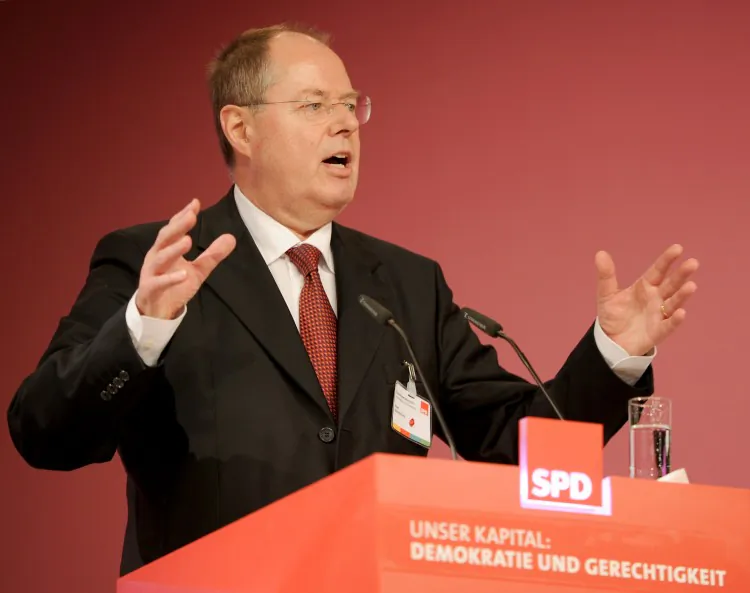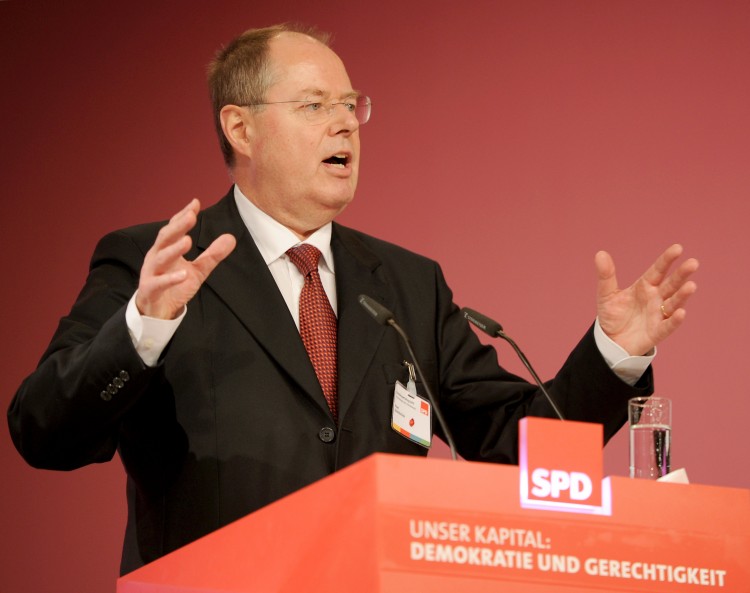

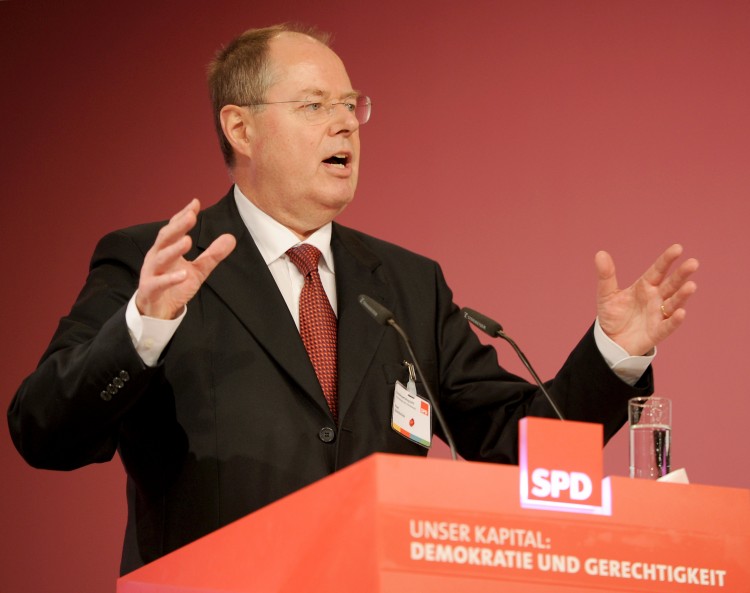
Germany’s main opposition party announced Friday its candidate to run against incumbent Chancellor Angela Merkel in next year’s federal election. Peer Steinbrück is a former finance minister under Merkel and an economic expert.
“Peer Steinbrück is the right candidate and best Chancellor Germany can find,” said Sigmar Gabriel, leader of the Social Democrats (SPD), at a press conference at the party’s headquarters Friday.
In the first government under Chancellor Angela Merkel, the so-called grand coalition between Merkel’s Christian Democrats (CDU) and the SPD, Steinbrück served as finance minister.
He gained some praise from the public for the handling of the financial crisis during his tenure from 2005 to 2009. Additionally, Steinbrück served several state governments as finance or economic minister and had a short stint as the governor of Germany’s most populous state, North-Rhine-Westphalia.
Jens Walther, political analyst from the Heinrich Heine University Düsseldorf, called Steinbrück “a candidate … with whom the SPD has chances to win the elections.”
He considers Steinbrück’s economic and financial expertise and experience an essential asset to his election bid. Walther believes that Steinbrück can “fill the gap of the SPD,” a party which stands traditionally for social justice and labor market policies.
Walther doubts that a social democratic chancellor would be much different in terms of dealing with partner countries on an European level due to “institutional constraints and pressing issues,” in face of the unsolved European debt crisis.
Despite Merkel’s government being characterized by heavy infighting, she has been experiencing high approval ratings for the last consecutive months.
This week, Steinbrück announced several proposals for the regulation of the banking sector. His suggestions included a 200 billion fund coming from mandatory contributions by European banks. It won him some praise from his party left wing.
Steinbrück on Friday made it clear that he will serve only within a coalition with the Green Party, instead of allowing the SPD to become again the junior partner under Merkel.
According to an August poll by Infratest dimap SPD and the greens were several percentage points ahead of the current government, largely due to the weakness of the Liberal Democrats, the smallest coalition partner.
Germans looks dimly into the future even though the crisis has left Germany relatively unscathed. According to an August poll by Infratest dimap, 84 percent of Germans believe that the “worst part of the crisis is has not happened yet.”
 Friends Read Free
Copy
Facebook
Tweet
Friends Read Free
Copy
Facebook
Tweet