
WARSAW, Poland—”I can proudly say that I’m a Pole and a European and that’s why I believe so strongly in our common European future.”
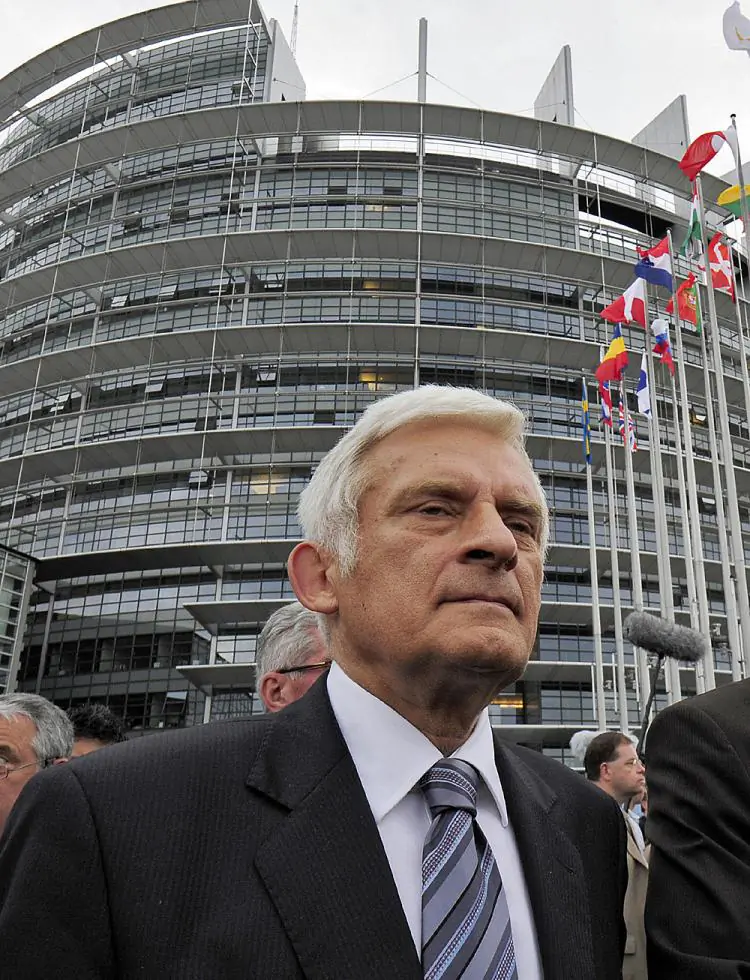
As the eurozone crisis continues to burn hot, not everyone in Poland is as optimistic as outgoing European Parliament President Jerzy Buzek, speaking at the final session of Parliament with him at the helm, just days before the end of his tenure on Jan.17.
Buzek’s words echo the essential vision at the heart of the European Union: the project of increasing confederation and centralization of power in Brussels, while retaining enough sovereignty to allay the concerns of those who fear losing their national identity and the power of self-determination.
“We must never take European integration for granted. We must work at it daily.”
Buzek’s words brought the assembly of the European Parliament to its feet.
While the standing ovation seems an obvious enthusiastic affirmation of the validity of pan-European politics, the professional raison d’être (reason for being) of the assembled members, it also speaks to the no-nonsense will to fight for a project—the European Union—that increasingly many are betting will fail.
“I have a great deal of respect for President Buzek […] particularly for his dedication to the EU. At a time when the Union is being called into question and is under intense attack by, unfortunately, increasing numbers of Europeans themselves, we need people who are committed Europeans,” said Greek Social Democrat Anni Podimata.
According to many of those fighting to keep it all together, like Podimata, Buzek’s presidency has been a job well done in helping keep the whole kit and caboodle on course.
German MEP Michael Gahler hailed Buzek’s concern for human rights issues and democracy in neighboring countries.
“His approach was at once European and Polish. He was sensitive to issues of human rights and democracy in countries adjacent to the EU.”
The following criticism, from Anni Podmata, however, typifies what is probably Buzek’s most widely cited failing—that he was “overly conciliatory.” Translated into realpolitik terms, he basically didn’t put his foot down enough or thump his fist on enough tables.
“Mr. Buzek is a very noble individual, but in the 20 or so EU summits, I would have preferred him to be less polite and speak louder and be firmer in his choice of words when speaking on behalf of the European Parliament,” said Podmata.
So it would appear that Buzek was more of a lover than a fighter.
In terms of numbers, Buzek’s presidency represented several firsts.
For starters, he is the first president to hail from one of the EU’s “new” member states, referring to the biggest ever expansion in 2004, which saw Poland and seven other ex-communist countries join.
Another auspicious first for the incumbent is winning the biggest majority vote of any European Union president since the first direct elections in 1979.
The final illustrious first is that in running for the post of member of the European Parliament back in 2004, he was elected with the largest majority ever of any Polish politician for that post.
Rumors abound in the Polish media as to what’s next for Buzek, who served as prime minister of Poland in the late 1990s and who some commentators expect to see in a race for president of Poland. But so far, he’s keeping his cards close.
Buzek’s firsts may be common knowledge, but what’s next remains shrouded in mystery. Doubtless after Tuesday when and he’s relieved of his duties, we’ll start hearing more about his future than his past.
 Friends Read Free
Copy
Facebook
Tweet
Friends Read Free
Copy
Facebook
Tweet