Away from the limelight, Republican leaders admit that they are not likely to succeed in replacing the Affordable Health Care for America Act—the name for the health care reform legislation that President Obama signed into law last March. For one, they will not control the Senate or the White House in the 112th Congress next January. Republicans also know that key provisions of the health care reform law are highly popular with the public.
Despite the obstacles to repeal, Dean Rosen, chief health adviser to former Senate Majority Leader William H. Frist (R-Tenn.), predicted, “There will be a vote to repeal the law.” Rosen was speaking on a panel Nov. 12 sponsored by the Alliance for Health Reform and the Robert Wood Johnson Foundation, on what the midterm election means for health care reform.
Rosen pointed out that there are about 80 new Republican members in the House, about one-third of the Republican caucus. At least 35 have never held any elected office before, and so there is less restraint on them to go along and accept reality that repeal is impossible, he said.
Rosen predicted there will be a vote in the Senate, where few Democrats may support the repeal, and the President could exercise the veto. Rosen said, nevertheless, the stage would be set to go forward to replace the Democratic president with a Republican president in 2012, saying the next election began Nov. 3. Rosen is a partner at Mehlman Vogel Castagnerri, which represents health care clients.
Repeal is not going to happen, countered Norman Ornstein, resident scholar at the American Enterprise Institute, who is an election analyst for CBS News. But Republicans “can retard progress, you could end up with a showdown with the HHS (Health and Human Services) appropriations bill, and we may see a shutdown…but if you shut down HHS, you shut down all of HHS; you shutdown CMS (Centers for Medicare and Medicaid Services), NIH—You can shutdown a lot of things, but people may not find that very comforting.”
Ezra Klein raised the disturbing scenario in the Washington Post on Nov. 1, whereby the Republicans refuse to pass any appropriations bills to fund the health care law and President Obama refusing to sign any appropriations bills that don’t fund the bill. A government shutdown would then seem inevitable.
Ornstein said that Republican leaders remember the shutdown of 1995, which hurt their standing with the public. They may not want a shutdown to happen, but “not be able to control the new [Republican] members coming in who are expected to take a meat ax to the program,” he said. 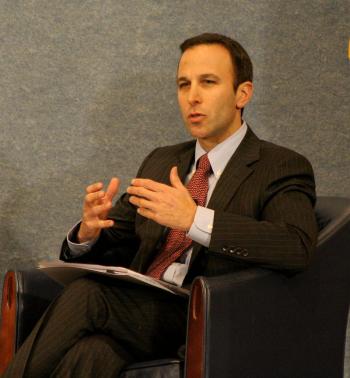
Both Republican Rosen and Democrat-leaning Ornstein are agreed that there will be a lot of oversight hearings. Both expect to see HHS Secretary Kathleen Sebelius, and Dr. Donald Berwick, director of CMS, to be called to the House repeatedly to justify their programs.
Election Mandate?
“I don’t think this [election] was a mandate to reform health care, but on the economy,” said John Rother, Executive Vice President of Policy, Strategy and International Affairs for AARP. This interpretation of the voter’s intent is strongly supported by a Fox news exit poll on House elections, which asked more than 8,700 voters which of four issues was the most important facing the country. The choices were the war in Afghanistan, health care, the economy, and illegal immigration. The economy was chosen by 62 percent of voters. Health care was a distant second with 18 percent.
The Kaiser Health Tracking poll, conducted just days after the election, used a different methodology but came to the same conclusion. It let its 1,502 respondents—voters and non-voters—use their own words to describe their views on the issues. Health care was mentioned much less often as a factor influencing them than the economy and jobs.
“I think it is easy to over interpret the election results and, for some reason, over dramatize its potential impact on health care reform,” said Rother, who was staff director and chief counsel for the Special Committee on Aging under its Chairman, former Senator John Heinz (R-Penn.).
“Most voters say they are confused by health care [reform] and what is in the Act that would affect them. Many messages in the campaign were designed to scare people, especially seniors,” said Rother.
Supporting Rother is a national survey of seniors in July, sponsored by the National Council on the Aging, which found that most seniors are confused or unaware of important aspects of the new law. For example, 42 percent of seniors believe incorrectly that the new law will cut basic Medicare benefits; 27 percent said they did not know. Only 22 percent understand that their basic Medicare benefits will not be affected.
Nearly half (49 percent) incorrectly believe the new law would increase the deficit. Only one in seven (14 percent) was aware that the health care reform act is projected to reduce the deficit, based on projections by the Congressional Budget Office.
Most Components of Health Care Reform Law Popular
Several key provisions of health reform remain popular, even among those who support repeal of the law. According to a Kaiser Family Foundation (KFF) Health Tracking poll in August, large majorities become more favorably disposed towards the law when told about the following provisions: eliminating pre-existing condition exclusions for children (72 percent), providing tax credits to small businesses (71 percent), limiting insurance companies from withdrawing coverage (68 percent), and closing the Medicare prescription drug “doughnut hole” (64 percent).
The public is generally in favor of “providing subsidies to low and moderate income Americans in need of coverage,” (76 percent), says KFF, and expanding Medicaid (71 percent).
The mandate that has the most unfavorable view by the public is the requirement for all Americans to have health insurance or else pay a fine (70 percent).
However, opposition to the individual mandate is “somewhat malleable,” says KFF. When told that without the requirement, insurance premiums would rise substantially, the number remaining unfavorable is reduced to 50 percent.
On the other hand, when respondents, who were favorable to the requirement (27 percent), were told that some people would find it too expensive or did not want it, the number unfavorable declined to 13 percent.
The Alliance for Health Reform says it favors the dual objectives of “extending health coverage to all Americans and containing health care costs, while not advocating any particular blueprint for changing American health care.” A non-partisan, non-profit group, “the Alliance for Health Reform is committed to the education of journalists, elected officials and shapers of public opinion, helping them understand the causes of the nation's health care problems and the tradeoffs posed by various proposals for change,” says its website.
 Friends Read Free
Copy
Facebook
Tweet
Friends Read Free
Copy
Facebook
Tweet