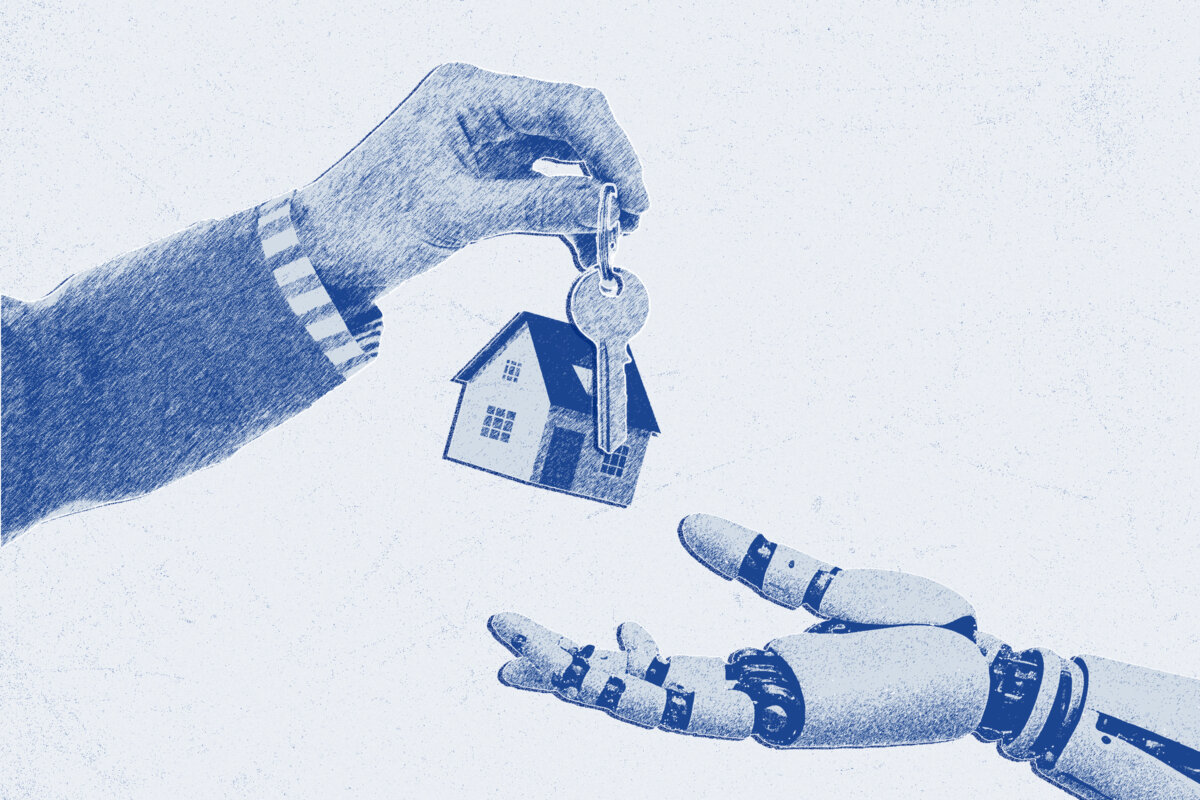

The path to homeownership has always had hurdles, but artificial intelligence is breathing new life into an old real estate scam: closing fund fraud.
Convincing digital mimicry, such as deepfake audio and documents, is pushing real estate, title, and mortgage professionals to rethink how they verify anyone involved in high-stakes transactions.
Americans lost more than $20.8 billion from cybercrime last year. Losses from real estate fraud surpassed $275 million, up from roughly $173 million in 2024, according to the FBI’s 2025 Internet Crime Report.
The agency also received more than 22,000 AI-related fraud complaints, with the related losses exceeding $893 million.
“I have personally encountered an attempted fraudulent listing where an individual represented themselves as the legitimate property owner,” Michael Kelczewski, a real estate broker and mortgage loan originator with MAK Realty, told The Epoch Times.
Kelczewski said the fraudster provided ID and supporting legal documents that appeared credible at first, but were later discovered to be AI-generated. The person also used AI-enabled technology to mask his or her real identity during communications.
“As the transaction progressed, inconsistencies began to emerge, and we increased the level of verification rather than accepting the information at face value. Ultimately, the listing attempt was determined to be fraudulent, and law enforcement became involved,” Kelczewski said.
“These schemes are no longer necessarily obvious or unsophisticated. Someone can present a fairly convincing package of identification, documents, and communications.”
The American Land Title Association says on its website that real estate fraud is “no longer confined to wire scams or last-minute payoff changes,” but rather “increasingly embedded inside legitimate transactions, carried out by individuals impersonating real buyers, sellers and property owners.”
Jeremy Olsher, a real estate broker associate at Mizner Residential Group, is also troubled by how AI technology is undermining methods people have traditionally used to verify interactions.
“Hearing a familiar voice on the phone or seeing someone’s face in a video is no longer a guarantee that we can trust our ears and eyes,” he told The Epoch Times.
Identifying Vulnerability
Olsher pointed out that the tools needed to create convincing, synthetic content have become “cheaper and easier to access.”
“The most dangerous situation is receiving a request to send money or change payment instructions. No email, text, or phone call alone is proof that new wiring instructions are legitimate,” he said.
When payment details suddenly change, Olsher said this is the cue to pause before proceeding.
“Verify the payment details through a trusted contact using information obtained independently,” he said.
Real estate agent Colby Hager, owner of Commission Cash Back, identified a specific moment in a real estate deal that’s a prime opportunity for an AI-powered scam.
“The vulnerable window is the stretch between contract and funding, not the closing table itself. That’s when payment instructions get emailed around, and nobody is in a room together like at closing,” Hager told The Epoch Times.
That said, he believes the entire process of transferring money has become a bit of a catch-22 scenario.
“Every verification method we fall back on assumes the channel itself is trustworthy. Call the number on the email. Confirm on a video call. Match the ID. If someone can generate the voice or the face, calling to verify is just asking the fraud to confirm itself,” Hager said.
CertifID noted in its 2026 State of Wire Fraud report that 22 percent of U.S. homebuyers receive fraudulent communications. The highest number of suspicious real estate communications occurred in the American West, at 26 percent. States in the U.S. South came in second, with nearly 24 percent of consumers reporting suspicious communications.
Nevada and Florida were the two highest-risk states for potential real estate wire fraud last year.
Kelczewski said vacant and investment properties are key targets for tech-savvy criminals.
Difficult Recovery
Some attorneys say financial recourse can be a quagmire.
“I’ve advised on real estate wire fraud matters where the instructions came from what appeared to be the title company, down to a follow-up phone call in a voice the buyer recognized. The funds were gone within hours,” Braden Perry, a partner at Kennyhertz Perry LLC, told The Epoch Times.
Perry said recovery in these kinds of cases gets harder every day the money sits in a “mule account.” This refers to a bank account used by criminals to receive, hold, and transfer illegal money disguised as legitimate property transactions.
“The pattern I see now is layered impersonation: a spoofed email plus a cloned voice to confirm it. That combination defeats the exact safeguard people were taught to use,” he said.
Perry said AI has industrialized what used to be a “manual con.” But while wire fraud at closing has been around for years, he said the “old red flags” that exposed a phony—like bad grammar and odd phrasing—are long gone.
“Buyers are wiring six figures based on instructions that look and sound exactly like the people they trust,” he said.
Perry thinks last-minute changes to wiring instructions should be treated as fraud until proven otherwise. “Legitimate title companies rarely change instructions at the eleventh hour,” he said.
The spike in AI-related fraud is being driven partly by the increased availability of tools for executing convincing deceptions, but also by the lack of technical know-how to stop it.
According to the deepfake detection company DuckDuckGoose AI, it takes only three seconds to build an 85 percent voice match for a selected target, and a single photo can be used to create a real-time face swap with basic open-source tools.
In 2018, it took machine-learning and coding expertise to pull off a successful AI deepfake scam. Now all someone needs is a browser app, and the aspiring criminal can have convincing documentation within an hour.
Perry said an important part of catching the thief before any money is lost means taking the time to do extra checks. “Fraud works because closings are stressful and rushed. A five-minute phone call can save your life savings,” he said.
Deloitte estimated that AI-enabled fraud losses could top $40 billion in the United States by 2027.
For Kelczewski, the main concern is that transaction values are extremely high relative to the cost of mounting an attack.
“Even if most attempts fail, one successful fraudulent closing or diverted wire transfer can generate an enormous return for the attacker,” he said. “That economic incentive, combined with increasingly accessible AI tools, makes stronger verification procedures increasingly important throughout the industry.”
 Friends Read Free
Copy
Facebook
Tweet
Friends Read Free
Copy
Facebook
Tweet