Commentary
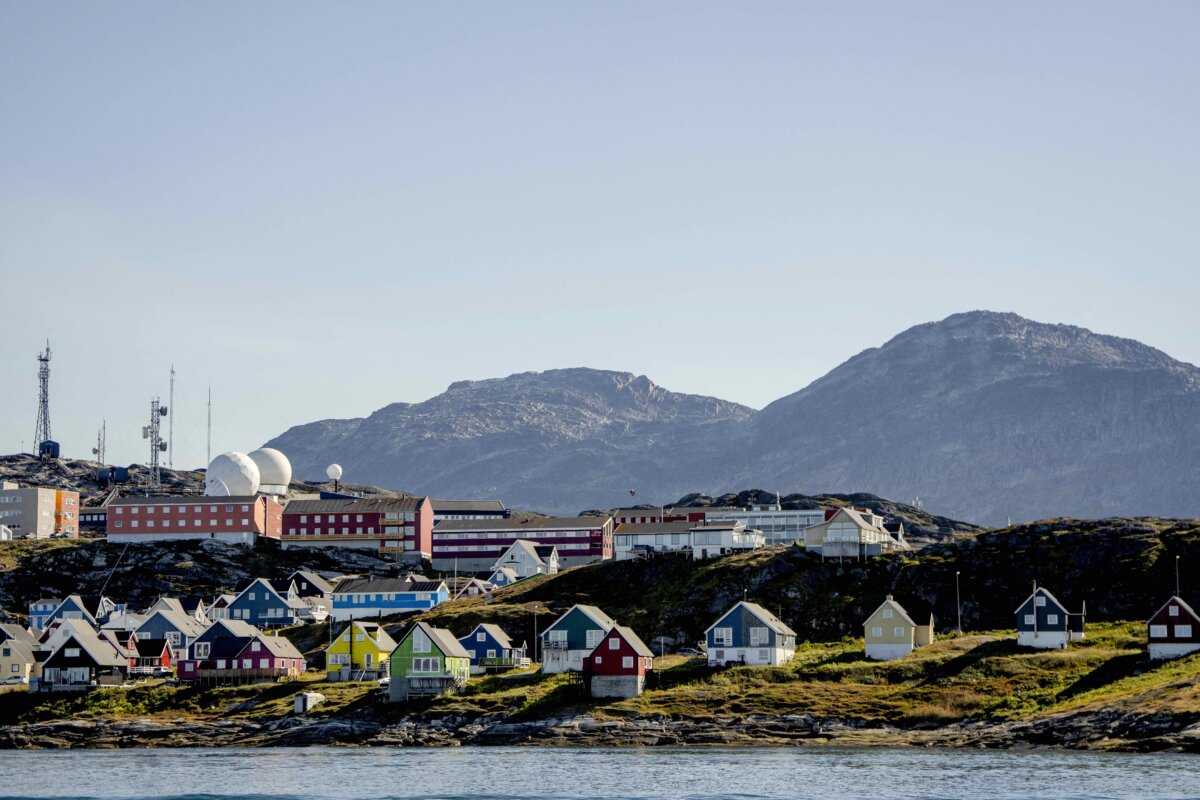
The announcement of agreed terms for an arrangement between Denmark, Greenland, and the United States is unambiguously good news for the Western Alliance. All the bluster about the United States resorting to force to protect its own national security if the Danes and Greenlanders (who are partially but imprecisely self‑governing) rejected its claim to safeguard NATO’s—and particularly America’s—interests in the Arctic and in Greenland’s potentially important strategic mineral resources was absurd.
It is not entirely clear to what extent Greenland is self-governing, but it has been evolving majestically in that direction over a very protracted schedule. After a Norse background, Greenland became a Danish colony and the Danes imposed their language on the overwhelming ethnic group on the island: the Greenlandic Inuit.
In 2008, after having been a county of Denmark, Greenland reestablished itself as a self-governing and autonomous territory within the Kingdom of Denmark. It has a population of approximately 57,000 and is the world’s largest island. The entire GNP of the island is less than $5 billion, and a fifth of this consists of grants from Denmark. But Denmark has received concessions to the island’s mineral resources, and it is forecast that the grant from Denmark will gradually disappear, but the revenue from Danish exploitation of Greenland’s resources will replace and ultimately exceed that amount.
The United States offered to buy Greenland from Denmark in 1946 for $100 million, 50 percent more than it paid Russia to buy Alaska in 1867. The Danes declined the offer, and the Americans maintained a couple of military bases in Greenland. But the rise of Russia’s and China’s naval power and more sophisticated icebreakers and submarines capable of navigating safely and for lengthy periods under the polar ice cap have steadily increased the security importance of Greenland. The Trump administration, and the president himself, made it abundantly clear that in the current international security circumstances, the status quo was completely unacceptable and constituted a menace to the security of all NATO countries, in particular the North American neighbors. The United States was not prepared to abide this state of affairs.
An astonishing amount of nonsensical sabre-rattling—unprecedented in NATO history—was conducted, and the French, German, and British leaders climbed onto their soapboxes and implied that they would help defend Greenland militarily against the United States. President Trump never said anything about a state of war within the alliance; he only hinted that the United States would take the measures necessary to extend the comprehensive antimissile defense system it is building to Greenland and that while it would prefer to negotiate such things, it would if necessary unilaterally establish support facilities for its Arctic Ocean submarine fleet in Greenland.
Denmark has not stirred itself to such paroxysms of bellicosity since the Prussian-Danish War of 1864, in which Bismarck seized Schleswig-Holstein from the Danes by force. This put an end to a system of shared rule so complicated that the great British foreign policy mastermind Viscount Palmerston, who was secretary at war for 15 years, foreign secretary for 15 years, and prime minister for nine years, and who negotiated the arrangements famously said: “Only three people have ever really understood the Schleswig-Holstein business–the Prince Consort, who is dead–a German professor, who has gone mad–and I, who have forgotten all about it.”
Denmark was neutral in World War I, and was occupied in one day in World War II when German soldiers emerged from the holds of freighters in Copenhagen harbor and took control of all the key points in the capital, including the Royal Palace. Denmark did join NATO, but never had an even slightly significant military establishment. One of the country’s prominent left-wing parties famously campaigned for a decade on the proposition that Denmark’s defense budget should be eliminated and replaced by a recording at the Defense Ministry’s telephone number stating in Russian and other European languages: “We surrender.”
From these 160 years of pacifism, it was astounding and not altogether credible to hear Danish cabinet officials and foreign service officers virtually shaking their fists at the great United States of America. It was even more astounding when, during a speech in the European Parliament in Strasbourg in January 2025, a Danish lawmaker used profanity to tell Trump to back off on his push to acquire Greenland.
Contrary to many expectations, Trump took no notice of this cavernous lapse in the diplomatic niceties. History could be ransacked to find an occasion where a politician representing so diminutive and defenseless a group as the 57,000 Greenlanders shouted such strictures before an audience of the whole world at the most powerful and famous person in the world, set at the head of a nation of 350 million people producing a GDP of $32 trillion, disposing armed forces of undreamed-of formidability, and who possesses the ability to occupy all relevant parts of Greenland in one hour with the high likelihood of not sustaining a single casualty.
It is objectively a good thing and very reassuring as well that discussions were then conducted by appropriate officials towards an agreement that benefits all parties. Of course, Denmark and Greenland must remain in the Western Alliance, and they cannot seriously imagine for an instant that seeking the suzerainty of the Russians would either be progress or acceptable to their NATO allies.
Obviously, the United States must anchor its antimissile defenses for the benefit of the whole alliance in such a strategically placed island as Greenland, and of course all the NATO allies must do their part, subordinate though it will be, in defending the Western Alliance’s interest in the Arctic. The details of the agreement have not been published, but it is understood that non-NATO countries will have no access to Greenland and that the United States will be offered, at a market price, first access to the island’s strategic resources.
Finally, the agreement shows that however belligerently President Trump speaks at times—though in this case he was temperate compared to the Danes and Greenlanders—the goals he espouses are not unsound and his methods of attaining them, jangling though they are, are apt to be successful.
We may reasonably hope that there will be a similar outcome to the trade discussions with Canada, where absurdly exaggerated references to commercial wars have been bandied about, but what is actually being sought, on the one side and the other, seems neither unreasonable nor irreconcilable. We will know that Prime Minister Carney is becoming overwrought if he starts screaming four-letter words at Trump as part of his parliamentary repertoire. The Greenland agreement should fortify our confidence that it will not come to this.
Views expressed in this article are the opinions of the author and do not necessarily reflect the views of The Epoch Times.
 Friends Read Free
Copy
Facebook
Tweet
Friends Read Free
Copy
Facebook
Tweet