Amid the excitement and heartbreak of the London 2012 Olympic Games, it’s easy to forget that someone has to foot the bill.
Hosting the Olympics can be a source of pride and an opportunity to rejuvenate a lagging city. However, the two-week worldwide party costs billions to build and operate. It’s something Canada knows a little about, having hosted three Olympic Games.
A Goldman Sachs report titled “The Olympics and Economics 2012” commended London for completing the infrastructure on time and below the 2007 budget. However, its £8.5 billion (C$13.3 billion) budget is still almost triple the initial estimate of £3 billion (C$4.7 billion).
The report suggested London could benefit more from its Games than Beijing, Athens, or Sydney, which had strong economies at the time.
Bruce Kidd, professor at the Faculty of Kinesiology and Physical Education at the University of Toronto, honorary member of the Canadian Olympic Committee, and a former Olympian, also had positive predictions for London.
In an email interview with The Epoch Times, he wrote that Olympics spending has “a mild stimulus on an economy in recession.”
However, for Kidd, the “most important investment” is the cleanup of London’s polluted areas, on which the Olympic Park is built. The cleanup would “[bring] back a massive chunk of the city for a healthy future.”
Montreal, disaster remembered
Canada’s Olympic hosting history has an uneven track record. Montreal is seen as the financial disaster, Calgary as the resounding success, and Vancouver looks to have learned from previous Games.
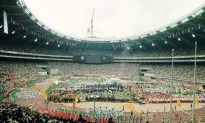
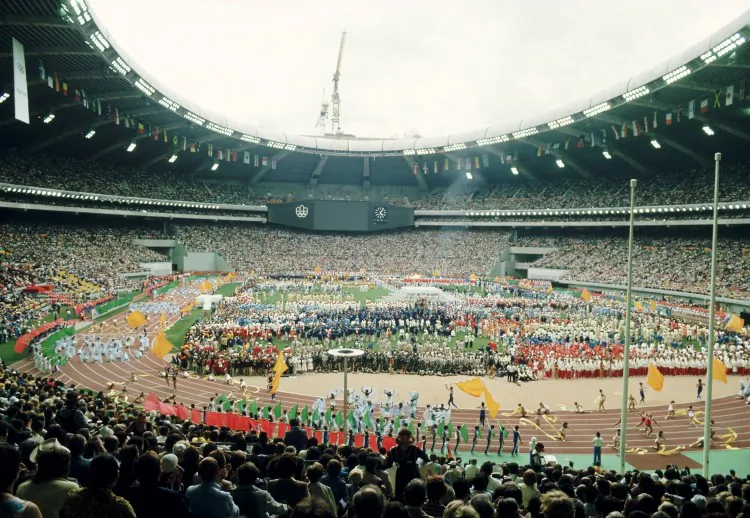
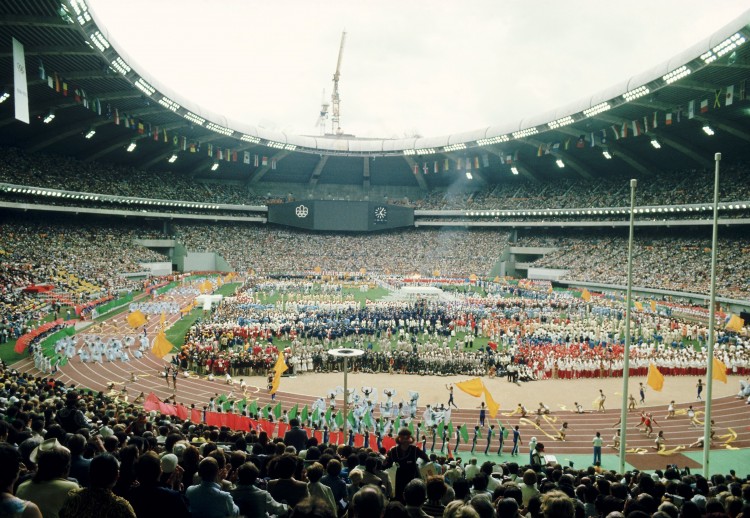
The 1976 Summer Games in Montreal landed Quebec with a 30-year debt that totalled $1.5 billion for the infrastructure. The tower and the stadium roof were not even completed on time for the Games, and were only finished 11 years later.
Kidd called the Montreal Games a “complicated” tale. “The Games actually made a profit on the operating budget and pioneered many forms of sponsorship we now take for granted,” he said.
However, the downside was the enormous capital cost, which Kidd blamed on “bad planning, corruption, an over-inflated economy, and the demands of the [International Olympic Committee (IOC) and international federations] for lavish facilities.”
Looking back on it, Kidd said some of the facilities have been used well, and credited them as “one of the reasons so many Quebec athletes have become successful Olympians.”
In a paper for the IOC’s Olympic Studies Centre, Kidd noted, Quebeckers went from claiming 2 percent of the places on Canadian Olympic teams prior to 1976 to 25-35 percent currently.
Everyone remembers the financial disaster of Montreal’s Games because of the Olympic tax imposed by the Parti Quebecois which came into power after the Games, he said.
Robert Barney, professor emeritus at the School of Kinesology and founder of the International Centre for Olympic Studies at the University of Western Ontario, called Montreal “one of the more vigorous examples of over-expenditure.”
While he mentioned the Olympic Park’s current function as a tourist site and a host for shows and trade fairs, he emphasized the monetary cost to Quebec taxpayers.
According to its 2011 report, the Olympic Park earned $16 million in self-generated revenue and $17.9 million in funding from the Quebec government. Expenditures were around $41.4 million.
Lessons learned in Calgary?
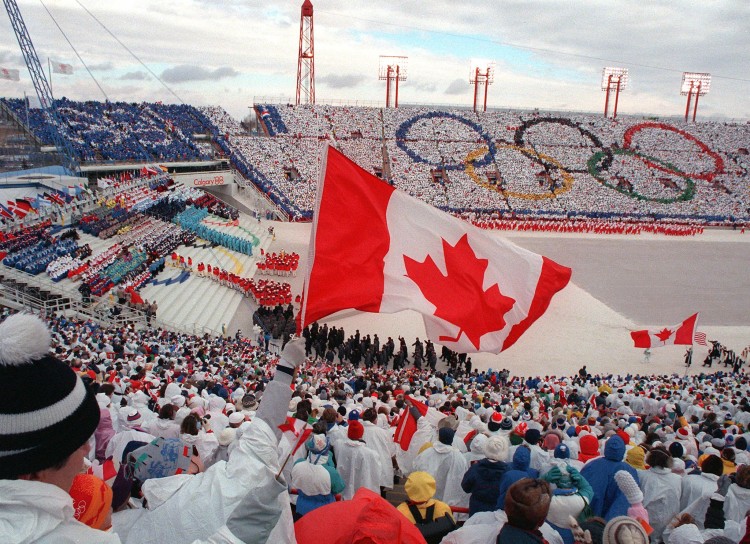
The Calgary Winter Games in 1988 are seen as a complete turnaround from Montreal, delivering a profit on the operating budget and creating facilities that continue to be used by both professional athletes and the general public.
The Calgary Olympic Development Association (CODA), which bid for the Winter Olympics, never dissolved. Instead, CODA changed itself into WinSport Canada, an organization dedicated to maintaining Calgary’s Olympic Park and developing Olympic athletes.Calgary, through its hosting prestige or its facilities, also may have transformed Canada into a top player in the Winter Games. Since Calgary, Canada’s medal count in the Winter Games has risen every year.
Kidd said Calgary “learned enormously from Montreal’s mistakes.” Calgary also benefitted from the recession going on at the time, which turned investments into economic stimuli.
Barney, however, said that Calgary’s “profit” only happened because the organizers counted “the money they [got] from the various levels of government” as revenue; they did not count the money as expenditure, which it would be from the taxpayers’ perspective.
Once that money is factored in, no Olympic Games has ever made a profit, Barney said.
The Goldman Sachs report agreed with Barney’s assessment. While several Games made profits under their reporting parameters, “if one fully accounts for all of the costs related to hosting a Games, it is questionable whether an Olympics ever truly makes a profit,” the report said.
Vancouver: Verdict still uncertain
In its final report, the Vancouver Organizing Committee for the 2010 Olympic and Paralympic Winter Games (VANOC) said that it broke even in operational finances. Revenues totalled $1.884 billion, equalling costs. Government contribution accounted for just 9 percent of revenues. However, this does not include infrastructure costs.
Vancouver’s expenditure on athletic facilities could be considered pragmatic, as the Richmond Olympic Oval was the only thing built from scratch.
Barney called Vancouver “one of the exceptions” in this regard, as most host cities build expensive and ultimately underused sports facilities.
The VANOC report says that expenditure on athletic venues came to $603.3 million, of which the British Colombia and federal governments each provided $290.0 million. The rest came through other means, such as sponsorship.
This number does not include, for instance, the upgrades to transportation. It is debatable whether those costs should be included as part of the Olympics, or if they were ventures that would have been developed anyway down the road.
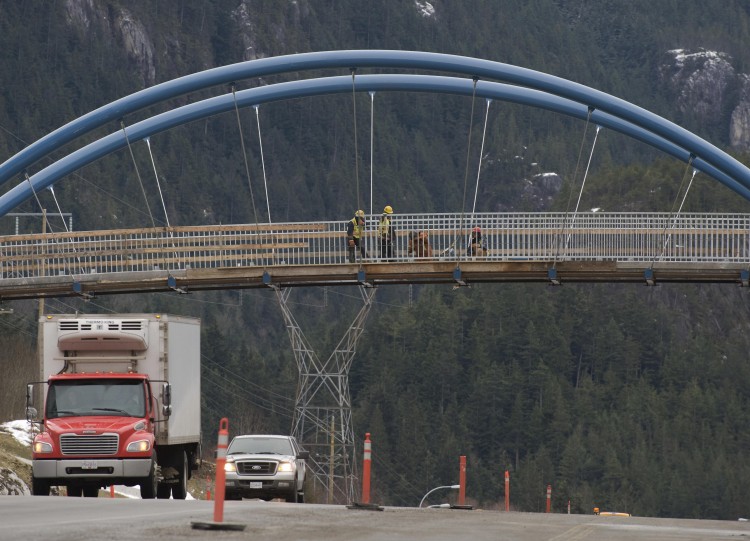
Vancouver’s Games were used to spur investments in an improved highway to Whistler, an extension of the SkyTrain, costs not included in the above figure. The Games also left Vancouver with a new convention centre.
In his paper, Kidd argued that these upgrades benefited the city.
However, he is uncertain if the Olympic facilities will remain “accessible and sustainable,” or if hosting the games would inspire funding and interest in sports.
Nature of investments determines success
Kidd said there is “no general rule” about the impact of hosting the Games. “Overall economic impact … is determined by the wisdom of infrastructure investments and economic context.”
Barney supported investment in things that “serve the urban population,” such as transportation, communication, security, and environment. “These are the big gains for the host cities,” he said.
“The downside is the investment in the athletic facilities,” he added. Because host cities “consistently” cannot operate and maintain these facilities at the pace required to make money, they turn into “white elephants” rather than profit.
He gives Athens as an example. Hosting the Games gave the city an opportunity to upgrade its decrepit transportation system, making a “tremendous improvement in mass transit.” By contrast, its athletics facilities lie abandoned despite how much the city spent on them.
While people talk about “lasting legacy” and “use by urban population,” those things are hard to measure, Barney said. What can be measured is the athletics facilities’ “drain on the public purse.”
Though he called the Olympics a “great movement” that brings people together and offers inspirational stories, Barney found them abysmal in economic terms. “I hate to sound negative, but I am negative on this particular point, as much as I love the Olympics,” he said.
With files from Matthew Little
The Epoch Times publishes in 35 countries and in 19 languages. Subscribe to our e-newsletter.
 Friends Read Free
Copy
Facebook
Tweet
Friends Read Free
Copy
Facebook
Tweet