



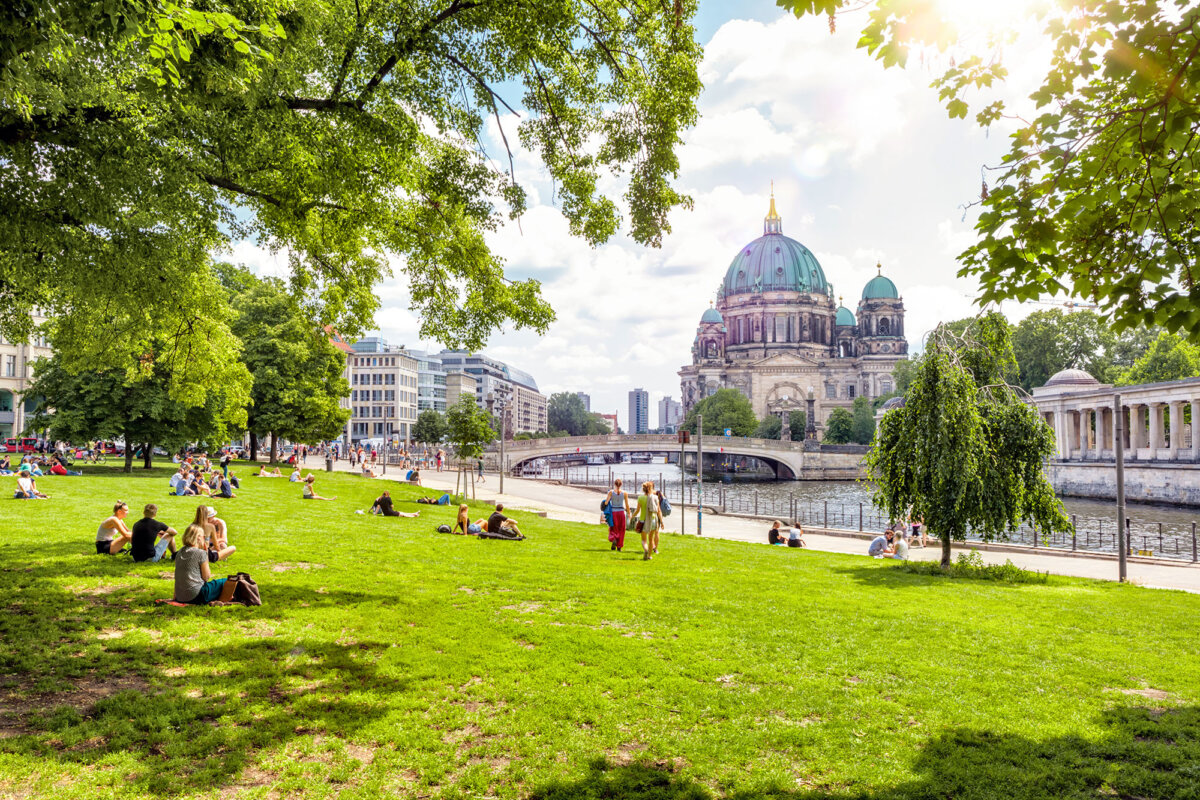
My first visit to Berlin was a quarter-century ago, the final stop on a whirlwind, whistle-stop Eurail pass tour of Europe. After devouring tapas and swimming the beaches of Barcelona, winding through the back lanes of Montmartre, seeing the Seine and the sweep of the city from the steps of Sacre Coeur in Paris, and riding the vaporetto down the Grand Canal in Venice, Germany’s capital just seemed … underwhelming. Weird, actually.
I was traveling with my best friend, and we asked each other, “What is this place?” Yes, we understood that the city sustained heavy bombing during the Second World War and had been essentially rebuilt from the ground up. But a hollow-tooth church? Modern buildings that lacked that historical patina of Notre Dame or Saint Mark’s Basilica? All of it under the gaze of the strange (ugly) TV Tower? Well, we didn’t like it.
But after decades and more than a dozen visits later, Berlin has become one of my favorite cities in the world. And here’s the thing: Many of the reasons we had that less-than-impressed first experience are why I love it today. This is a place unlike any other on earth.
History, especially the 20th century, shaped and reshaped Berlin. The city was founded in 1237 and served as the capital of both Prussia and the German Empire. It was the heart of the evil Third Reich and then, after the Second World War, was sliced into zones. Then it was divided by a very famous wall, with very different development and lives lived on each side. Freedom on one, communism on the other. More recently, a post-Cold War reunification has added a fascinating new chapter to the story.
Diverse and dynamic, the weird here is actually wonderful—especially when you know how to explore it all.
A Complicated Airport Situation
People headed on a German vacation often wonder why they can’t just step onto a plane in Chicago or New York and fly nonstop to Berlin. After all, isn’t this the country’s capital? But that unique Cold War history affected the development of modern aviation here.
After World War II, the Allied powers divided Germany into occupation zones, with Berlin falling within the territory of Soviet-occupied East Germany. As a result, the seat of Germany’s national power was moved to the city of Bonn, and international airports developed and grew in other important—and firmly West German—cities. This is why Frankfurt (FRA) and Munich (MUC) remain the two main airports into the country.
Things are slowly changing. Brandenburg Airport Willy Brandt (BER) opened in 2020 and is glassy, bright, and airy—a pleasant place to land. A small handful of seasonal, nonstop routes are being established from North America, which is a welcome development to help travelers avoid the usual mayhem of FRA.
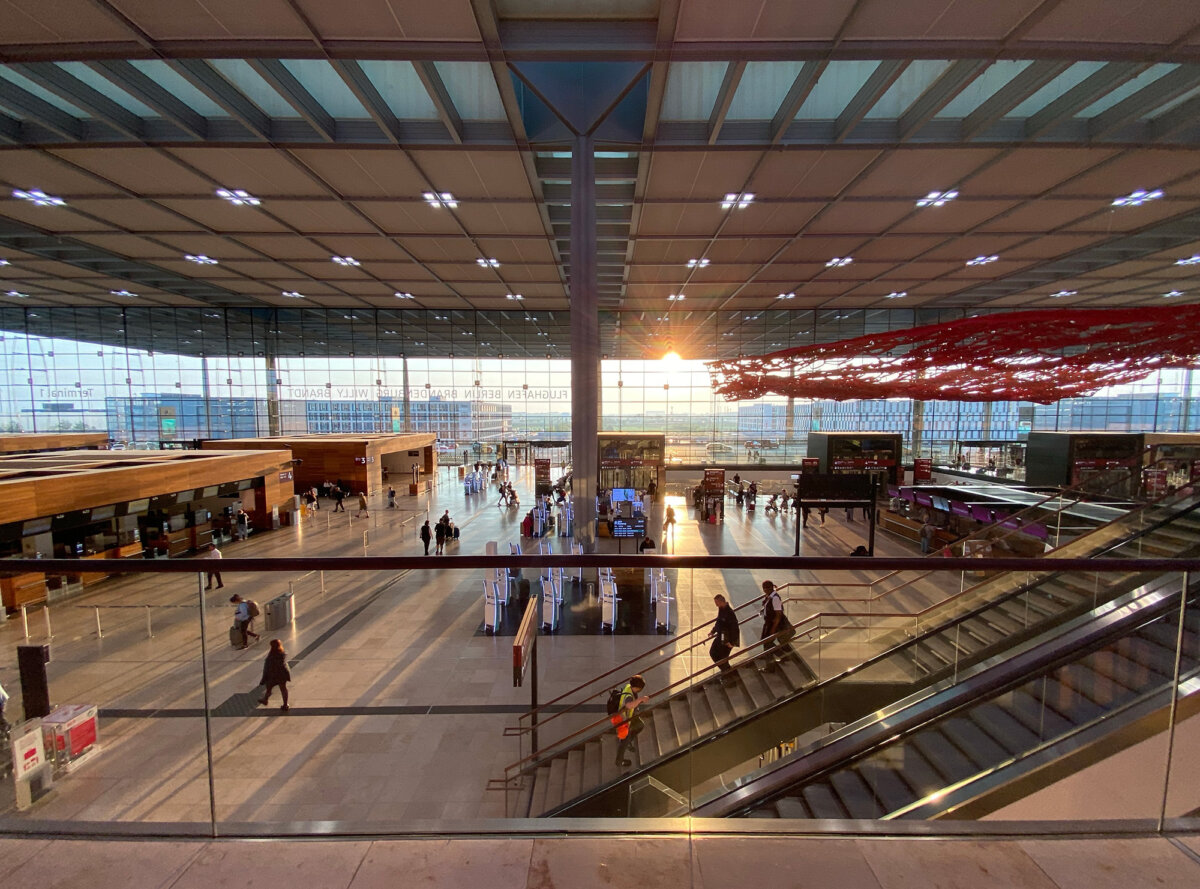
BER is well-connected to most major European capitals, so at most, you might be looking at a single connection. Once you land, things get easier. The airport is relatively close to the city center. A direct light-rail link on the S-Bahn will get you to the Brandenburg Gate (or other spots in the heart of town) in about half an hour.
Walk the Berlin Wall
So much of Berlin’s recent history was defined by the 27-mile wall that long divided the eastern and western halves of the city. Looking back, it’s remarkable to reflect on the fact that within one city, two entirely different worlds existed: To the west, an affluent, well-functioning (and well-fed) society. And to the east, heavy surveillance by the dreaded Stasi secret police and chronic shortages, meaning empty shelves and long queues for basic staples like bread and coffee.
Images of the Berlin Wall’s fall—and the outright and unrestrained jubilation its demise inspired—are indelible. The wind of change had finally blown away the Eastern Bloc. People sprayed champagne and let off fireworks. They (somehow) climbed up the nearly 12-foot wall to the top, raising hands in victory.
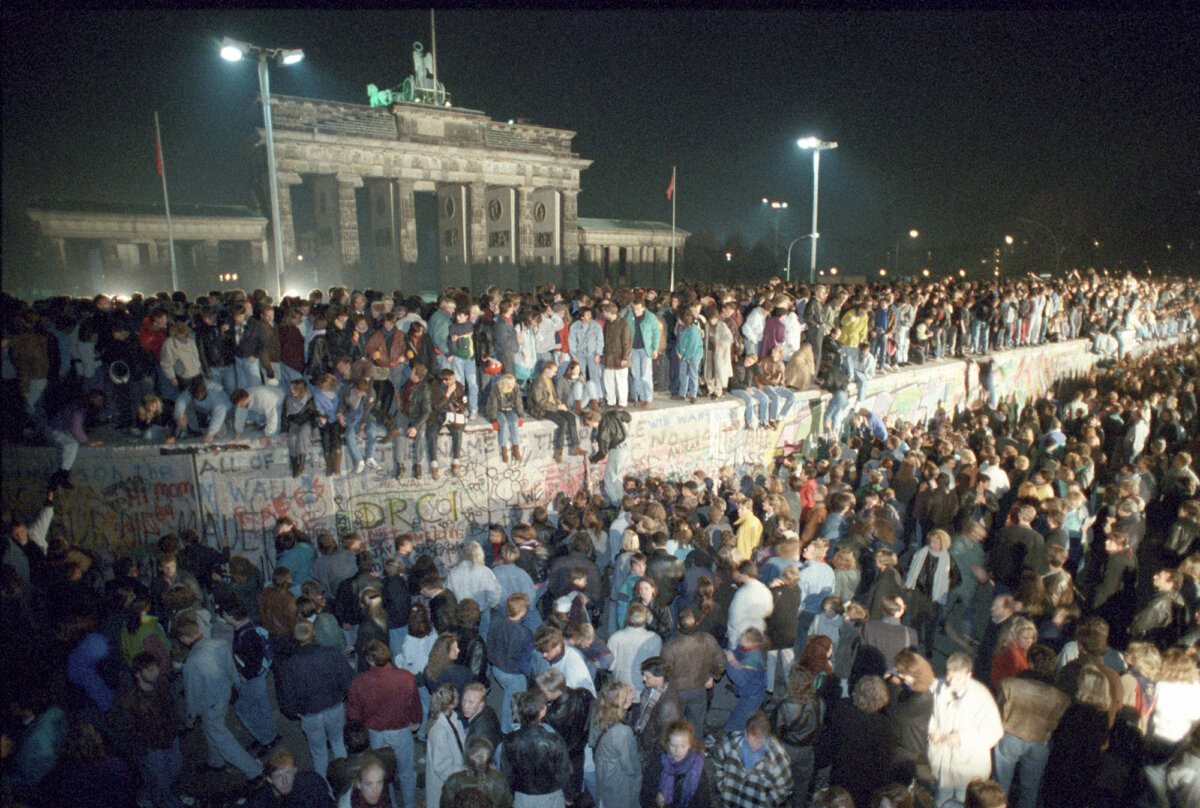
They also hacked off chunks of it as whole sections started to come down. I was a less-sophisticated traveler on that first backpacker visit to Berlin and bought a chunk of rock from a guy claiming it had actually been part of the Wall. Looking back, I’m now fairly certain it was just a random rock from his backyard that he spray-painted purple with a can from his basement.
Anyway, it’s definitely an interesting and instructive experience to retrace part of its course, starting at the (in)famous Checkpoint Charlie. This was the most common crossing point between East and West Berlin and the most globally visible gate through the Iron Curtain. The guardhouse that now stands on the spot is a reconstruction of the one that stood there in 1961.
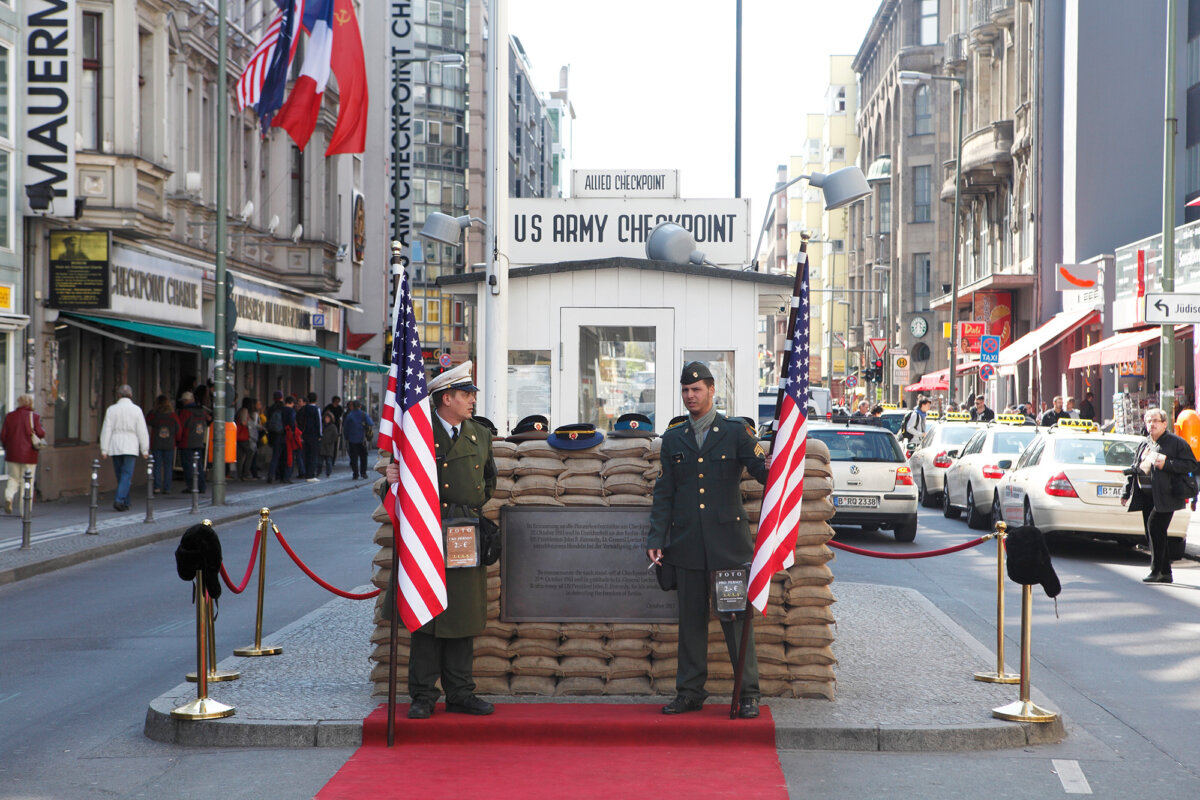
There’s plenty of touristy stuff around it (including even a Hard Rock Cafe shop), but I was enchanted by a small, free museum just a few steps away. Called the BlackBox Cold War Exhibition, it explains how the Checkpoint changed over the years and its impact on the city. It also honors the desperate East Berliners who lost their lives trying to escape, whether through the Checkpoint or in other ways.
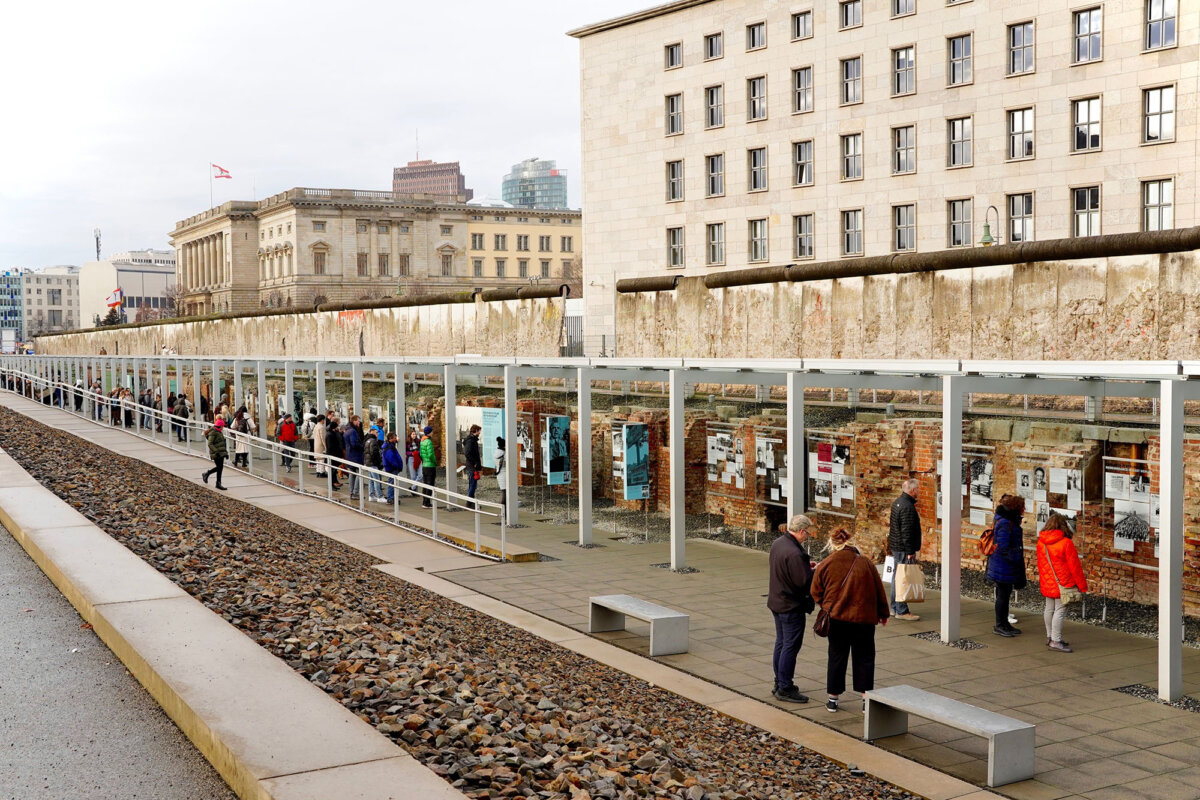
Two remaining sections of the wall stand nearby. One is a small stretch about 130 feet south of the guardhouse. There’s a longer length of the inner and outer wall at a museum called Topography of Terror, about a five-minute walk west, down Niederkirchnerstrasse. Visiting the museum is also worthwhile, but take a deep breath and steel yourself before going inside. This imposing building was once home to the SS and Gestapo leadership and retells some very dark history.
The longest remaining section of the wall was turned into the East Side Gallery. A total of 118 artists from 21 countries have decorated it with bright paintings celebrating freedom and democracy. It’s been preserved as a national memorial and is worth a visit. Look for the mural of a Trabant, the notoriously awful East German automobile, “breaking” through the Wall.
Try the Curry Wurst (Trust Me, It’s Good)
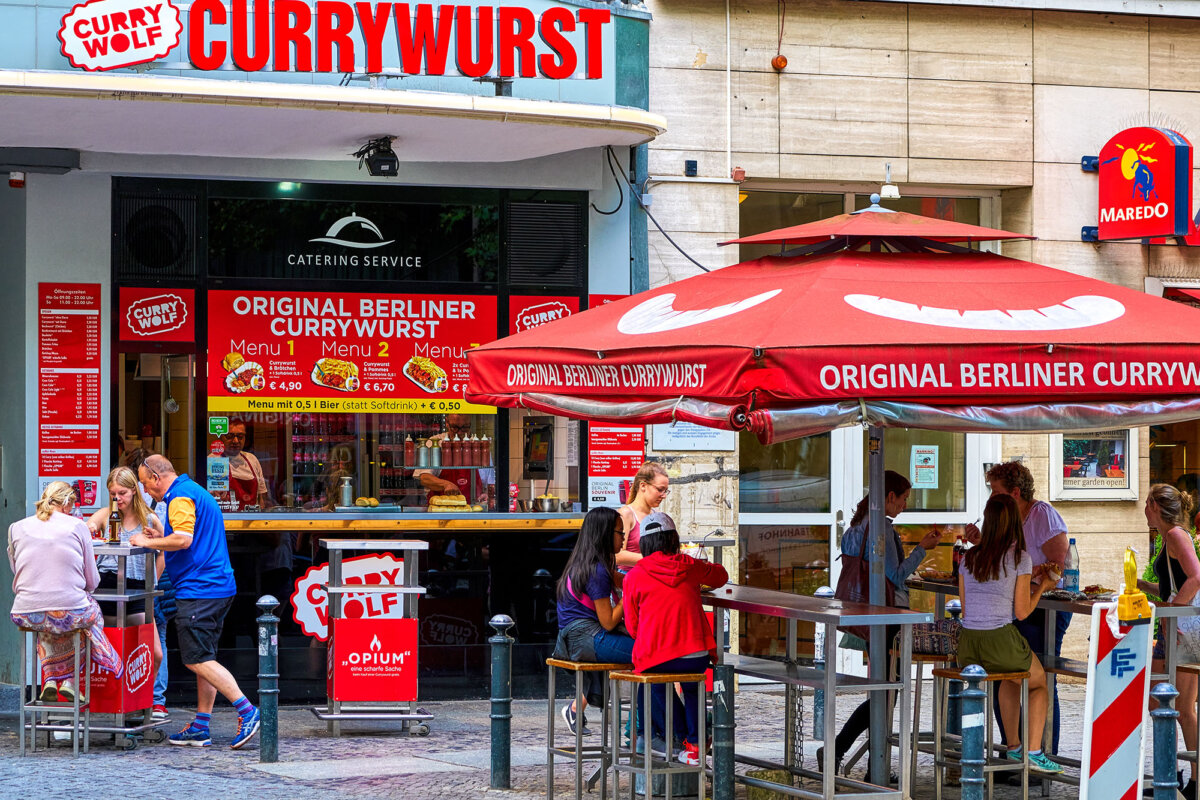
Right, so stick with me on this: sausage and curry powder. Put together, they’re pure deliciousness.
It’s a simple, cheap dish invented by a local snack stand owner in the hard, hungry times following the Second World War. The construction workers rebuilding the city loved it, and it’s become a local institution, with hundreds of millions of portions served up every year.
You can find a little currywurst kiosk on almost every corner. For me, it’s the perfect quick meal on a busy day. Served up in a spiced tomato-based sauce with fries, a nice plate will set you back about five bucks.
Take a Ride on the S-Bahn
For most people, the experience of riding public transit ranges from simple necessity to pure drudgery. It’s a way to get home from work, and nothing more. But riding the S-Bahn, at least for me, is pure pleasure.
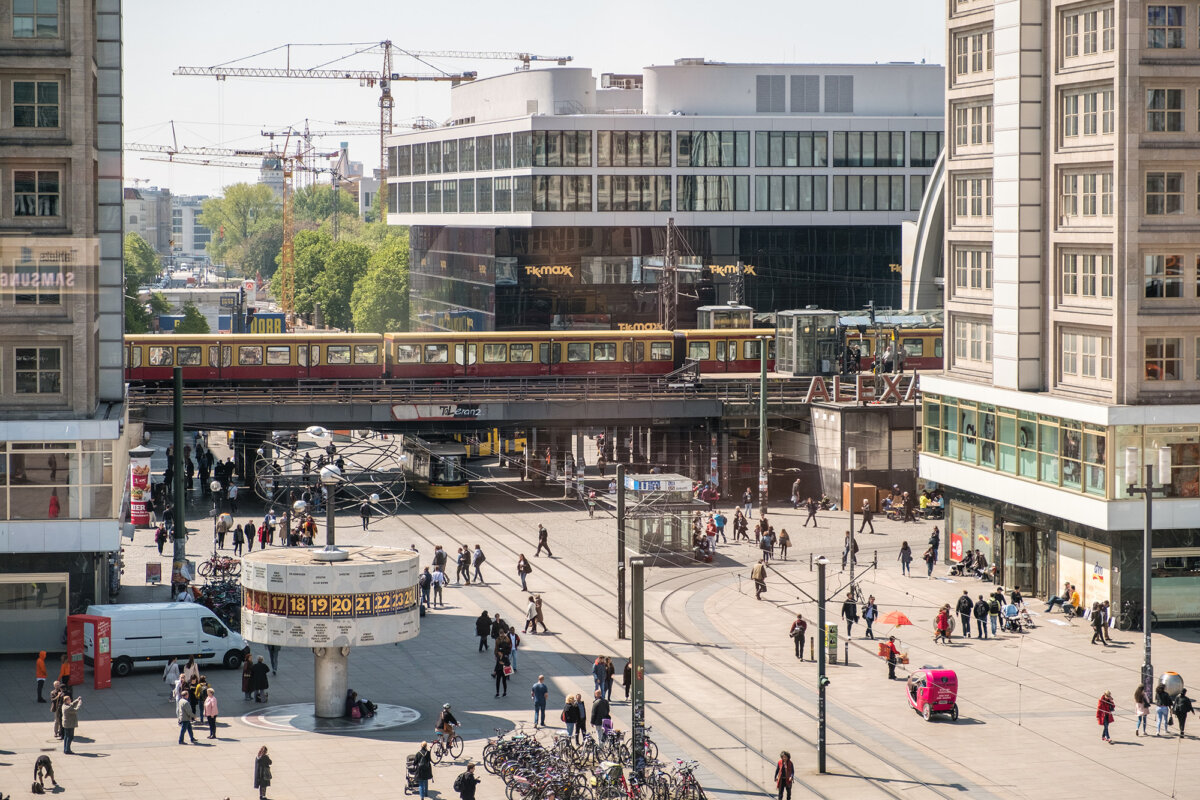
This system of surface trains is truly impressive. The network includes 16 separate lines and 168 stations. Every day, its rolling stock carries an average of 1.4 million Berliners. (And I’m not even mentioning the subterranean U-Bahn, which transports millions more.)
It’s a cheap, easy, and super-fun way to tour the city. I usually choose a slow time in the middle of the day to avoid rush hour, settle into a window seat, and watch Berlin roll by. A particular favorite section of mine is the 7.5-mile Stadtbahn. It’s a historic elevated viaduct that crosses more than 700 masonry arches, passes over the River Spree to Museum Island, and passes through some of Berlin’s most bustling and interesting neighborhoods. Another fun thing: You can dine in the cozy restaurants situated inside the arches as the trains rattle overhead.
Get on board one of the trains and take a day trip out to Potsdam. Or just enjoy the S1. This north-south line traces part of the course of where the Berlin Wall once stood, taking you through both sides and demonstrating their reunification. Along the way, you’ll see some of the city’s loveliest and most famous sights, including the Botanical Gardens, Potsdamer Platz, and the Brandenburg Gate. (Quick tip: I usually just buy a day pass, which costs 11.20 euros, to avoid the hassle of purchasing a ticket each time I ride.)
Pop by the Hollow Tooth
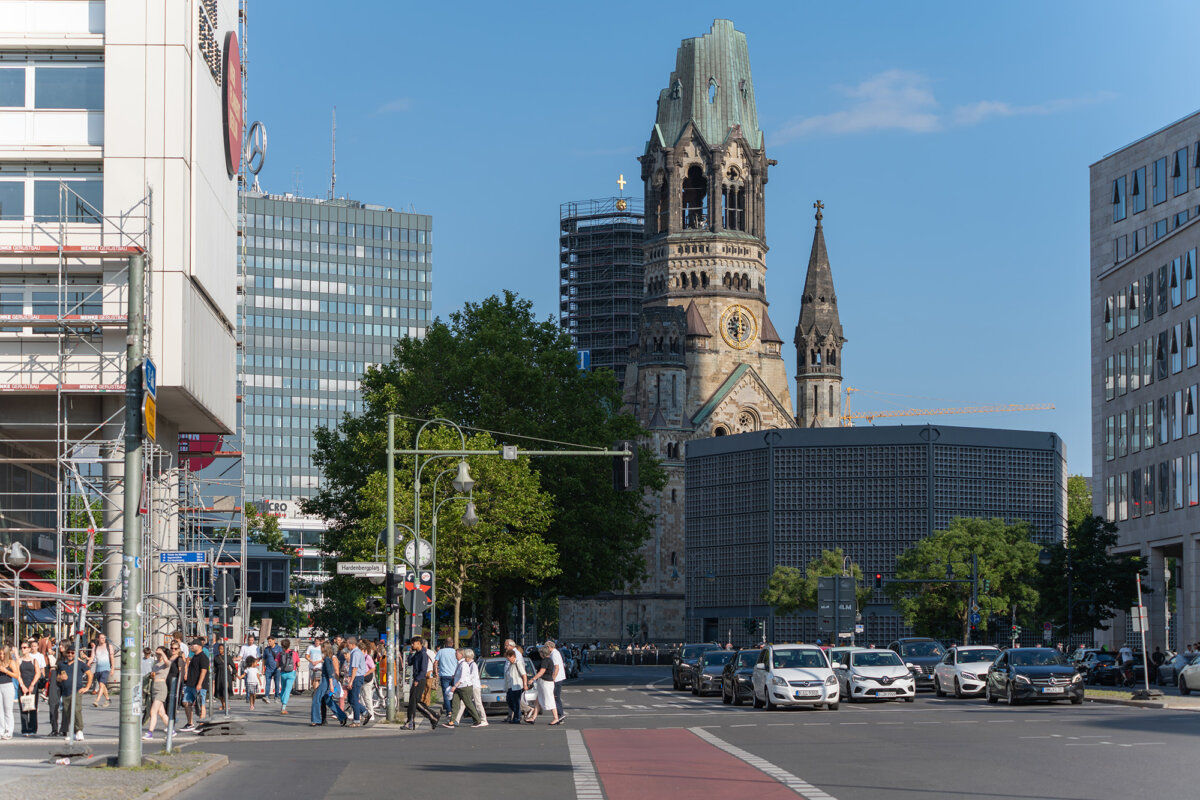
While much of Berlin was reconstructed after the Second World War, the bell tower at the Kaiser Wilhelm Memorial Church is one very notable exception. The original church was dedicated in 1895 and was huge and magnificent, with five towers and room enough to seat thousands of parishioners. Legend has it that when its massive bells rang, the wolves at the zoo would join in the chorus.
Most of the church was destroyed during a 1943 bombing raid, and Berliners debated what to do with the one bell tower that still stood. It was badly damaged. They decided to let the jagged ruin remain as a reminder of the horrors of war. It is a distinctive landmark.
Locals quickly came up with a nickname, “der hohle Zahn,” which means “the hollow tooth.” It’s worth popping into the base of the spire, which is now a memorial hall with original mosaics and information about the original church and the construction of the new one.
Go a Little Green (and Blue)
I always find myself a little exhausted on my visits to Berlin. There’s just so much to do, and it is a fast-paced city. But when I need a breath of fresh air, I don’t have to go far. Germany’s capital is one of Europe’s greenest cities, with almost 60 percent of it covered in green space.
It also has about 50 lakes and three rivers, with over 30 islands. The fabulous, 520-acre Tiergarten is always a good choice. It’s right in the heart of town, a few steps from the Brandenburg Gate. Walk or bike the pathways or, even better (and my usual choice), settle down for a frosty pint at a lakeside beer garden. It’s a pleasant place to reflect on your visit to this weird and wonderful city.
