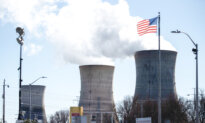
The disaster that has befallen Japan’s Fukushima Daiichi nuclear power plant was man-made, with both the plant’s operator and the government at fault, a new parliamentary report has said.
The Tokyo Electric Power Company (TEPCO) blamed the disaster on the massive, magnitude-9.0 earthquake and tsunami that struck on March 11 of last year, but the parliamentary report challenged the company’s claim in a highly critical response.
The disaster, it said, was the result of collusion between TEPCO, the nuclear regulator, and the government.
“They effectively betrayed the nation’s right to be safe from nuclear accidents. Therefore, we conclude that the accident was clearly ‘man-made,'” the report said.
The report details errors that were made before and after the earthquake, involving regulators working with TEPCO to avoid implementing security measures. “And its effects could have been mitigated by a more effective human response,” it added.
“Across the board, the commission found ignorance and arrogance unforgivable for anyone or any organization that deals with nuclear power. We found a disregard for global trends and a disregard for public safety,” the report said.
It also said that the ingrained, cultural conventions of the Japanese people were part of the problem.
“Our reflexive obedience, our reluctance to question authority, our devotion to ‘sticking with the program,’ our groupism, and our insularity” were at the center of the disaster, the parliamentary commission chairman, Kiyoshi Kurokawa said.
“Had other Japanese been in the shoes of those who bear responsibility for this accident, the result may well have been the same,” he continued.
The report criticized Japan’s single-minded desire to rely heavily on nuclear power since the “oil shocks” of the 1970s.
“Its regulation was entrusted to the same government bureaucracy responsible for its promotion. At a time when Japan’s self-confidence was soaring, a tightly knit elite with enormous financial resources had diminishing regard for anything not invented here,” it said, adding that this arrogance prompted Japanese bureaucracies to put their organizational interests ahead of public safety.
The six-reactor Fukushima plant was severely damaged during the tsunami, knocking out the cooling systems, which led to meltdowns and large releases of radiation. In the immediate vicinity of the disaster, thousands of residents were evacuated.
In the aftermath of the earthquake, the disaster worsened because government agencies failed to function correctly, with roles and responsibilities of involved parties not clearly defined.
There were also communication breakdowns between the office of then-Prime Minister Naoto Kan, who resigned last year, and TEPCO officials. At the time, Kan interfered with the response at a critical moment and caused confusion in the chain of command.
The parliamentary report called for an investigation into how much the earthquake factored into the disaster.
“We conclude that TEPCO was too quick to cite the tsunami as the cause of the nuclear accident and deny that the earthquake caused any damage. We believe there is a possibility that the earthquake damaged equipment necessary for ensuring safety,” the report said.
An earlier report from TEPCO said that earthquake and tsunami were beyond the expectations laid out by the utility and the government.
After the disaster, all of Japan’s nuclear power plants were shut down, but the first reactor located in Fukui Prefecture was restarted.
 Friends Read Free
Copy
Facebook
Tweet
Friends Read Free
Copy
Facebook
Tweet