
SAO PAULO, Brazil—A recent resolution on gold mining in Brazil’s Amazonas State has scientists questioning the effectiveness of once again limiting, but not outlawing the use of highly toxic mercury in the mining process.
The resolution passed by the State Council on the Environment in May, was supposed to go into effect on Aug. 9, but protests from scientists and activists concerned about mercury’s impact on human and environmental health have thus far forestalled its implementation.
Under the resolution, miners are allowed to use mercury if they obtain a permit and a document “attesting the origin of the mercury within 30 days of the issuance of environmental permits.”
State Secretary of the Environment and Sustainable Development Nadia Ferreira, suggested at meeting on Aug. 14 that mercury gold mining, with the appropriate environmental license, be allowed in the Amazon for at least another five years, until reduction mechanisms can reach the zero mercury goal.
“If companies and cooperatives use mercury [they] will have to do it safely, using the available methods of recovering mercury,” wrote Antonio Ademir Stroski, president of the Protection Institute of Amazonas in an open letter. The institute is the government body responsible for environmental controls like licensing, surveillance, and environmental monitoring.
In Brazil, the use of mercury in mining, despite being highly controlled, is very high. About 50 tons per year are used illegally.
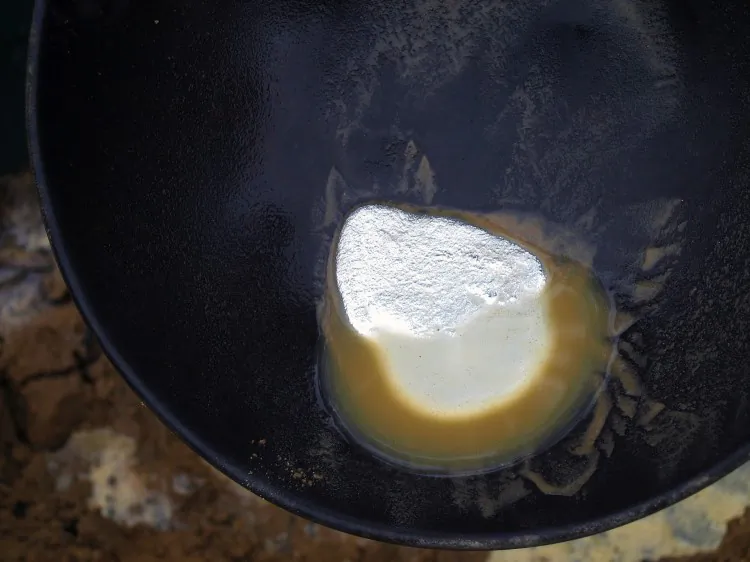
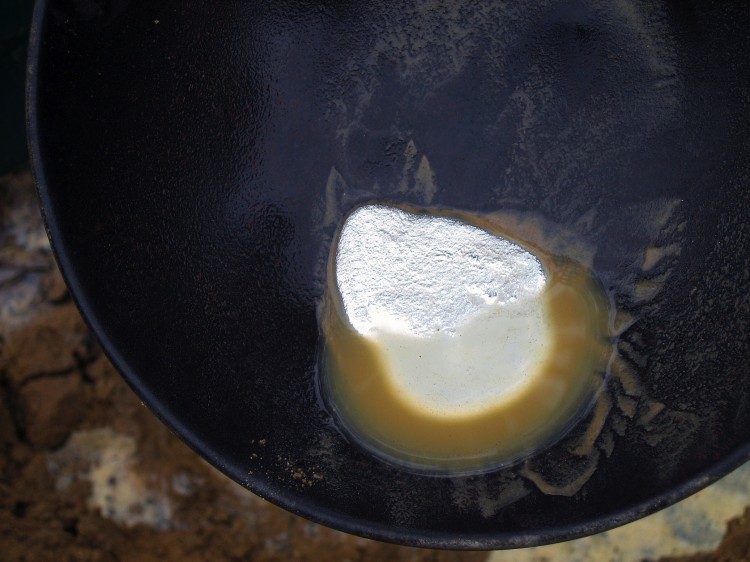
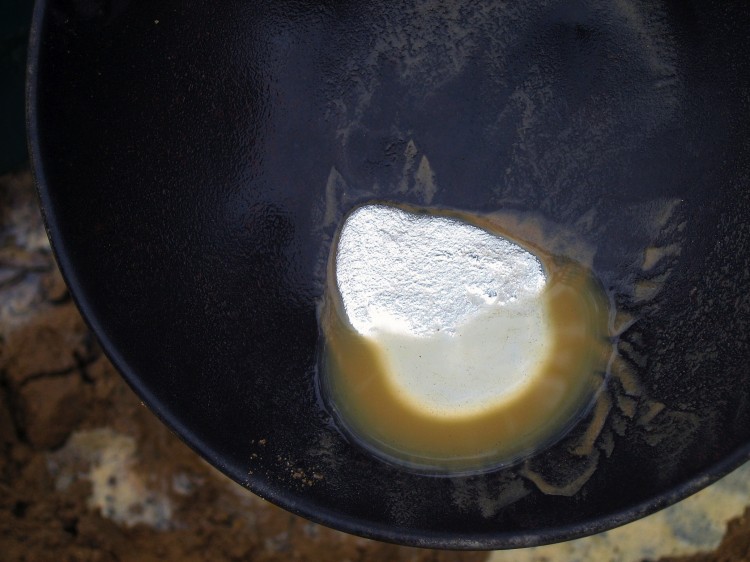
Most gold mining activity is concentrated in the biologically rich Amazon region home to over half the world’s species of plants and animals. Miners use mercury to separate gold from the other minerals found in sediment of riverbeds and floodplains. In the process, some mercury is left behind in the environment. And after the mercury-gold bond is formed, the mercury is burned off, which releases more mercury vapor into the air.
According to a recent article in environmental science news site Mongabay.com, small-scale mining is particularly inefficient at mercury recovery, releasing some roughly 2.91 pounds of mercury into water systems for every 2.2 pounds of gold they produce.
The polemic over the resolution, however, will not change the current situation, according to Marcello Veiga, professor at University of British Columbia in Canada. Veiga has worked extensively on the subject of mining for over 30 years in several countries such as Brazil, Canada, the United States, Venezuela, Chile, and Peru.
Whether the resolution passes or not in the end, Veiga says it makes little difference.
“There are 20 laws in Brazil controlling the use of mercury and cyanide in mining and nothing is accomplished,” says Veiga, citing scientific work he co-authored.
To Veiga, education and technical assistance for the miners, as well as tax incentives are the solutions to the mercury problem.
“Prospectors elsewhere in the world, including Canada and the United States, are working with mercury with minimal losses. There are better methods than mercury, but without education and without funding, how can a gold miner evolve?” says Veiga.
Inhaling mercury dust and fumes is highly dangerous for the miners themselves, as well as local communities, and everything downstream. About 20 percent of the Earth’s fresh water emptying into the oceans comes from the Amazon.
General director of the Museum of the Amazon and ex-president of the Brazilian Society for Advancement of Science, Ennio Candotti, initiated a petition to Amazonas Gov. Omar Aziz, asking him to recast the resolution to make explicit the toxicity of mercury and affirm the state’s commitment to monitor and supervise the environmental contamination by mercury, among other demands.
Control and supervision of mercury should be the duty of the government, says the museum director.
“It turns out that the state of Amazonas control is very precarious, if not nonexistent,” says Candotti.
He is concerned about the wider impacts of the decision of a small group of miners.
When ingested, mercury can severely impair neurological development in fetuses, although the mother may show no symptoms. Inhaling mercury causes symptoms including tremors, mood swings, neuromuscular changes, kidney and respiratory failure, and even death.
“Those involved in mining risk their lives for personal gain [and] put public health at risk with their activity,” said Candotti.
“Society cannot choose whether or not to eat contaminated fish. The damage to health is imposed by a minority seeking personal advantage.”
The Epoch Times publishes in 35 countries and in 19 languages. Subscribe to our e-newsletter.
 Friends Read Free
Copy
Facebook
Tweet
Friends Read Free
Copy
Facebook
Tweet