
Opinion is divided on the implications of America’s defense policy following the announcement of President Obama’s strategic defense review last week, but U.S. forces are already embracing some of the initiatives recommended.
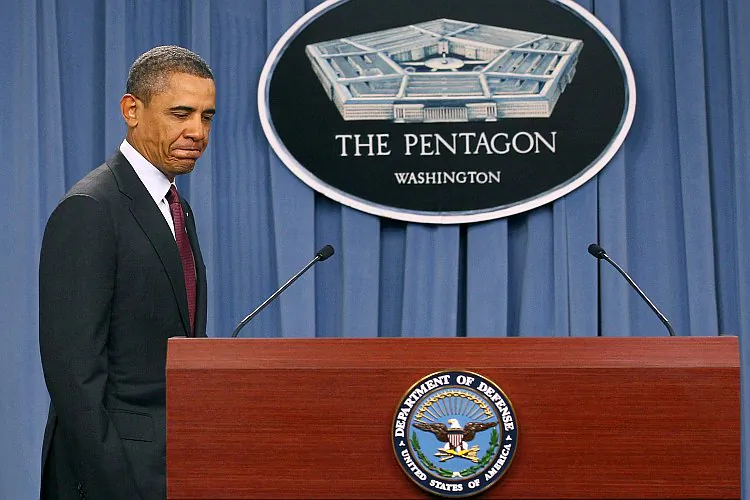
Speaking from the Pentagon Jan. 5, President Obama said the United States had “succeeded in defending” the nation, and it was now time to put America’s “fiscal house in order”.
Under the Budget Control Act passed last year that would require cuts in federal spending—including the defense budget—the president said: “The size and the structure of our military and defense budgets have to be driven by a strategy, not the other way around,” he said.
Outdated Cold War-era systems would be replaced with capabilities for the future, including “intelligence, surveillance and reconnaissance, counterterrorism … and the ability to operate in environments where adversaries try to deny us access,” he explained.
Although the military would be leaner, U.S. military presence would be strengthened as promised in the Asia-Pacific, a region he said was critical. At the same time, greater investment in partnerships with allies would be the focus.
The strategic review has been largely embraced by the military, still in shock at the threat of a $1 trillion budget cut through sequestration, the result of the Congressional Budget standoff at the end of last year.
Leon Panetta, former chief of staff to Bill Clinton and director of the CIA from 2009 to 2011, is now secretary of the Department of Defense (DOD). Speaking at the Pentagon Jan. 5, Panetta welcomed the review saying that the complex array of security challenges calls “for reshaping of America’s defense priorities.”
While the fiscal crisis was difficult, it had forced the DOD to make decisions that needed to be made.
“Let me be clear again. The department would need to make a strategic shift regardless of the nation’s fiscal situation,” he said.
Panetta said the plan would not involve a “hollowing out the force” but would focus on creating “a smaller, ready, and well-equipped military.”
Opinion Divided
According to White House Press Secretary Jay Carney, the Pentagon will have to reduce spending by $498 billion over 10 years.
While the cuts may be necessary, they have raised concerns about America’s ability to react under threat, and to its perceived standing in the global community.
Max Boot, national security analyst with the Council of Foreign Relations (CFR), estimates the army will shrink from 569,000 to 490,000 soldiers.
He believes America is the only nation with the commitment and the force to guarantee “order and stability in the world” and is concerned the new defense strategy will leave the United States vulnerable.
“I think we have sent a very dangerous message that will dishearten our allies and encourage our enemies or would-be enemies,” he told a CFR forum this week.
Boot says the military is already “overstretched” on multiple missions, and must face a navy “down to 280 ships, the smallest level … since 1930” and an air force with aging aircraft, “some of which are literally falling out of the sky.”
While these issues are costly, he believes unless they are addressed the United States will lose its military primacy.
“The cost of that in the long-term will be far greater than the short-term costs of adequate readiness,” he said.
Security analyst Richard Betts says the United States should move toward “a more modest definition of national security” than assuming world order, and believes the Obama administration is moving in the right direction.
Author of a book titled American Force: Dangers, Delusions, and Dilemmas in National Security, Betts believes the military should focus on counterterrorism, which involves “small-ticket expenditures” while keeping an eye on potential threats, like a rising China.
A leaner, more strategic military would cater to counterterrorism, while strategies he describes as “soft primacy” and “burden-sharing” would fit into long-term strategy.
“That is maintaining and appreciating the primacy of the U.S. militarily, but regarding it more as a cushion against challenges to come, rather than exploitative,” he explained.
Burden-shifting would involve “getting our rich allies to do more since they make roughly half the effort, at best, that we do,” he said.
As the debate continues, Adm. Jonathan W. Greenert, the Navy’s chief of operations, says the U.S. Navy is already implementing aspects of the strategic review.
Speaking at a forum at the Center for a New American Security Jan. 10, Greenert said the Navy was working to “bolster” partnerships in the Asia-Pacific region and “forge new ones,” rather than focus on a “naval buildup in the region” as part of President Obama’s strategic guidance.
“There are many [relationships] out there, and they are growing, through a range of missions that we will have to foster,” he said.
While the specific details of the cuts have not been announced to date, a U.S. defense official has reportedly told Bloomberg News that the first details of the Obama administration’s fiscal 2013 defense budget will be released Jan. 26.
 Friends Read Free
Copy
Facebook
Tweet
Friends Read Free
Copy
Facebook
Tweet