



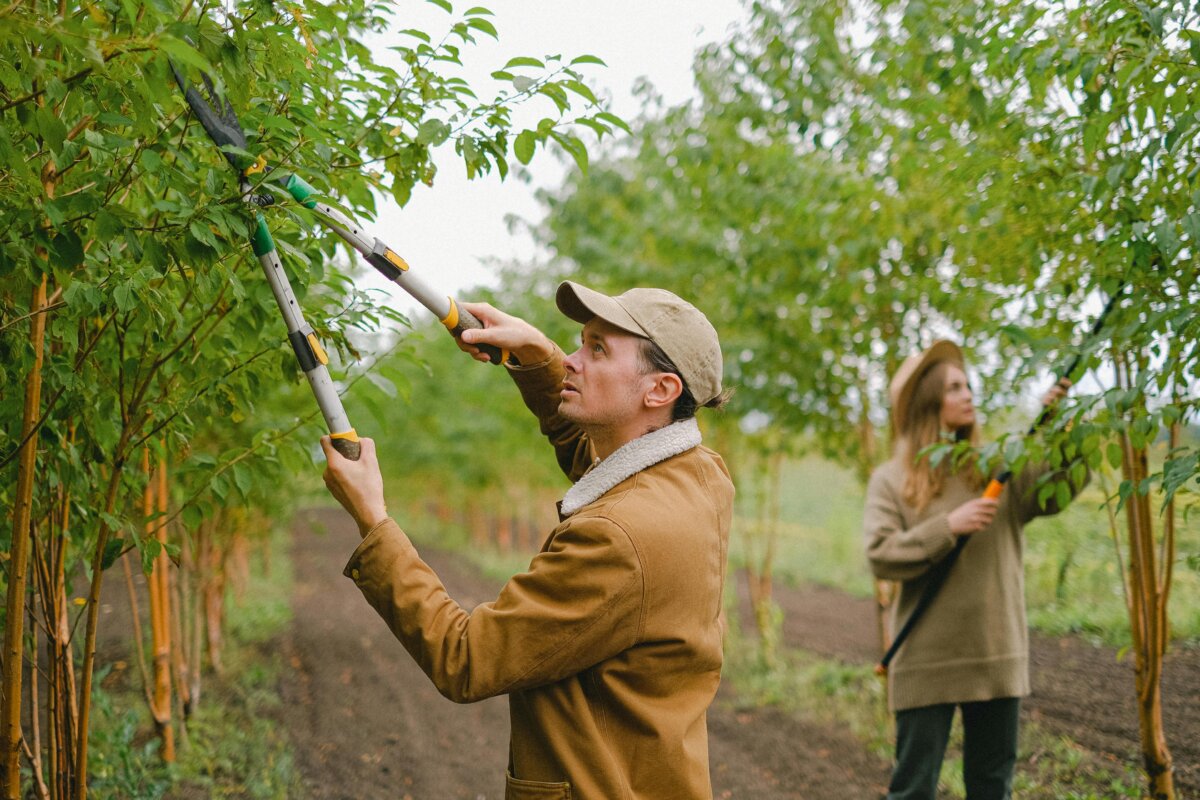
Fruiting trees, bushes, and vines should be pruned in the fall to remove any dead or diseased branches (sanitary pruning). Beyond that, pruning can become quite the controversial subject, with gardeners having very passionate opinions. For example, many will swear by pruning cherry trees in the spring, but this runs the risk of discovering that the plant has already begun to swell and bud and it’s too late for pruning.
Fall pruning, on the other hand, eliminates this concern and allows plenty of time for thinning (removing crossing and otherwise incorrectly growing branches), supportive trimming (shortening back the year’s growth on branches), and formative pruning (done in the first few years to improve structure and shape).
Later in the tree’s life comes the need for anti-aging trimming, removing old, no-longer-bearing branches to allow new ones to form next spring.
Let’s go in order of simplicity: vines, bushes, trees.
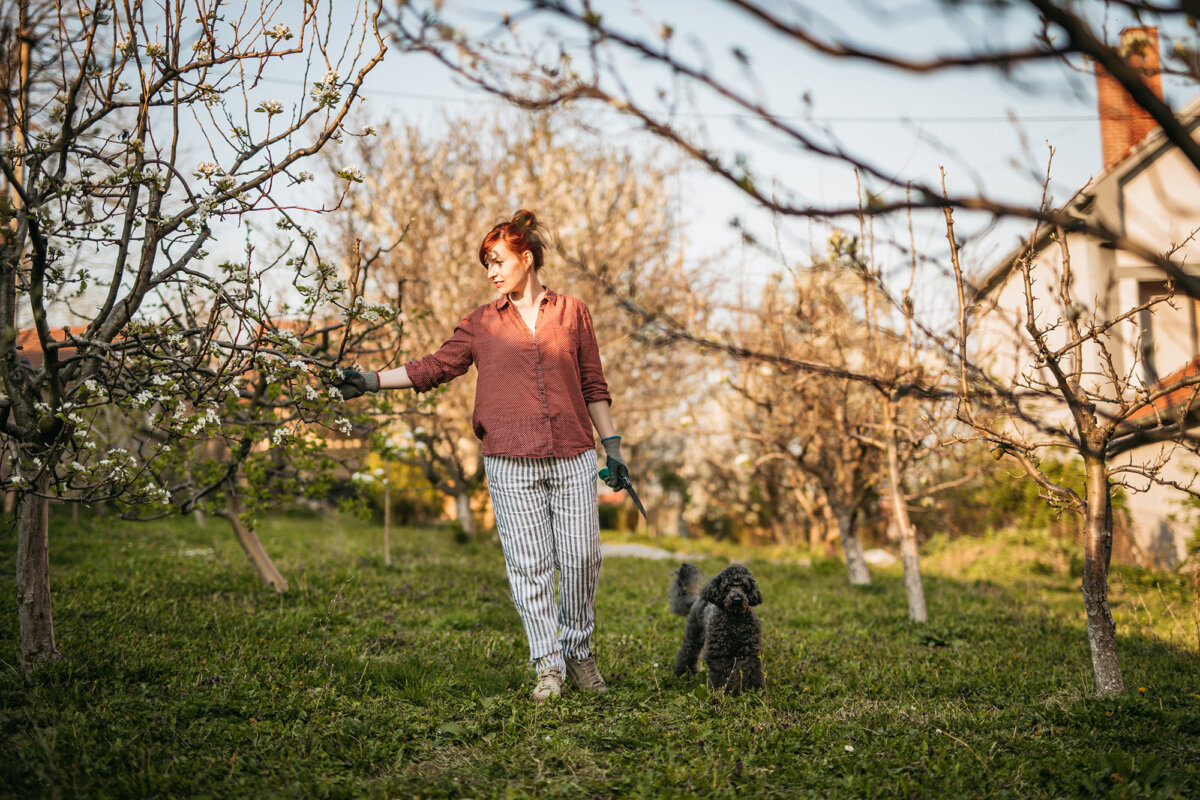
Vining Berries
While they’re considered two of the easiest-to-grow fruiting plants and require minimal care in general, blackberry and raspberry vines need a judicious pruning of any dead floricanes (the second-year growth sections that produced fruit) as soon as they have finished fruiting. This will be in early fall for summer-producing types and everbearing varieties as well.
For fall-producing plants, it is best to wait until late winter (December or January) to prune them while they’re deeply dormant. This significantly reduces the risk of them resprouting after pruning, as they might if pruned in a still temperate late fall, and the risk of new shoots being damaged by a sudden hard frost.
Glorious Grapes
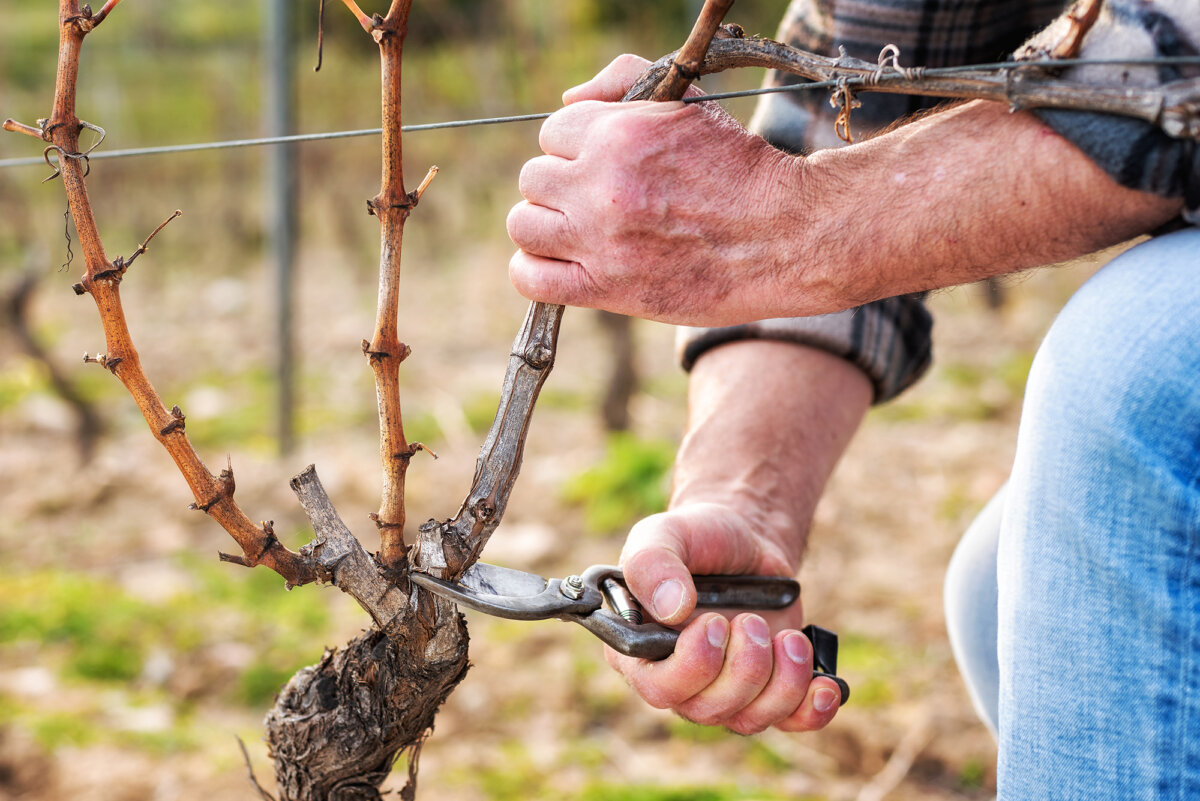
Step away from the grapes. They are best left alone to be pruned in spring—in February, March, or even early April. At that point, up to 90 percent of last year’s growth (the long canes that sprouted during the past season) can be sheared off. New plants should be trimmed to about 30 inches or to the first trellis wire. Grapes older than one year should be pruned of canes that fruited last year and will not fruit again.
Some gardeners take this one step further, leaving only one or two canes that have 8 to 10 buds each and are the thickness of a finger. Happily, grapes are resilient and forgiving, allowing any beginner mistakes to be corrected the following year.
Passionate Cuts
Passionfruit vines can easily take over a garden, but pruning keeps them under control and leads to a bigger harvest next season. Fall pruning should be kept to removing overly aggressive shoots and dead, diseased, or damaged vines. In late winter, trim back the shoots that have fruited to one or two buds to encourage a bumper crop next summer.
Bush Berries (Trees, too!)
After they’ve reached three to four years (fruiting age), blueberries and cranberries should be pruned yearly to control their size and stimulate new growth, as they produce best on younger stems. Don’t trim them after Aug. 1, to avoid winter injury. Instead, prune them toward the end of their dormant stage—January to early March.
The same holds true for red, black, white (nonstaining), and everbearing mulberry trees and bushes and their many subcultivars.
After-Harvest Trims
Apricots, avocados, figs, grapefruit, guava, kumquats, lemons, limes, lychees, and mangoes will all produce best next season if they are pruned back right after the harvest, typically in late summer to late fall. While many of these are tropical trees, apricots are hardy as far north as Zone 5.
As an aside, growers have been creating dwarf varieties of many tropicals—particularly in the citrus category—that will grow surprisingly well indoors. Is there a better way to combat seasonal affective disorder?
Pip Planning
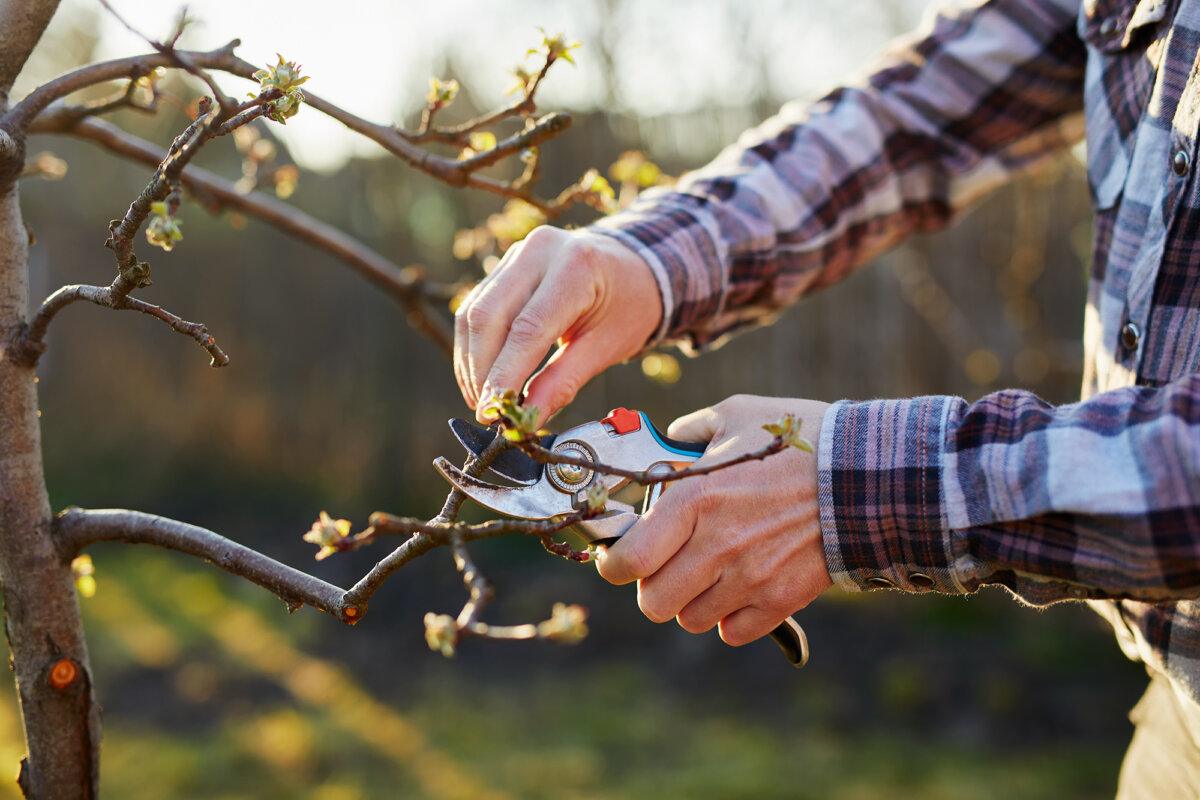
Apples, pears, crabapples, quince, nashi (Japanese pears), and other members of the pip family are generally pruned in late winter when the coldest weather has passed, but the trees are still firmly dormant. The idea is to control the tree’s shape and growth without subjecting any new growth to the danger of icing.
This is the time to trim for height so the fruit isn’t growing out of reach, and to open the canopy for good airflow to lessen the chance of disease. Trim off dead, damaged, and diseased growth, as well as crossing branches and any other excess branching to encourage good limb structure, enhance fruit production, and increase overall good health. The idea is to allow the tree to put this year’s energy into production and encourage new limbs that will fruit in their second season.
Pomegranates are the “pip” exception. They don’t need to be pruned annually, though a quick trim will help enhance fruit production. Also, they are best pruned in autumn after fruiting and before their vegetative rest.
DIY Plant Surgeon
Disinfect pruning tools with isopropyl alcohol between cuts to avoid unintentionally spreading fungus or disease. Angle all cuts to prevent water buildup on the wound. Apply a wound sealer to large cuts.
____________
The “Be Patient” Bunch
Stone fruit—a fancy name for fruit with pits—is a category that contains some of the world’s most popular produce, including peaches, plums, and nectarines.
Perfect Timing
On the whole, stone fruits are never pruned before February and can be pruned as late as March and April, depending on the gardener’s agricultural zone. They must be pruned while dormant, ideally just before they bud and bloom, to reduce the risk of cold damage on new growth.
1st Harvest
Stone fruit should start to give fruit two to five years after planting. Note: This is when one starts with a one- or two-year-old plant; trees grown from pits will take much longer. They should be trimmed annually to shape them and help them develop an open canopy with good airflow.
If The Worst Happens
Stone fruits are early bloomers, meaning there is always the chance that an unexpected hard frost will occur after they bloom, damaging the flowers. Unfortunately, they will not produce fruit that year but may have an even more bountiful harvest in the following year.
