
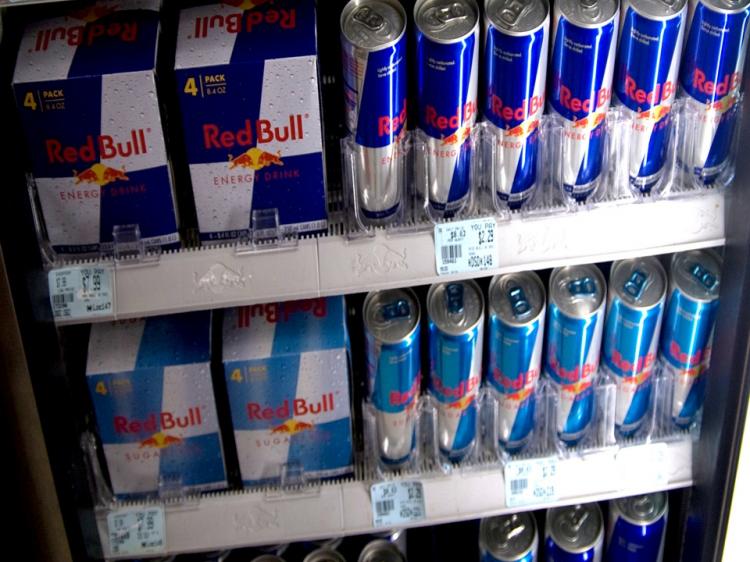
James Shepherd told the House of Commons health committee recently that his healthy son died of arrhythmia, an irregular heartbeat, after consuming an energy drink just hours prior to his sudden death in 2008.
Shepherd and the deputy chief health officer of the province of Prince Edward Island (P.E.I.) also urged the committee to place restrictions on the advertising and marketing of such products. The drinks, which include the brand names Red Bull, Full Throttle, and Rockstar, are classified as natural health products in Canada.
Dr. Lamont Sweet told the committee that after the P.E.I. government lifted a ban on the sale of canned soft drinks in May 2008, energy drinks soon appeared across the province.
“Almost immediately, teachers in schools noted students becoming hyperactive, agitated, and unable to concentrate,” he said.
Dr. Sweet said the drinks’ classification as natural health products seems inappropriate given that their concentration of caffeine is “enormous” compared to cola drinks, leading to possible toxic amounts not expected in a natural food.
Energy drinks are banned in P.E.I. schools, but kids can still buy them in stores—something home and school associations across Canada are hoping to change. They are urging Ottawa to implement a nationwide ban on selling the drinks to anyone under 18.
“We just see that it’s a problem and it’s going to become even more of a problem in the future, says Owen Parkhouse, president of the P.E.I. Home and School Federation.
Parkhouse says that in some cases, children have been diagnosed with attention deficit hyperactivity disorder when in fact they were “not getting enough sleep for a combination of reasons, and one of these reasons is consumption of energy drinks with caffeine, and that’s a real issue.”
Dr. Billy Scantlebury, president of the Medical Society of P.E.I., has said that the drinks are targeted at youth and students through clever marketing campaigns. A family physician from Charlottetown has also said the drinks can cause behavioral problems and anxiety in youth, as well as serious conditions such as heart arrhythmias and palpitations.
 Friends Read Free
Copy
Facebook
Tweet
Friends Read Free
Copy
Facebook
Tweet