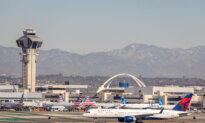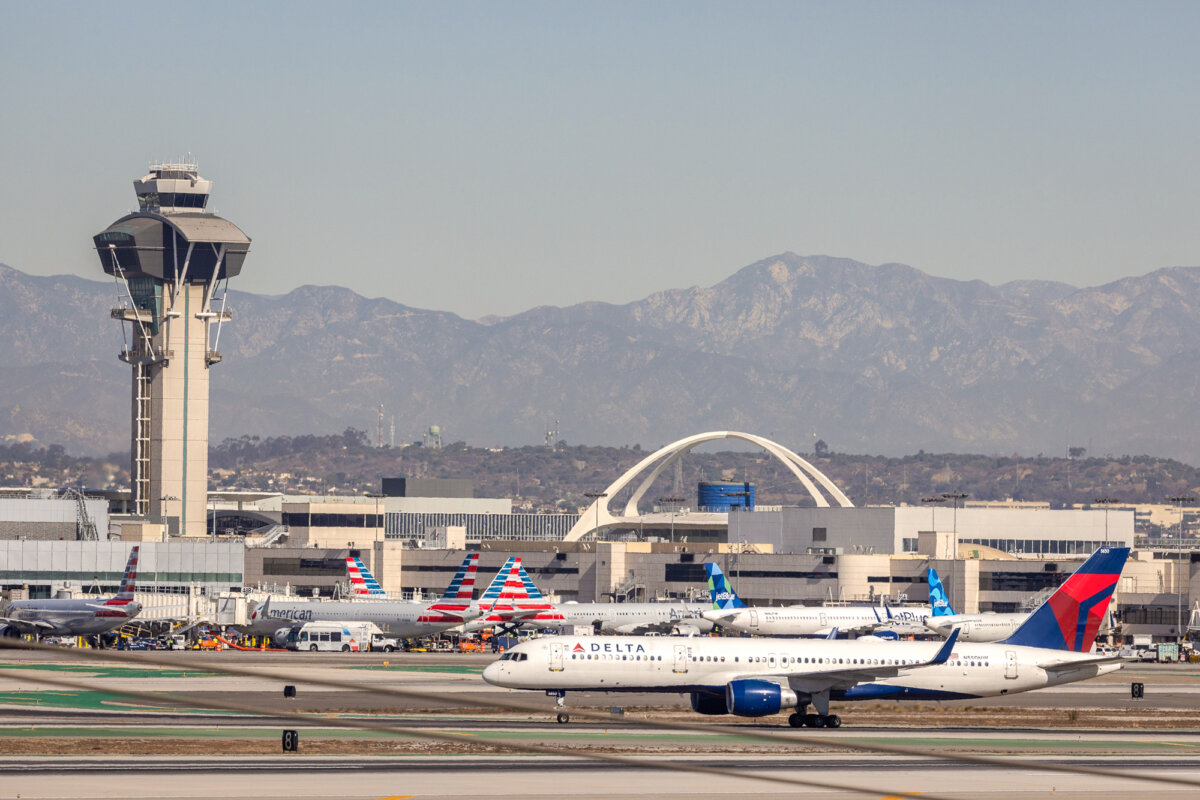

The federal government is embarking on what Transportation Secretary Sean Duffy has called the most important infrastructure project in the country “for decades.” It is attempting to modernize and upgrade the nation’s entire air traffic control system within roughly four years.
Multiple aviation experts, ranging from former pilots and controllers to professors and an aviation lawyer, have said that the changes are needed and long overdue.
The entire project is projected to cost at least $32.5 billion, according to the Federal Aviation Administration (FAA), including an initial $12.5 billion down payment funded by President Donald Trump’s spending bill in July 2025. Duffy has asked Congress for an additional $20 billion to complete the project by the end of the president’s term.
This is what the FAA has said it plans to do in this multi-year modernization project, which portions of the project experts say are most critical, some of the obstacles the federal government might face, and background on the company chosen to lead the endeavor.
What to Expect
The FAA’s plan to “deliver Americans a state-of-the-art air traffic control system” will involve replacing telecommunication lines, radar systems, software, hardware, and other core U.S. aviation infrastructure.
The agency said it will replace copper lines with fiber optics—a project that Duffy recently said is already more than 30 percent complete—and will swap outdated communication hardware with wireless and satellite technology.
These changes will be made at nearly 5,000 locations, alongside the implementation of more than 25,000 new radios and 462 new digital voice switches, according to an FAA fact sheet.
The agency said more than 600 radar systems that “have gone past their life cycle” will be replaced. Some U.S. radar systems, particularly ground-based radar, date back to between the 1940s and the 1970s.
Margaret Wallace, a former military air traffic controller and an assistant professor of aviation management at Florida Institute of Technology, said: “The primary radar system, that goes back to World War II, and that’s still in use. And that’s basically detecting that there is something in the air. You can’t always tell what it is.”
In the decades since World War II, the FAA has “added layers of technology … and if a lower level has an issue, then that’s going to create issues in all the other layers of technology,” Wallace told The Epoch Times.
Additionally, the FAA is increasing the number of airports that deploy the Surface Awareness Initiative system (SAI). SAI is a ground-based monitoring system that allows air traffic controllers to see all aircraft traversing runways, taxiways, and other surface movement areas at airports.
As of March 2025, SAI was operational at 18 airports. The FAA aimed to install it at 50 airports by the end of 2025 and a total of 200 airports overall. An FAA spokesman told The Epoch Times on Jan. 6 that the system has now been installed at 52 air traffic control towers.
Modernizing air traffic control will also involve building a new consolidated air route traffic control center for the first time in six decades and replacing multiple control towers and one terminal radar approach control (TRACON) facility.
TRACON facilities manage air traffic for several airports in specific regions, such as the New York City and Tampa metropolitan areas.
Desperately Needed
U.S. airspace is in desperate need of upgrades, multiple aviation experts said.
“The basic radar technology obviously needs to be upgraded and have better detection systems,” Wallace said. “With all the GPS and everything we have, I think it would be reasonable to use that as a secondary technology as well.”
She described how other countries have upgraded the way their air traffic control infrastructures identify aircraft and communicate across multiple systems within their airspace, leading to improved reliability throughout.
The United States still uses analog frequency radios, similar to the AM/FM radios found in cars, which—unlike radios in airport control towers—have already been outpaced by digital devices such as smartphones that use new technology, Wallace said.
Some of these radios have created headaches for pilots flying into busy airspaces, according to Shawn Pruchnicki, a safety expert, former pilot, and aviation professor at The Ohio State University.
“The number one problem that I think if you ask any pilot, and probably the majority of controllers, would tell you, is that we have this single channel for communications that only one person can talk at a time. I don’t know how you get around that,” Pruchnicki told The Epoch Times.
Sometimes pilots will be handed off to a new radio frequency from a previous one.
“Then all of a sudden … you listen, and it’s just like this constant barrage of air traffic control clearances,” he said. “It’s like this person’s not even taking a breath, and you’re just like, ‘Oh, dear God … this airspace, apparently, is out of control.’”
Pruchnicki said that even though the controllers in the tower can see and direct the planes without constant communication with pilots, there are times when a pilot needs to check in with the tower, especially if there’s an emergency, and it can “become problematic” if there are too many pilots waiting to speak on congested radio channels.
Making these upgrades throughout U.S. airspace requires an entire overhaul, including rebuilding whole facilities to make way for modernized hardware and software, Wallace said.
There’s also the need to balance the need for change with caution to maintain safety within a system as complex and critical as aviation, according to Shem Malmquist, who has worked in aviation for nearly 40 years, including as a commercial pilot, professor, and safety consultant.
“Whether it’s politics or whatever, you have some people that want to push forward and come up with the new ideas and constantly change things. And then you have the other, that’s the conservative side, saying: ‘No, no, wait, wait, wait; we know this other thing is working. Let’s not change too quickly,’” he told The Epoch Times.
“Those two working together creates a balance, and the same thing is true on development of safety-critical systems. You want that balance.”
Compressed Timeline
Although the upgrades are necessary, some aviation experts are concerned about the timeline of three-and-a-half to four years.
“I think it’s probably aggressive,” Greg Reigel, an aviation lawyer and private pilot, told The Epoch Times.
Reigel said the project is essentially one of the most ambitious and wide-reaching infrastructure projects in U.S. history.
“I think it’s a good thing. I think they’re on the right track,” he said.
“I just hope that they’re doing this the right way, and that safety is first and foremost, and they’re not getting outside political or financial pressure with respect to deadlines or going live.”
Wallace said it’s not a “realistic timeline” to do a “full overhaul” of U.S. air traffic control.
“We can get some facilities started, but even when we get them up and built and everything, we still have to have a test period,” she said.
When a new facility is built to replace an old one, it takes time to transition workers from one building to another. Throwing human factors into the mix complicates it further, Wallace said.
“It’s great to have all this new technology, but how do humans adapt to it? So they work with certain systems now; there’s going to be a big training process,” she said.
Malmquist said that any changes to a system as complex as U.S. airspace are going to require careful consideration, “management of change procedure,” and documentation of all alterations to air traffic control infrastructure and why it was replaced or modified.
Peraton to Lead Upgrade Project
The federal government announced on Dec. 4, 2025, that it had chosen Peraton, a national security and technology firm that contracts with the Department of Defense, to be the “prime integrator” of the air traffic control modernization project.
As prime integrator, Peraton’s main initiative will be managing the modernization project and making sure it is delivered on time without major disruptions to U.S. airspace, the FAA said in a fact sheet the same day.
Several aviation experts told The Epoch Times that they had not heard of Peraton before seeing the FAA’s announcement. The company was spun out of another defense contractor, the former Harris Corporation. Veritas Capital bought Harris Corporation’s government IT services division in 2017 and renamed it Peraton.
In a September 2025 statement, Peraton said it “brings to the table a holistic approach, unhindered by a failed history of FAA supplier performance and technical bias in serving as a pure-play systems integrator.”
Peraton did not respond to a request for comment.
Harris Corporation had a decades-long history of involvement in the aviation industry; a 2016 annual report listed air traffic control management as one of the company’s four key business components.
In 2002, Harris Corporation partnered with Lockheed Martin to develop technology for air traffic management and communications.
In 2009, the Harris Corporation acquired SolaCom Technologies, Inc., a privately held air traffic control company that was based in Quebec, Canada, at the time.
The FAA awarded Harris a 15-year, $291 million contract in 2012 to provide a new communications system for air traffic control as part of the agency’s previous “NextGen” initiative.
NextGen was similar to the Trump administration’s current plan to upgrade U.S. air traffic control nationwide, but with a key difference: It had a timeline of more than 20 years, with 2025 set as the initial target date for deployment. A 2024 Department of Transportation report indicated that the project had stalled and that some portions had been delayed until at least 2030.
 Friends Read Free
Copy
Facebook
Tweet
Friends Read Free
Copy
Facebook
Tweet