
The Trump administration released three batches of records in July that shed new light on the decade-long controversy over Russia’s alleged meddling in the 2016 presidential election.
The records center around the creation, at President Barack Obama’s behest, of an intelligence community assessment (ICA) that alleged Russian President Vladimir Putin had interfered in the presidential election in order to help then-candidate Donald Trump.
The documents’ release on Jan. 6, 2017 prompted a media wildfire that led to the appointment of special counsel Robert Mueller. His investigation would hamstring the administration for years before Mueller ended the probe, ruling there had been no collusion.
Documents released by the administration suggest that key actors, including Obama, knew there was no merit to the allegations but authorized the creation of the ICA anyway.
Trump has accused Obama of treason and Obama has issued a rare public statement to dismiss the claims.
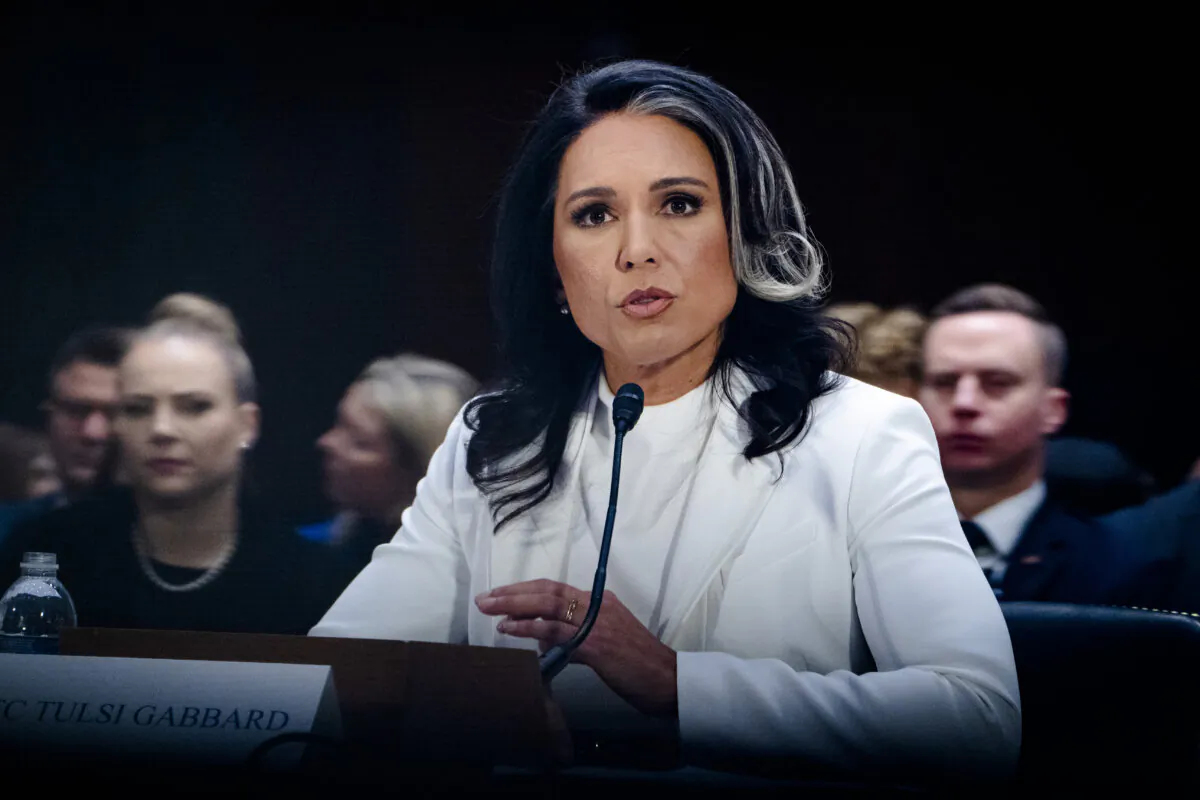
The Department of Justice has formed a task force to review the records to determine whether any crimes were committed, as more whistleblowers come forward, emboldened by the release of the records, according to Director of National Intelligence Tulsi Gabbard.
Here are some of the revelations from the documents.
CIA Director John Brennan testified under oath to Congress in 2017 that the infamous Steele dossier “was not in any way used as a basis for the Intelligence Community Assessment that was done.”
But according to two of the records released this month, the CIA director overruled those who objected to the inclusion of the Steele dossier in the ICA.
The Steele dossier, which has since been debunked, was paid for by Hillary Clinton’s campaign and composed by former British intelligence officer Christopher Steele.
According to a July 2 note from CIA Director John Ratcliffe, the authors of the ICA and senior CIA managers opposed inclusion of the dossier in the ICA, “asserting that it did not meet even the most basic tradecraft standards.”
The CIA’s deputy director for analysis warned the CIA director that including the dossier in any form risked undermining “the credibility of the entire paper.”
However, Brennan ordered that the dossier remain in the assessment and wrote, “My bottom line is that I believe that the information warrants inclusion in the report.”
The FBI also strongly encouraged the inclusion of the dossier, threatening to remove itself from the report if it were not included.
Brennan has alleged there was a political motivation to the recent disclosures, saying the allegations against the Obama administration “are without foundation at all.”
The House Intelligence Committee report on the ICA released July 23 found a host of other issues with the preparation of the intelligence assessment.
The panel found that while most of its judgments were sound, the ICA’s assessment that Putin “developed a clear preference for candidate Trump” and “aspired to help his chances of victory” was a failure of intelligence.
That judgment violated standards by failing to remain “independent of political considerations,” among other issues, the committee found.
The report by the panel focused on three “substandard” intelligence reports underlying the assessment that Putin interfered in the election to help Trump.
The three reports were published internally after the 2016 election, despite a veteran CIA officer’s judgment they were “unclear, of uncertain origin, potentially biased, implausible, or in the words of senior operations officers, ‘odd.’”
The panel claimed that a single piece of classified information—an “unverifiable fragment of a sentence” from one of the reports—was used as the basis of the allegations. Specifically, the sentence stated that Putin “was counting on” Trump’s victory.
One senior CIA operations officer said: “We don’t know what was meant by that. … Five people read it five ways.”
The source of the fragment is “not clear,” the panel said, but its “significance … to the ICA case that Putin ‘aspired’ for candidate Trump to win cannot be overstated.”
The human source of the report had a known strong dislike of Putin and Trump, according to CIA officers. That context was not featured in the final assessment.
Brennan also authorized the internal publication of a second report deemed “odd” and “lacking authoritativeness” by other CIA professionals. The source for the second report also had a known anti-Trump bias.
The third substandard report featured an unknown source who claimed that “several members of Putin’s inner circle strongly preferred Republican over Democratic candidates.” Brennan again ordered the internal publication of the report over the objections of CIA professionals.
A CIA memo released earlier this month identified several “procedural anomalies” in the preparation of the 2016 ICA, including “a highly compressed production timeline, stringent compartmentation, and excessive involvement of agency heads.”
Obama ordered the creation of the ICA assessment on Dec. 6, 2016, and said it should be released to the public before the end of his term on Jan. 20, 2017. Intelligence officials subsequently moved up the deadline to Jan. 6, the day Congress was set to certify Trump’s election victory.
According to a CIA memo released this month, this process resulted in “a highly compressed production timeline, stringent compartmentation, and excessive involvement of agency heads.”
A formal ICA assessment can take months to prepare—the authors assigned by the CIA were given a week to draft the document and two days to coordinate with the rest of the Intelligence Community before it entered final review on Dec. 20, 2016.
The memo concluded that the rushed timeline was not justified, given that the election was over and the scramble to prepare the report invited the question whether the Obama White House acted with a political motive.
Obama administration officials pushed for the ICA on Russia’s interference in the U.S. election to be completed and released to the public by Jan. 6, 2017, according to a batch of emails and records declassified by Gabbard on July 18.
Obama set a Jan. 20, 2017, deadline for the public release.
The House Intelligence Committee found that the rushed release suggested the schedule “was driven by a political motivation to ensure the ICA was rolled out to the Congress and world media by the outgoing administration.”
—Ivan Pentchoukov and Joseph Lord
BOOKMARKS
The Federal Reserve once again declined to lower interest rates on Wednesday, leaving the benchmark rate in the 4.25 to 4.5 percent range. But for the first time in more than 30 years, two officials dissented from the decision and suggested the rate should be cut by a quarter of a percent.
Donald Trump’s administration announced 50 percent tariffs on many Brazilian copper products on Wednesday, to “address the government of Brazil’s unusual and extraordinary policies and actions harming U.S. companies, the free speech rights of U.S. persons, U.S. foreign policy, and the U.S. economy.” The move is also intended to address the political persecution of former Brazilian President Jair Bolsonaro, according to the White House.
Former Vice President Kamala Harris says she will not run for governor of California next year. California Gov. Gavin Newsom is also ineligible for reelection due to term limits, which may lead to a contest between himself, Harris, and former Transportation Secretary Pete Buttigieg in the 2028 Democratic Party Primary.
Attorneys general from 15 states are asking Congress to ban “shield laws” that allow doctors to ship abortion pills to states that outlaw abortion. The request comes after New York officials refused to extradite Dr. Margaret Carpenter to Louisiana after she mailed abortion pills to a woman in that state, in violation of its laws.
U.S. Department of Homeland Security Secretary Kristi Noem is taking steps to allow Argentina to rejoin America’s visa-waiver program. The program allows visits of up to 90 days without a visa.
—Stacy Robinson
 Friends Read Free
Copy
Facebook
Tweet
Friends Read Free
Copy
Facebook
Tweet