Regulators from four European Union nations last week decided to ban the short selling of shares of bank and insurance stocks, giving them a temporary lift Friday, Aug. 12.
It remains to be seen how long the benefit would last into this week.
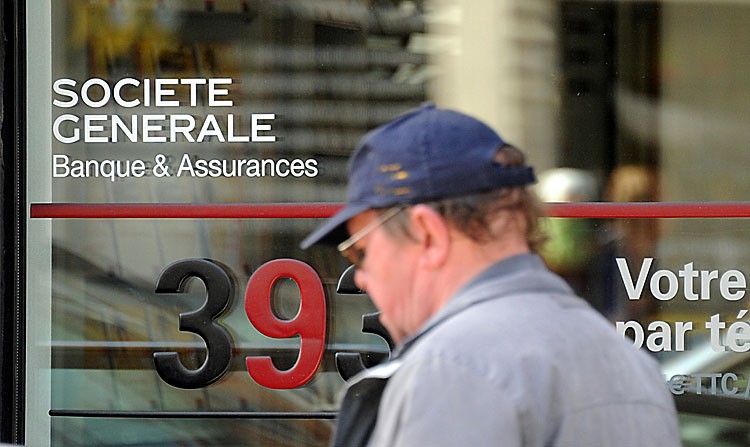
France, Belgium, Spain, and Italy announced the ban, in response to the decline of bank stocks earlier last week, especially to the shares of banking giants Societe Generale, BNP Paribas, Santander, and BBVA. Shares of French bank Societe Generale suffered after rumors circulated that the bank is in financial difficulties, which the bank vehemently denied. The short sale ban was carried out by the European Securities and Markets Authority.
It was done “out of concern for consistency with the action of other regulators in the Euronext zone, even if the current rumors don’t specifically affect the financial securities that are listed on Euronext Brussels,” said Belgian regulators last week in a statement. The ban is for 15 days in Italy, France, and Spain, and for an indefinite amount of time in Belgium.
In a surprising move, the market regulators in the U.K. were against the short sale ban.
A short sale is a strategy employed by an investor to bet that the stock price of a particular company will decline. The investor borrows shares and sells them for a profit today, and when the shares decline in the future, the investor buys them back at a lower price to close out the position (of the borrowed shares).
But a short sale ban has its detractors, who argue that it may not achieve the desired goal once the ban ends.
The shares of the major European banks are traded in multiple markets, including in Frankfurt and in New York. As such, investors who are bearish on the shares can still sell them short if they wish in other marketplaces. Because of this, there may be price dislocation for the shares of such companies across multiple jurisdictions.
In addition, savvy investors can enter into derivative contracts, or other traded funds, which achieve similar results. Perhaps the greatest concern is that a short sale ban sends a message to investors and the market that something indeed may be wrong with the banned companies, which could fuel further speculation.
The U.S., French, German, and U.K. regulators enacted a short sale ban during the financial crisis, late in 2008, to halt the slide in banking shares, which at the time were battered by speculators. Economists argued that the ban at the time was unsuccessful.
“The knee-jerk reaction of most stock exchange regulators around the globe to the financial crisis—imposing bans or regulatory constraints on short selling—has been detrimental for market liquidity and price discovery, and at best neutral in its effects on stock prices,” concluded economists Alessandro Beber and Marco Pagano at the Center for Studies in Economics and Finance in Italy, in a research paper.
 Friends Read Free
Copy
Facebook
Tweet
Friends Read Free
Copy
Facebook
Tweet