AMOT, Sweden—In February 2011, two people illegally killed a wolf on a frozen lake in central Sweden by chasing it with a snowmobile, running it over repeatedly, and finally bludgeoning the seriously injured animal to death with a makeshift club. Then they hid the carcass in a crevice and covered it with snow. It is a powerful illustration of the kind of hatred some people have for wolves in Sweden.
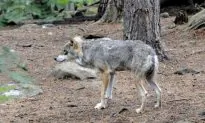
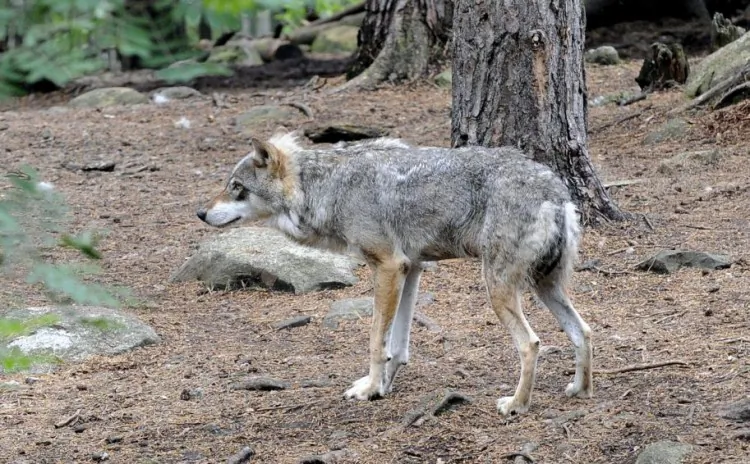
The wolf is easily Sweden’s most controversial animal, despite there only being about 300 of them in a country of 9 million people, that’s roughly the size of California.
The debate is heated over whether or not to tolerate wolves in a country that has a long history of killing them off. It is often portrayed as being a battle between urban conservationists who only care for animals, and heartless country hicks who are ready to hunt down every last canine menace.
Swedish officials who handle predator issues are routinely threatened and harassed. When regulated wolf hunting was controversially introduced in 2010, activists took to the forest to sabotage it. TV debates on the topic end in shouting matches.
Leif Holst, who runs a nature tourism operation with sled dogs outside the small village of Katrineberg, some 200 miles north of Stockholm, first discovered the tracks of the grisly hunt along with his wife Gullan. Holst is also regional director of an association working to preserve Swedish predator-animals.

After the killing went public, Holst was told that killing the wolf in this manner was a service to the community; the person also suggested that Holst might be treated the same way.
“He was serious,” Holst said. “But that’s the only time I’ve had someone say something like that to my face. Mostly, they just talk behind your back.”
Extremists aside, however, the discussion in rural Sweden where the wolves roam is more nuanced. People there tend to take a more pragmatic approach, says Per Mellstrom, who lives about 10 miles from Holst in the village of Amot.
Mellstrom is an active member of the Swedish Hunter’s Association, and represents hunters’ interests in a regional government body for wildlife issues.
There once was a sizable wolf population in Sweden. In the 1830s, records show that Swedes hunted roughly 500 animals per year. Into the 1960s, rewards were still being offered for wolf kills. The program worked so well, that by the mid-’60s, wolves were declared officially extinct in Sweden.
A decade or two later, it is believed that five animals wandered into Sweden from Finland and began to proliferate.
Mellstrom says in his neck of the woods alone, three different wolf packs have established territories.
“Of course, everybody has an opinion,” he said. “But there is a pattern where there is usually a lot of controversy at first, when wolves spread to a new area, and after a while it blows over. Media only seek out the extremists, because that’s what makes good copy.”
 Friends Read Free
Copy
Facebook
Tweet
Friends Read Free
Copy
Facebook
Tweet