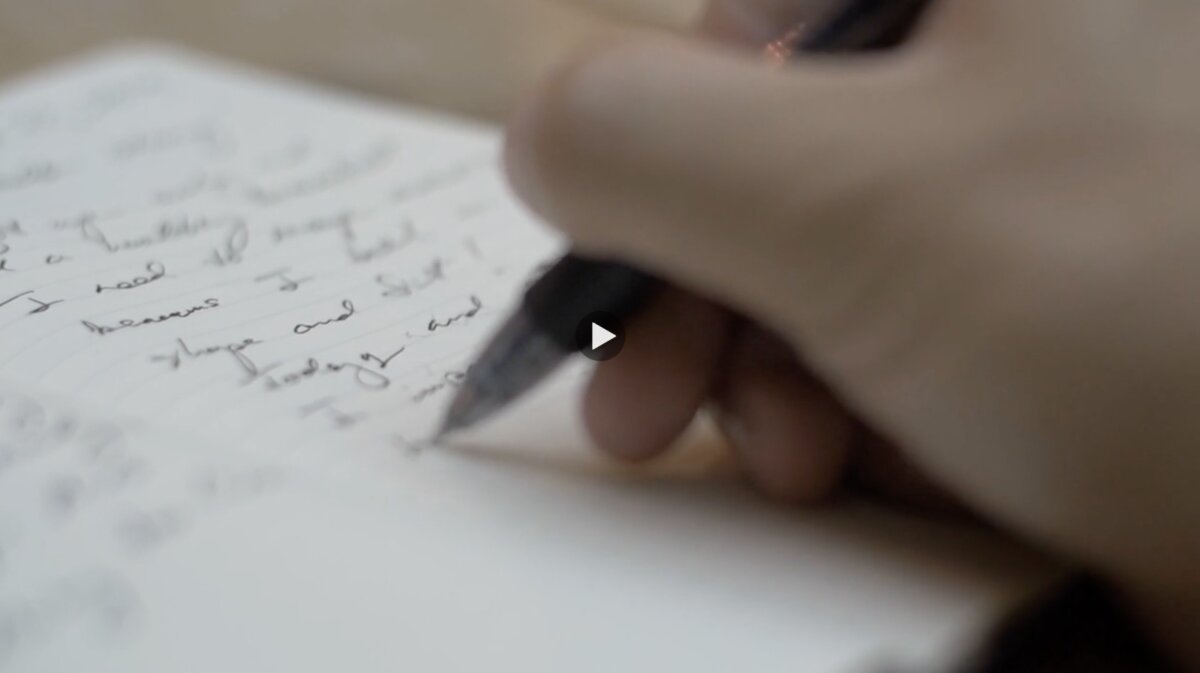
I was recently cleaning out an old family desk when I came across a stack of letters bound with a faded blue ribbon. The paper had gone brittle with age, and the cursive writing looked like something from another world.
Every loop and flourish had a kind of rhythm, almost like the writer had danced across the page instead of having written on it. I couldn’t help but imagine the life behind each carefully penned word, a voice reaching across decades to meet me.
It turned out to be a letter from one of my distant ancestors, a woman who could make ordinary notes look elegant. It made me wonder what she would think of today’s world, where most of our thoughts live inside glowing screens and vanish at the press of a button.
That discovery sent me down a rabbit hole of nostalgia and reflection. When did we stop writing like that? When did a once-prized act start to feel like a relic of the past?
Then I thought of my mother, a retired teacher. Once, I compared her writings with a family letter from generations ago. My mother’s handwriting, shaped by years of reporting cards and reminders, moved with confidence, whereas my ancestor’s script looked ceremonial, reflecting a time when penmanship was a mark of pride and identity.
Why Handwriting Still Matters
We live in a world where typing has taken over almost everything. It’s faster, cleaner, and easier. Yet, for all that convenience, something important has gone missing.
Handwriting engages the brain in a different way. Neuroscientists have found that writing by hand activates regions tied to memory, focus, and creativity.
In other words, when you write something down, you remember it better. That’s why even in an age of digital note-taking apps, students who write by hand often recall more. The act of shaping each letter by hand gives thoughts a built-in reflection time that typing skips over.
There is also the human factor. Handwriting carries emotion, tone, and personality without emojis or punctuation tricks. A letter written by hand feels alive in a way that a text message never can. You can sense the writer’s mood in the pressure of the pen or the tilt of the lines.
Another reason handwriting matters is permanence. Emails get deleted, phones get replaced, and files get lost. But a handwritten note can survive generations. The handwritten letter I found from the old family desk has outlasted every computer I’ve ever owned. Ink may fade with time, but digital memories vanish in an instant with the press of a button.
On a more practical level, handwriting also forces clarity of thought. You can’t edit endlessly with a pen. Writing by hand doesn’t just produce sentences; it trains focus. We pause before putting words on paper, and sometimes that pause is where real insights begin.
And let’s not forget the aesthetic pleasure. There’s something deeply satisfying about seeing a page filled with your own handwriting. Curves and loops form an experience that no digital font can replicate, and the act of writing itself becomes an aesthetic pleasure.
Written by Hand, Remembered by Heart
Maybe handwriting will never make a full comeback. Technology has its place, and I wouldn’t want to give up the ease of typing. But handwriting deserves more than a footnote in history.
Just as physical books have not disappeared since e-readers arrived, and vinyl records still have a place on store shelves, handwriting will always have its loyalists.
There’s a comfort in the analog world that digital tools can’t replace. People still crave the texture of paper, the scratch of a pen, and the visible trail of thought unfolding. Much like those who seek stories created by the human mind rather than algorithms, a part of us will always reach for the genuine over the generated.
So maybe the next time you feel like writing something, skip the keyboard. Grab a pen, find some paper, and let your ideas flow at their own pace. You might be surprised by how good it feels to see your own thoughts taking shape in real ink.