
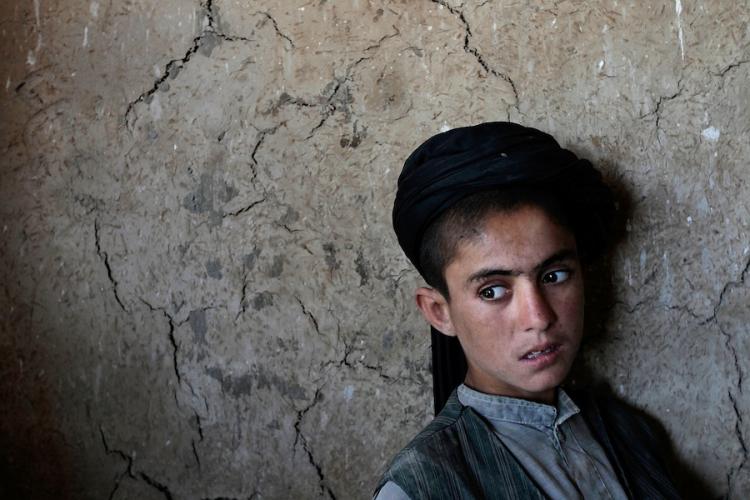
Northwestern Pakistan’s Federally Administered Tribal Areas (FATA) and North West Frontier Province (NWFP) are nestled in the heart of both an international and domestic conflict.
A report released Wednesday by Amnesty International, based on 300 interviews with civilians, government officials, teachers, aid workers, and others, sheds light on the northwest Pakistani situation.
The Pakistani government has historically marginalized the people in the FATA and NWFP regions, who are mostly of the Pashtun ethnic group.
According to the AI report, the Pashtun people suffer from some of the lowest living standards in Asia. With an overall adult literacy rate of 17 percent, and as low as 7 percent for women and girls over 10 years old, the region is developmentally far behind the rest of Pakistan, which has an overall literacy rate of 43 percent.
Since 1901, the region has been governed under the colonial-era Frontier Crime Regulation (FCR)—a law that has been criticized for perpetuating sexual discrimination and violating both international human rights laws and the Pakistani Constitution.
Caught in the Middle
The Taliban was first pushed into the northwest region of Pakistan as they fled the U.S.-led invasion of Afghanistan in 2001.
When the Pakistani Taliban started to interfere in military operations in Afghanistan, the Pakistani government took steps to suppress them, often at the expense of the human rights of the local population living in the FATA and the NWFP regions.
In 2009 alone, AI’s conservative estimate is that 1,300 people were killed in confrontations between the Pakistani military and the Taliban. Other sources, such as the Pakistan-based Institute for Peace Studies, suspects that the figure is much higher, upward of 11,000 people.
 Friends Read Free
Copy
Facebook
Tweet
Friends Read Free
Copy
Facebook
Tweet