With the 18th Party Congress rapidly approaching, the reshuffling of power within the Chinese Communist Party (CCP) has entered a critical phase. In the July 2012 Beidaihe Meeting, top Party leaders are expected to decide on the regime’s new leaders.
An announcement on who will lead the CCP for the next 10 years, however, will not be made until October or November, following the secretive tradition of power handovers in the regime.
This year, due to the scandals of former vice-mayor of Chongqing, Wang Lijun, and former Party secretary of Chongqing, Bo Xilai, the curtain has to some degree been pulled back on the regime’s internal negotiations. With the help of firewall circumvention software, Chinese people also now have access to free information from around the world.
The June issue of Hong Kong’s Chengming Magazine reported that two vice-chairmen of the Central Military Commission (CMC); eight members of the CMC, the defense minister; and the chief of general staff for the People’s Liberation Army (PLA) jointly wrote to the Central Committee of the Communist Party of China requesting that Hu Jintao remain the chairman of the CMC after the 18th Congress.
Former Party leader Jiang Zemin may have set a precedent by insisting on serving as chairman of the CMC after he was no longer General Secretary of the Party. A source from Beijing told New Epoch Weekly that different factions have given tacit support for Hu to serve as chairman for another two years.
Another well-informed source told New Epoch Weekly that Hu’s original plan for the 18th Politburo Standing Committee (PSC) included Vice Premier Li Keqiang, Organization Department Chief Li Yuanchao, Chief of the General Office of the Central Committee Ling Jihua, and Party Secretary of Hunan Zhou Qiang, who are all key members of the Communist Youth League faction led by Hu.
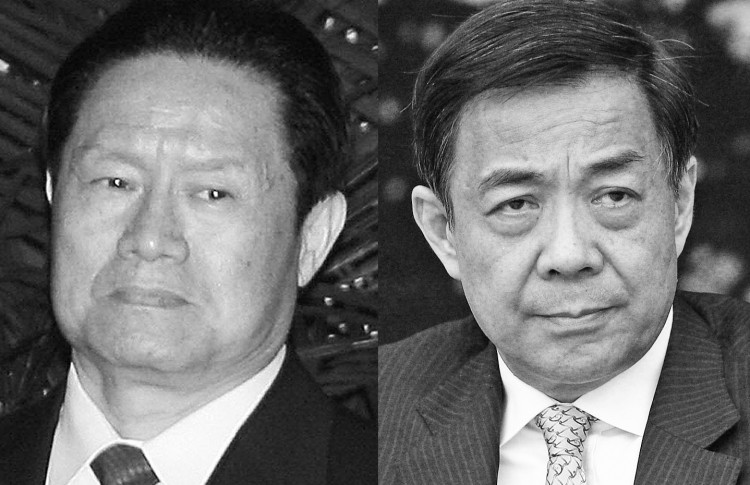
The Wang Lijun scandal, however, has led to the ouster of Bo Xilai and implicated domestic security chief Zhou Yongkang. The scandal also exposed Bo and Zhou’s coup plot to prevent Xi Jinping’s smooth succession, and Bo and Zhou are both close allies of Jiang Zemin.
Jiang’s supporters are now in a desperate fight to stay in power. Hu therefore was forced to put aside his plan for the upcoming succession and has focused on keeping control of the army.
The source said that since Jiang is in frail health, his supporters want Zhou to hold onto power. They agreed to let Hu keep control of the military on the condition that Bo does not implicate Zhou in the investigation currently being conducted on Bo.
A dissident Chinese-language news website outside China reported in late May that the number of PSC members will be reduced from nine to seven.
An article by Hong Kong’s South China Morning Post on June 8 also said the number is likely to be reduced to seven. The article predicted that besides Xi Jinping and Li Keqiang, those who are likely to make the list are: Shanghai Party Chief Yu Zhengsheng, Vice Premier and acting Chongqing Party Chief Zhang Dejiang, Vice Premier Wang Qishan, Organization Department Chief Li Yuanchao, and Propaganda Chief Liu Yunshan.
The Post also reported that senior members of the Party held an internal poll in mid-May to select their favorite top leaders for the next 10 years. Although the ballot may not be decisive in determining the leadership’s exact lineup, its results will have an important bearing on the actual selection of the Party’s top leaders, the report said.
This prediction stirred a heated discussion online, because it did not include Guangdong Party Secretary Wang Yang—and except for Li Keqiang and Li Yuanchao, who both belong to Hu’s Youth League Faction—the rest all belong to Jiang’s Faction.
Despite the Post’s prediction, the dissident Chinese-language news website Boxun recently said that according to new information, the number of PSC members might still remain at nine, which would mean that more candidates compete for the two extra seats.
Click www.ept.ms/ccp-crisis to read about the most recent developments in the ongoing crisis within the Chinese communist regime. In this special topic, we provide readers with the necessary context to understand the situation. Get the RSS feed. Get the new interactive Timeline of Events. Who are the Major Players? 
When Chongqing’s former top cop, Wang Lijun, fled for his life to the U.S. Consulate in Chengdu on Feb. 6, he set in motion a political storm that has not subsided. The battle behind the scenes turns on what stance officials take toward the persecution of Falun Gong. The faction with bloody hands—the officials former CCP head Jiang Zemin promoted in order to carry out the persecution—is seeking to avoid accountability for their crimes and to continue the campaign. Other officials are refusing any longer to participate in the persecution. Events present a clear choice to the officials and citizens of China, as well as people around the world: either support or oppose the persecution of Falun Gong. History will record the choice each person makes.
Read the original Chinese article.
The Epoch Times publishes in 35 countries and in 19 languages. Subscribe to our e-newsletter.
 Friends Read Free
Copy
Facebook
Tweet
Friends Read Free
Copy
Facebook
Tweet