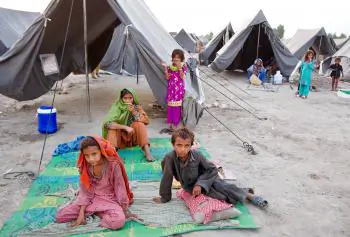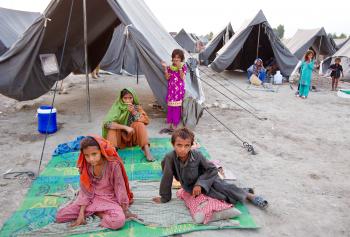
Because the need to respond urgently to natural disasters is great, considering the long-term impact of how that relief is delivered, has often been neglected. As a result, places struck by natural disasters are often further damaged by pollution brought by aid organizations themselves, thus creating more problems for locals to deal with in the long term.
The international relief community is now starting to look at these issues and think about more sustainable ways of delivering emergency relief.
On Thursday, in honor World Humanitarian Day, the United Nations Environment Program (UNEP) launched its Resource Centre for Mainstreaming Environment into Humanitarian Action, an online resource with a compilation of information about responding to humanitarian issues with a focus on being environmentally friendly during the process.
One article on the site by Groupe URD, a France-based research, evaluation and training institute, says that providing aid using materials that are local, natural, renewable, or biodegradable as a priority, favors sustainable reconstruction and/or development in a crisis area.
“In contrast, not respecting the environment promotes bad habits regarding the management of resources, which is already under threat because of the crisis,” writes Groupe URD.
The main idea behind the green aid initiative is that it will do a much better job setting up an area for long-term recovery and success.
“Humanitarian action always takes place in an environment that has been weakened and often in one that has been stretched beyond its capacity for resilience, that is, beyond its capacity to recover and develop normally after serious disruption,” writes UNEP.
“Making relief and recovery operations more environmentally sound will ensure that both human welfare and the environment are protected and conserved in response to a disaster or conflict,” UNEP advises.
 Friends Read Free
Copy
Facebook
Tweet
Friends Read Free
Copy
Facebook
Tweet