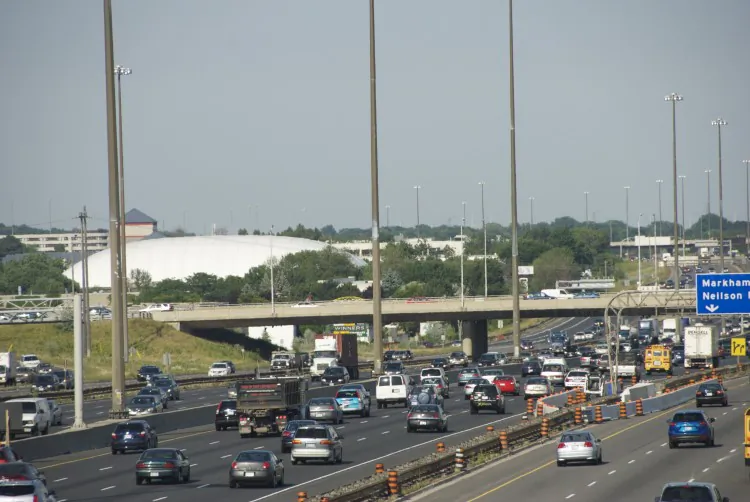

One very simple fact about driving in densely populated urban areas is you are most likely going to be among many, many other motorists on the road. So it is very important to know what other drivers are trying to do, and at the same time let them know what you are trying to do.
So it boils down to one simple word: communication.
For this purpose, every car is equipped with three signal lights: turning, braking, and backing up. The back-up light tells others that the car will be moving in the reverse direction. Nothing complicated here.
The brake light is also a simple concept, but vitally important. Because of the fact that it lights up whenever you put your foot on the brake pedal, many tailgaters rely completely on the brake lights of the car in front to tell them when they need to slow down. Unfortunately, many tailgaters don’t seem to understand the concept of engine braking.
I drive a car with a stick-shift, and being tailgated is by no means a rare event. As I come up to a red light, while downshifting for a mild engine-braking, I would notice in the rear view mirror the car behind drawing close for about a second, then slowing down in a hurry.
Usually by the third red light, it would register with the tailgater that my car can slow down faster than expected without the brake lights coming on, and I would start seeing a bit more space behind me.
Of course, this is not just about “teaching tailgaters something.” The take-away here is that while brake lights are vitally important—and that’s why by law modern cars have three of them—you shouldn’t rely solely on the brake lights of the car directly in front. It’s a good idea to look beyond the car in front and pay attention the overall traffic flow.
Then there’s the turn signal. Unlike the back-up and brake lights, the turn signal is not directly linked to any core operation of a vehicle, so it is left to the judgment of the driver to use it, and this is where much of the problem lies.
I’ve seen many drivers who seem to have completely forgotten that the idea here is to convey one’s intent, as opposed to an after-the-fact gesture. I am sure most drivers in big cities have seen a car cutting into their lane, only to flick the turn signal once after the car is more than half-way into the lane.
For new drivers, changing lanes in busy traffic can be a big headache. I would suggest that these novice drivers keep “communication” in mind.
Turn on the signal, and within a second or so the car behind you in the other lane will have some sort of reaction to your intent. The driver will either hold speed or slow down to make room for you to come in; speed up as if saying “maybe try the guy behind me”; or remain totally oblivious or decide to make life difficult by staying in your blind spot.
Sometimes it is difficult to tell the difference between the latter two scenarios. The driver in the other lane might think you already have all the space in the world, but for inexperienced drivers, that front bumper looks awfully close in the mirror.
I know some drivers who take a more competitive approach to changing lanes. They feel that if they signal, other cars will try to block them. Such thinking is hard to understand—maybe it’s what they themselves always do to other drivers. This competitive mindset is definitely not recommended for novice drivers.
The Epoch Times publishes in 35 countries and in 19 languages. Subscribe to our e-newsletter.
 Friends Read Free
Copy
Facebook
Tweet
Friends Read Free
Copy
Facebook
Tweet