
The U.S.–China trade war has unfolded like a boxing match. Both sides were trading blows, and suddenly, China threw a haymaker.
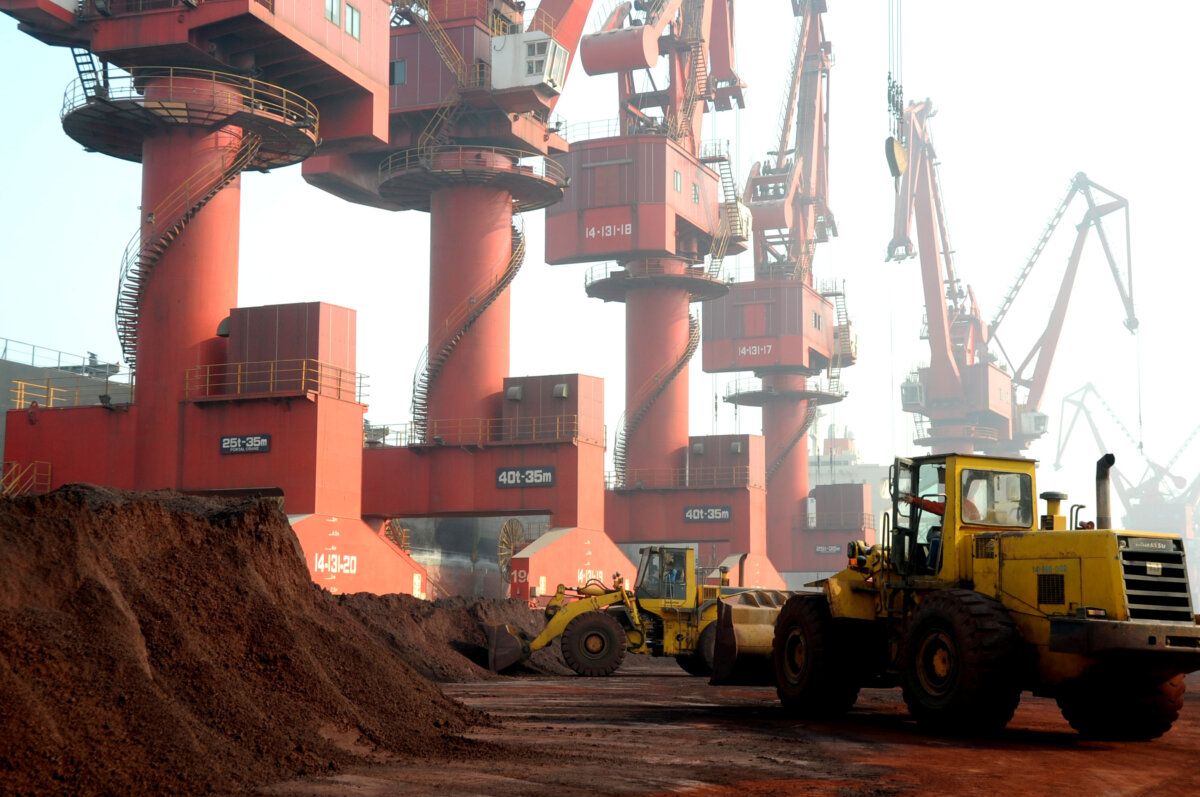
It expanded its export controls of rare earths to include any products that contain 0.1 percent of Chinese rare earth content or use Chinese technology in the production process. Beijing made the announcement on Oct. 9. The new measures will take effect on Dec. 1.
Never mind the agreements with the United States in June about implementing the May agreement to provide rare earths to U.S. companies. In fact, ever since April, China has been slowwalking those critical minerals that are essential for a modern economy, from cars and electronics to advanced weapon systems.
China’s export controls on rare earths are not, in practical terms, a significant change from before, considering the new 0.1 percent measures are very difficult to enforce, according to China expert Alexander Liao, who grew up in China’s military system and later became a seasoned journalist and Hong Kong bureau chief.
The difference is that Beijing is being very loud, said Liao.
So why now?
The Chinese Communist Party (CCP) is attempting to take advantage of what it perceives as a U.S. vulnerability associated with the government shutdown, but the move hasn’t improved Beijing’s position in trade negotiations, Liao told The Epoch Times.
Instead, Liao said, it will deepen China’s isolation by strengthening the West’s resolve to achieve rare earth independence and facilitate a world trade alliance without China.
The CCP knows that the rare earth trump card it holds has an expiration rate, said Mike Sun, a U.S.-based businessman with decades of experience advising foreign investors and traders doing business in China. He uses an alias to protect himself from reprisals from the regime.
The regime is using its card for maximum impact while it still can, Sun added.
The shutdown can be seen as an external reason that the regime made its move on Oct. 9, Sun said. Internally, Xi Jinping needs to appear strong to reinforce his authority within the CCP; the stagnant Chinese economy is putting him under pressure.
The recent tariff tit-for-tat occurred days before an annual plenary session by central committee members of the CCP. Hundreds of members will set the next five-year plan for China from Oct. 20 to 23.
The new five-year plan, covering 2026 to 2030, will be of utmost importance, Sun added, because Beijing is facing many challenges amid its economic woes and a strained international geopolitical environment.
China’s domestic demand is still “very weak,” said William Lee, chief economist of the Milken Institute, citing lackluster data from retail sales, private investment, and the property market—metrics that, in his view, are not under the direct control of the regime.
“It’s a time of getting desperate because economic measures are not working, and they have to show a very strong foreign policy line,” Lee, who also leads the consultancy Global Economic Advisors, told The Epoch Times.
“Instead of saying ‘attack Taiwan,’ they get to say, ‘We are going to attack the U.S. directly at the weakest point.’ And this is it: rare earths.”
The geopolitical link from rare earths to the U.S. economy is also how it affects the AI trade, the main driver of economic growth in the United States. Without it, the growth of the first half of 2025 was only 0.1 percent, according to Harvard economist Jason Furman.
Hence, the market reacted with both the S&P 500 and the Dow Jones Industrial Average dropping by 3 percent on Oct. 10.
President Donald Trump immediately retaliated against China on Oct. 10, with a 100 percent additional tariff on Chinese goods and export controls on all critical software, effective Nov. 1.
China’s Ministry of Commerce called for “addressing concerns through dialogue” on Oct. 12 and said it would retaliate if Trump follows through on his promise.
The United States leads the world in AI chip technology, with U.S. companies such as Nvidia and AMD designing most of the advanced AI processors. During the trade talks, China has repeatedly sought greater access to such technologies, which are seen as essential for the regime to achieve its goal for global dominance in advanced manufacturing.
Washington and Beijing have entered another round of trade negotiations with higher baseline hostility, with the tug of war still revolving around rare earths versus AI chips until their cards expire, according to Sun’s analysis.
“Don’t worry about China, it will all be fine!” Trump wrote in Truth Social on Oct. 12, adding the United States “wants to help China, not hurt it.”—Terri Wu
 Friends Read Free
Copy
Facebook
Tweet
Friends Read Free
Copy
Facebook
Tweet