Since U.S. forces captured Nicolás Maduro, Venezuelans have been seeing some rights return to the socialist country, such as freedom of speech, sources told The Epoch Times. This is despite the fact that top leaders from the same oppressive regime remain in power.
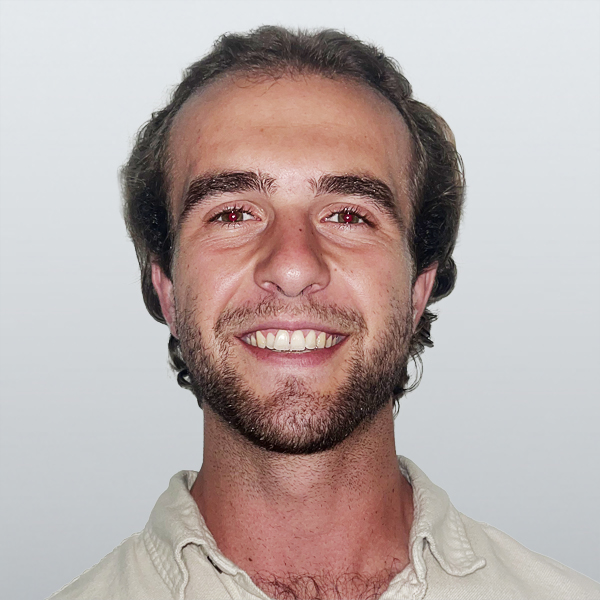
“Everyone is feeling that we are getting some freedom,” said 21-year-old Jacobo Malkhasian, who lives in the capital city of Caracas. “We’re getting some rights … some possibilities to now have free speech.”
Other aspects of daily life, such as high inflation, have yet to see improvements after the overnight U.S. operation to capture former Venezuelan leader Maduro on Jan. 3, Malkhasian said.
The Epoch Times spoke to several Venezuelans living in their home country and expats in the United States who expressed gratitude for President Donald Trump and the U.S. military. They said a sense of relief has settled over the South American country in the past few months.
However, achieving a lasting, peaceful, and free society in Venezuela could take years because of what they described as a population with post-traumatic stress disorder.
Freedom of Speech Returns
Prior to Maduro’s capture, there was no real news coverage or sense of freedom of speech in Venezuela, multiple sources explained.
“[Maduro] took control of what the media says, and if the media didn’t say what he wanted, he destroyed,” Malkhasian said. “The news in Venezuela always was [an] alternate reality—the Chavista reality.”
Chavistas are supporters of Chavismo, a political ideology named after the late Hugo Chávez, Maduro’s predecessor.
Media coverage in Venezuela before Maduro’s capture reflected Russia as a necessary ally and the United States as an enemy, said Malkhasian, who works with a student political opposition group called UNION at the Central University of Venezuela.
Malkhasian described his type of work as difficult and dangerous up until Maduro’s capture.
“If you talk, you go to jail. If you make any discussions that get the government uncomfortable, you go to jail—you disappear,” he said.
News coverage has noticeably become more balanced, Malkhasian said, reflecting the true state of Venezuela and the hardships the population has endured for years under a socialist regime—not just broadcasting the “Chavista reality.”
The Epoch Times spoke with another Venezuelan man, 32, who works as a salesman in Caracas. He wished to remain anonymous due to what he described as an “unclear” situation under the remaining regime leadership. However, he said people now feel they can voice their opinions without risk of political prosecution or retaliation from the regime.
He recalled a time when he posted a photo online that he said the regime wouldn’t care for, and one of his friends, who works in a Venezuelan police force, warned him he should take it down or risk being taken to jail.
That doesn’t happen anymore, he said. It’s one of the biggest changes he’s noticed since Maduro’s capture.
“People are expressing themselves with the utmost liberty,” he said. “They’re not really afraid of being taken to jail or being prosecuted because of what they say online.”
Basic Necessities
Political opposition groups, such as the one Malkhasian works for, can now openly talk about issues facing the Venezuelan population, including energy, water, and internet connection.
“There is freedom, but in the economic way, there’s trouble,” Malkhasian said.
One Venezuelan woman who spoke to The Epoch Times, 24-year-old Oriana Campos, said she could not establish a strong enough internet connection for a phone interview and instead supplied written replies via WhatsApp.
Right now, the priority should be on securing water and electricity supplies, and workers’ purchasing power, Campos said.
Water and electricity issues vary dramatically depending on the area, the anonymous Venezuelan man said. Some places have adequate service, while his area might be without water for two or three days at a time, he said.
But he has seen improvements in utilities issues, including internet speeds, he said.
Meanwhile, prices remain high and wages low due to nearly three decades of “laziness, corruption, destruction, and theft of resources” by the socialist government, Campos said.
Venezuela experienced hyperinflation under its socialist regime. World Bank data show the country’s inflation rate skyrocketed to more than 225,000 percent in 2018. It has since come down, but remains at elevated levels.
The anonymous Venezuelan said that after Maduro’s capture, he saw food prices decrease, though not dramatically. That hasn’t happened in years.
Daniel Tirado, a political refugee who fled Venezuela because of harassment and threats to him and his family, said social media platforms such as X play a massive role in news coverage and holding powers accountable.
Maduro signed a resolution that banned X for 10 days after the country’s disputed 2024 election. Venezuelan sources said, however, that the platform remained unavailable in the South American country, which explains how the Maduro regime has been able to control the narrative, Tirado said.
Malkhasian said X only began working for him a month ago, and prior to that, the platform hadn’t worked since at least 2017.
Energy also remains an issue for Venezuelans, Tirado said. So as long as the Venezuelan regime has control of the country’s oil, it has control of the population.
Malkhasian agreed. “The oil and the gas are under the control of the state, and [the regime] has the state. … They have the money, and they have power.”
Right to Assembly, Expression
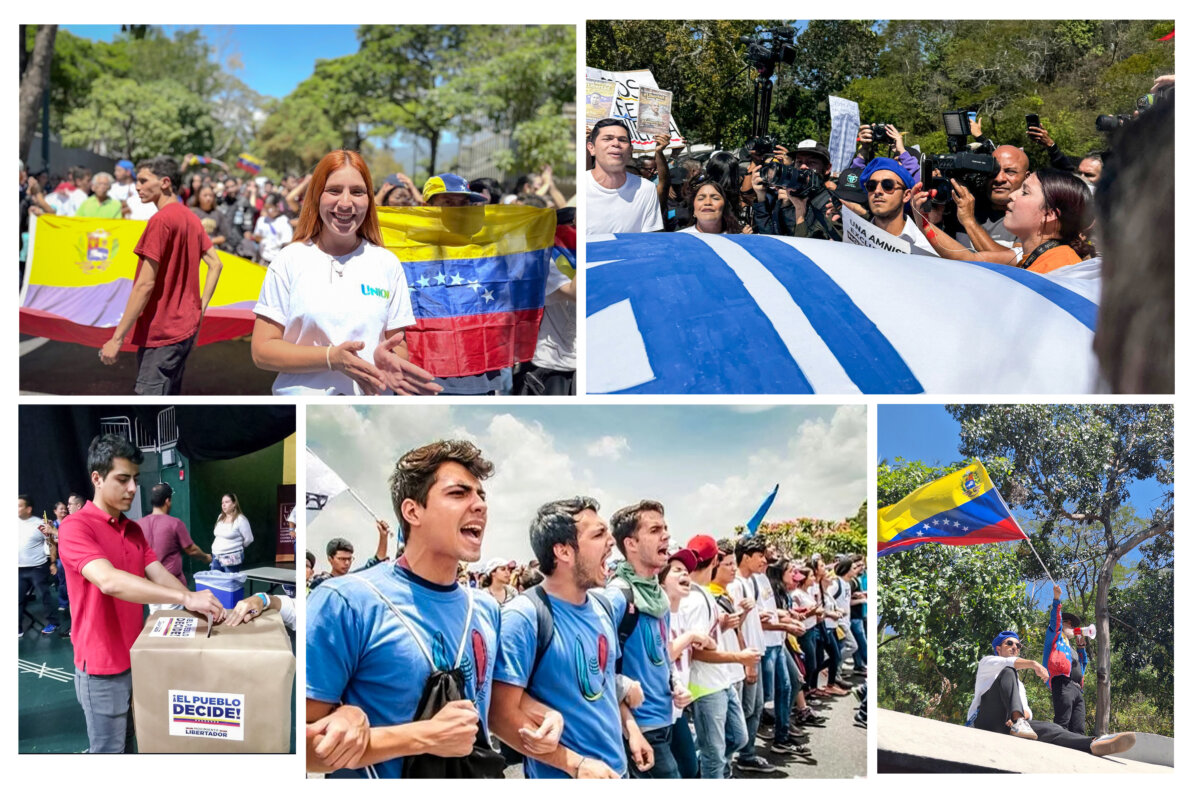
Campos, like Malkhasian, is an active member of the UNION group at the same university. She participated in a March protest that led all the way to the doors of the National Assembly, which is “something that has not happened for many years.”
She explained that she feels less afraid to assemble, express, and even discuss such matters with The Epoch Times since Maduro’s capture.
Before, Campos said, state security forces would never have allowed a protest to reach the National Assembly.
“When they saw a protest on the street, they repressed [it] with tear gas, pellets, or locks to prevent people from walking further,” Campos said.
Campos is on an international studies track at the Central University of Venezuela and serves as a member of the board of directors for UNION. She also worked on the youth campaign for opposition candidate Edmundo González Urrutia, who is recognized as the rightly elected Venezuelan president, after his predecessor, María Corina Machado, was barred from holding public office by the Maduro regime.
The anonymous Venezuelan source also said he would have never dared to speak to The Epoch Times before Maduro’s capture.
He recalled that during the 2024 election, the country knew the opposition party had won, but the Maduro regime claimed victory anyway.
The regime would send out armed forces to “shoot whoever they had to shoot” to stamp down protests, he said.
“I think that when working in politics, the most relevant thing would be to say that we have a little freedom of expression again,” Campos said, adding that it doesn’t feel 100 percent guaranteed yet.
Tirado, who actively participated in political opposition groups when he used to live in Venezuela and continues to do so in the United States, said Campos and Malkhasian put their lives at risk every day fighting against the regime.
Remnants of the Regime
With some of these positive effects since Maduro’s capture, Venezuelans are now in a balancing act, walking a tightrope to see just how far they can go while avoiding falling back into the fear instilled in the population over the course of decades, sources explained.
Although Maduro is gone, remnants of his regime remain.
“We know that the people that are in the government are the same,” Malkhasian said. “They still need the power, and they will do anything to get the power. And as we know, they are capable of doing anything to take over.”
Venezuela’s interim leader, Delcy Rodríguez, served as Maduro’s vice president prior to his capture. She previously said she welcomes renewed diplomacy between Venezuela and the United States.
Trump and the U.S. military can take Maduro, but they can’t take away the loyalty that top government officials and military commanders have for him.
“It’s like a negotiation,” Malkhasian said. “We are seeing how much we can take until they say, ‘Stop, go to prison.’”
Venezuela is still controlled by the Chavismo, the anonymous source reiterated.
Tirado said he has observed small improvements, with some rights returning to Venezuelans, but a full transition into a truly free country will take more work.
“[The regime] is going to do whatever it takes to remain in power,” Tirado said. “It’s still the same power structure. It’s still the same people. The only difference is that right now, Donald Trump and Marco Rubio—they’re supervising.”
Tirado’s choice to flee, like that of millions of other Venezuelans, was an impossible one forced upon him. It will follow him the rest of his life, he said.
As a political exile, it is still not safe for him to visit Venezuela.
“What they did to us, I think, is going to be very traumatizing for the next generations,” Tirado said. “We will have to work on this, try to overcome this situation.”
Change Is Coming
Positive and immediate changes were evident after Maduro’s capture.
“I think that more than capturing Maduro, it gave us hope,” Tirado said. “It showed to the world that even dictators, they are not untouchable.”
But Venezuelans are not truly free yet, he said.
“I would say the system hasn’t really changed, it has just adapted,” Tirado said in a follow-up conversation. “It’s still authoritarian, just operating in a different way.”
Aside from fundamental rights returning to Venezuela, like speech, assembly, and expression, the perception of a better future is now inevitable, sources said.
“At some point in my life, like all young Venezuelans, I considered emigrating,” Campos said. “But I also felt that I should be part of change and politics.”
Campos said she doesn’t believe in revenge but does believe in justice, which is an essential building block for achieving the dream of Venezuela she has for herself and her family.
“Venezuela has an inexhaustible resource that is its people, its resilience,” Campos said. “Maybe not in a year, but Venezuela will be great, it will be wonderful and will open its arms to the world.”
The anonymous Venezuelan said, overall, there’s a renewed sense of optimism among the population as it tries to overcome the years of violence it endured from the regime.
“People with the military, with tanks going over people that were protesting and smashing them with cars—that was on live television, people getting shot in the street for no reason. … Those things actually happened. Those things are real,” he said.
Building trust in the government, military, and elections again will be a slow, painstaking process, sources agreed.
The United States continuing to put pressure on Venezuela, Malkhasian said, could help ease the shift to a new stage in the country’s existence.
“[The regime has] the power, they have the military space, and they have control over resources,” Malkhasian said. “How are you going to destroy them? You have to get a little help from your friends.”
He wants to see a complete restructuring of Venezuelan society and a casting out of the remaining Maduro loyalists.
“I think that Venezuela is going to be a great country in 20 years,” Malkhasian said. “We’re going to look back, and we’re going to say, ‘We did it.’”
 Friends Read Free
Copy
Facebook
Tweet
Friends Read Free
Copy
Facebook
Tweet