

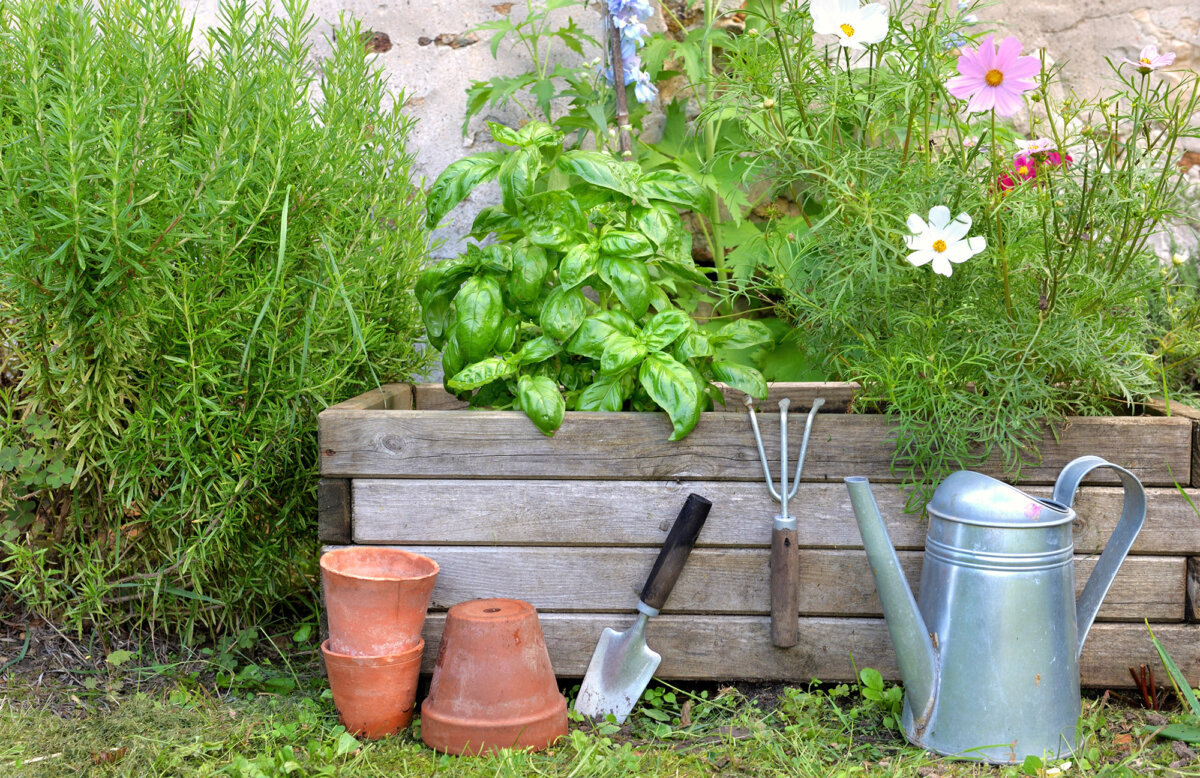
It’s 48 degrees Fahrenheit at 7 a.m. in the upper level of my hillside garden—chilly but not an outright threat to tender young early-season transplants such as basil.
Some 100 feet downhill, on a little plateau beside the spring creek flowing through the garden, it’s 41 degrees F. Had I set basil seedlings there, those warmth-dependent, super-delicate sprouts would be flopped over like shoelaces, gasping for heat and assistance.
But I didn’t do that, because I know where the hot spots and chill hills are in my quarter-acre garden and orchard. These are microclimates, distinct facets of topography that can make the difference between success or failure for many of the high-maintenance vegetables, flowers, and herbs that dedicated gardeners grow. When it comes to one’s own yard, I suppose we would call them hyper microclimates and stop there because we have reached the limits of English nomenclature.
My little plateau is where chilly overnight air pools in spring, creating a mini-fridge that’s fine for preservation but not for production. Once harvested, basil would be fine stored in a produce drawer at 41 degrees F—after I’ve grown it in a warm spot.
The funny thing about this little cold-air plateau is that, six weeks later, it’s the opposite: a hot spot. Shielded from cool maritime winds by a hedge of scrub brush, open to the high-summer sun high in the sky, it gathers early morning warmth and holds the heat until 8 p.m., when evening shadow washes over from northwesterly trees. So here, where I dare not plant delicate early-season basil, just eight weeks later, I have a thriving bed of heirloom corn, powering its way up toward the sun.
Now that’s a microclimate!
I make a point of taking advantage of it, because understanding the climatic topography of your yard and garden is crucial to horticultural success.
Most gardeners have some intuitive understanding of this. One wouldn’t plant sunflowers on the shady north side of a house, for instance. Fuchsias don’t belong on a heat-blasted south-facing wall.
Climate, using the simplest definition, is “weather over time”—time meaning decades or centuries. Climates are generally applied to broad regions, often international: Mediterranean (a term for the Mediterranean basin as well as California), temperate mid-latitude, subarctic, subtropical, and so on.
A microclimate is the climate of a discrete small area that differs from that of the general surrounding region. Often, because of the geographic features that create a microclimate, the variations are seasonal: The eastern half of Washington state, in the lee of the Cascade range, is colder in winter and hotter in summer—also drier in winter and sometimes wetter in summer due to thunderstorms.
North America’s West Coast is arguably the world capital of microclimates. My farm lies within a famous one, the Olympic Mountains rain shadow, in which the 10,000-foot range south of us, across the Strait of Juan de Fuca, blocks southerly winds bearing rain and clouds. Rainfall at Owl Feather Farm (less than 20 inches) is notably less than that in Seattle and one-tenth of the annual precipitation in Cascade foothills valleys just 50 miles away. Pilots often remark on the blue hole visible amid regional cloud cover over our island.
Microclimates are found in topographically dynamic landscapes such as mountainous areas, areas near large bodies of water, islands, and urban areas. The famous lake effect snow belts along the eastern and southern shores of the Great Lakes are one example—annual snowfall in Buffalo averages feet more than inland just 25 miles. Two towns in British Columbia separated by just 100 miles of mountain canyon, Hope and Lillooet, register the same difference of many feet in rainfall, and Lillooet holds the Canadian record for hottest temperature ever (an astounding 121 degrees F in 2021).
Hawaii’s West Maui Mountains, which fans believe is the wettest place on Earth, record hundreds of inches of rain a year on their northeast windward slopes, but downhill on the westward side, just a few miles away, Lahaina is arid, getting barely 14 inches per year.
These geographic distinctions are fascinating—and important, because similar distinctions exist in everyone’s yard. Beyond that, you can create them.
Understand Your Yard’s Microclimates
Cold air pools in low places and in places where it’s blocked from dropping further. At the Seattle home I once lived in, on crisp early spring mornings, there would be frost within five feet of the back of the house but none 25 feet farther out in the yard, even though the elevation difference was minimal. The back of the house was the geographic barrier that gathered cold air.
Today, at my island farm, I can step out on our patio and admire April’s lush green grass—shimmering white with frost in the lower end of the horse paddock located 200 yards away from and 50 feet below our house.
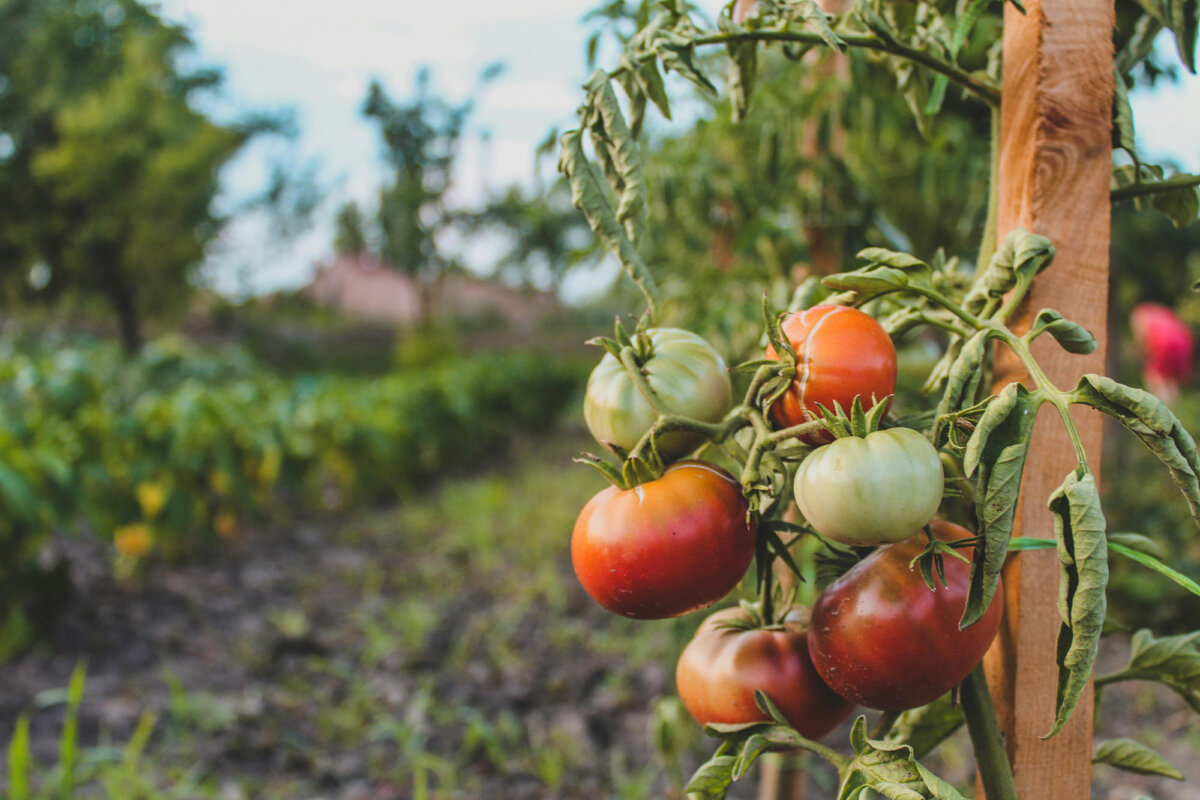
Concrete, stone, and dark materials absorb and hold heat: If you’re looking for an ideal place for tomatoes, pick the front of a concrete wall or wood fence. But that won’t work if you’re in a really hot climate, as tomatoes won’t set fruit when temperatures are too hot. These garden plants we love are fussy!
Some microclimate miniature zones are well-known horticulturally. Here on the West Coast, “dry shade” is a notoriously difficult landscape zone—whereas virtually no such thing exists in, say, southern Florida. Try to grow shade-loving impatiens beneath a mature cedar tree here, and you’ll need to water it every other day from June to September. What little rain falls is filtered by the tree’s thick frondy branches above; surface-seeking tree roots also extract moisture from the dirt. Flowers planted beneath will suffer, whether they like shade or not.
The place to learn more is at local nurseries and garden stores or in garden guides that draw on decades of experience in particular regions. And the whole enterprise is also a DIY arena that’s productive, fascinating, and a bit semiprofessional; casual gardeners pay little attention to these arcane details.
Make Your Own
This year, I hung an old wooden trellis behind a bed in which I planted my favorite long-season golden tomatoes. I hoped the dark wood would hold heat early in the spring and boost plant growth and then extend the season by conserving whatever sun and warmth came our way in October and November. Sure enough, that’s what happened: These plants had ripe fruit, and more of it, two weeks earlier than some identical tomatoes I planted just 8 feet away at the edge of my sweet corn. I enjoyed my last Kellogg’s Breakfast tomato at Thanksgiving.
The classic mechanical microclimate is formed by placing plastic row cover over beds, held up by hoops. You can position this over the plants just for spring or throughout the season. The ultimate version of this is a greenhouse, which may be tiny, tucked in next to a barn or garden shed, or large, with a frame and fiberglass panels. Row covers and greenhouses harvest warmth and, in some cases, fend off pests, such as the dreaded cabbage worm. But they can also encourage problems, too. They boost humidity, which then invites mold and mildew.
Winning the Wind Wars
Few weather conditions are more challenging than wind, which both chills and dries plants (and other living things, such as gardeners’ hands). This year, my pumpkins were pitiful one-pound midgets; last year, they were majestic 20-pound prizes. The difference was a July fraught with chill winds off the Salish Sea, located a couple hundred yards from my farm.
The answer has long been known to landowners around the world: Windbreaks are not only horticulturally beneficial, but they are also horticultural themselves. A row of hardy, handsome trees or large shrubs is both practical and pleasant to look at.
However, it isn’t instantaneous. If you could use a windbreak around your garden, plant now. I’ve been letting native shrub trees grow around mine, and after eight years, the effect is finally strong enough to make a difference. The one major gap is where, yes, my pumpkins were planted.
Small Differences Yield Big Outcomes
The key fact is that plants are exceptionally sensitive to small climatic differences. My neighbor uphill from me, just a quarter mile away and 200 feet higher, can grow chile peppers. I can’t. The daily temperature difference is probably less than 5 degrees F—but that extra warmth over a summer’s 100 days adds up to a significant horticultural disparity. This factor is called “growing degree days” (GDD), and it is the difference between her garden and mine.

I can’t move my garden uphill to hers. But I can just let her grow a few peppers for me … or try my hand at a chile-culture construct. Dark brick wall at the back of a bed facing directly south-southwest? Sheltered by plastic row cover? Might work. Might not.
You never know until you try. Plus, you don’t know at all to begin with until you learn about and pay attention to this semi-secret horticultural domain, the landscape of winds, sun angles, slopes, ridges, and valleys, all in your own backyard.
 Friends Read Free
Copy
Facebook
Tweet
Friends Read Free
Copy
Facebook
Tweet