
However, this may not be the case. Western democracy is not necessarily the highest aspiration of the protest movements.
The common thread is that people are trying to seize upon the momentum building across the region to demand improvements. The last months and weeks have been challenging for leaders in North Africa and the Middle East.
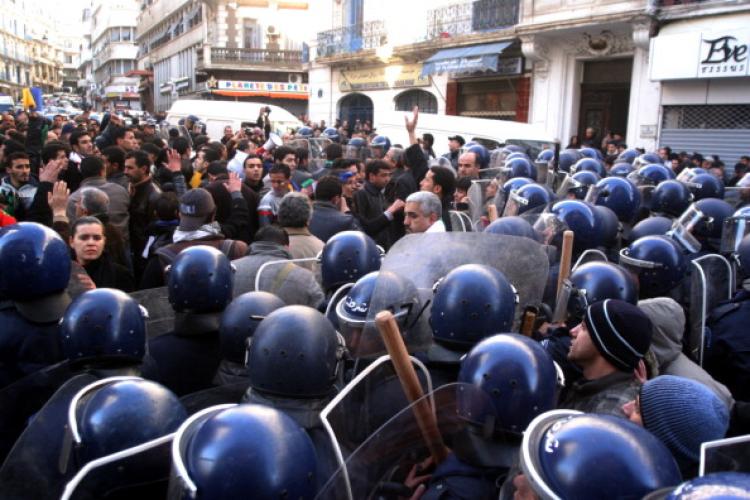
Starting in Tunisia where popular pressure drove President Zine El Abidine Ben Ali out of the country a month ago, Egypt's President Hosni Mubarak followed last Friday. Yemen, Algeria, Jordan, and Iran have also had to deal with protests obviously inspired by the success of Tunisia's successful Jasmine revolution. Syrian opposition tried to hold demonstrations but have not been successful.
But while they wish improvement, even the nature of what that means has not been consistent across the countries, or among all individuals. And certainly it is not true, say some observers, that their wish is democracy.
”It is fair to say that most protesters equate the ability to get rid of a hated leader … and to choose their leaders in free and fair elections, with democracy,” says Sylvia Maier, assistant professor at New York University School of Continuing and Professional Studies Center for Global Affairs.
However, the democratic model that we know in the West is broader than that and not necessarily pursued everywhere. Maier says a portion of the protesters in Tunisia, Egypt, and Yemen want to get rid of “an entire political order, characterized by arbitrary rule, the absence of the rule of law, little freedom of speech, endemic corruption, inefficiency, and a thoroughly unjust social and economic order,” and install the protection of more equal rights.
Tunisia, one month into its transition is starting to realize that reforming a society into a democracy is “a long haul business,” professor Rym Kaki of the University of Southern California wrote in an e-mail.
“Look at Tunisia's revolution as a tornado. It leaves a great deal of damage for years to fix and clean up.”
Some Tunisians might not have realized this looking at the number of Tunisians now attempting to flee to Italy. “We cannot speculate much about the reason why they fled other than an act of desperation,” she wrote.
Next: President Hosni Mubarak's resignation was exuberantly celebrated
 Friends Read Free
Copy
Facebook
Tweet
Friends Read Free
Copy
Facebook
Tweet