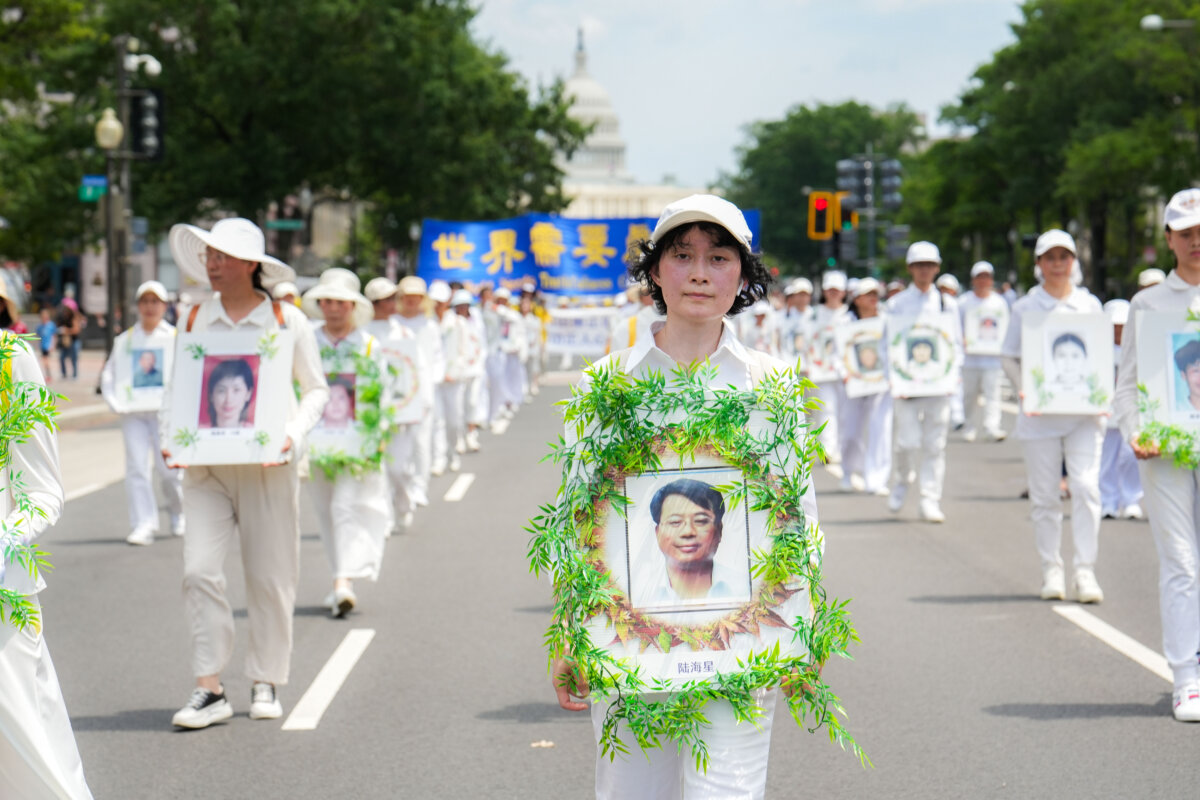

This text appeared in the ‘Top Story’ email newsletter sent on July 19, 2025.
“If 100 million people are practicing it, that’s 100 billion yuan saved per year in medical fees. Premier Zhu Rongji is very happy about that. The country could use the money right now.”
That quote was from an unnamed official at China’s state sports commission, as reported by U.S. News and World Report in February 1999.
It pertained to Falun Gong.
Also known as Falun Dafa, the belief system is based on the principles of truthfulness, compassion, and forbearance, along with a set of meditative exercises. Since its introduction in the early 1990s, the practice grew rapidly in the country, with an estimated 70 million to 100 million people learning it by 1999.
The Chinese Communist Party (CCP) no longer welcomed Falun Gong’s health benefits when it realized that the practice was also a belief rooted in Chinese traditional culture, according to Zhang Erping, a spokesperson of the faith group.
Months after the quote was reported, on July 20, 1999, the CCP unleashed a sweeping campaign to eliminate Falun Gong—a persecution that continues to this day.
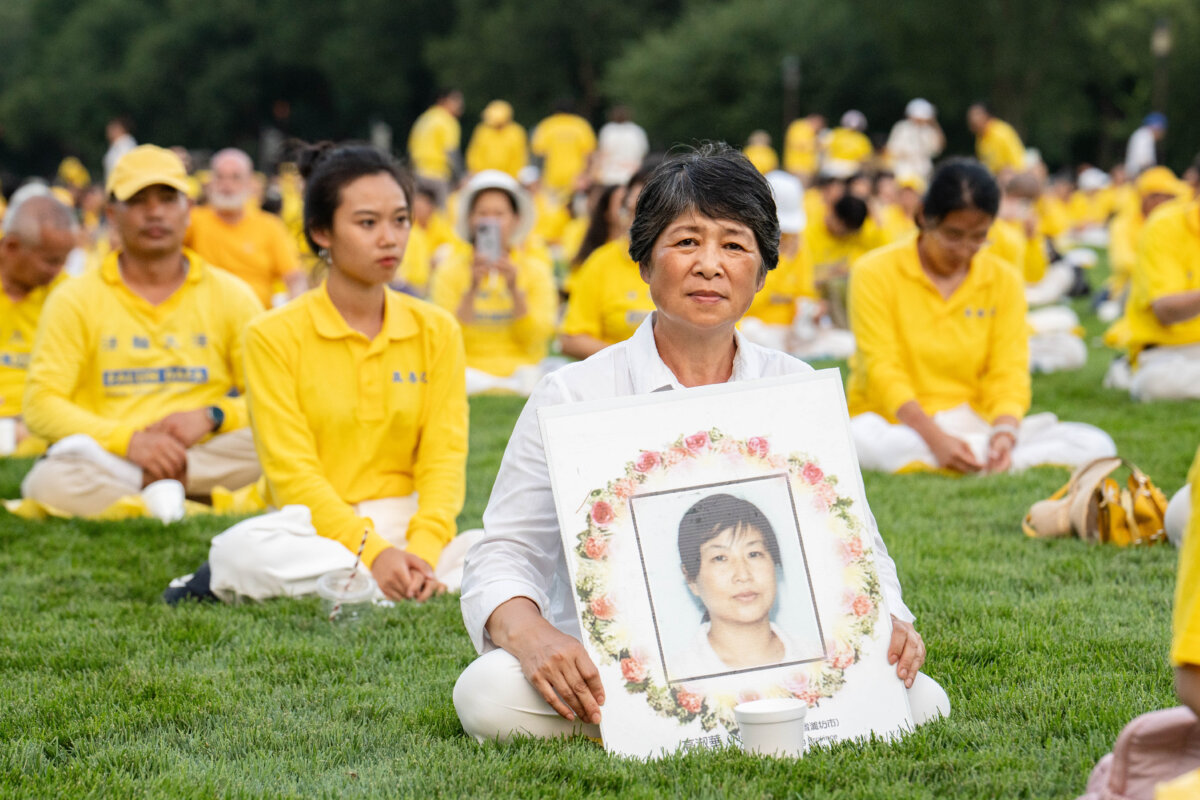
Out of all religions, the regime fears Falun Gong the most, said Amb. Sam Brownback at a forum in the U.S. Capitol on July 17, commemorating the 26th anniversary of the start of the persecution.
“Falun Gong is very natural to China, the Chinese mentality, and the Chinese heart, and I think that’s why the Communist Party so fears and does everything it possibly can to stomp out this faith,” the former U.S. Ambassador-at-Large for International Religious Freedom told hundreds in the audience.
“They won’t get it done because it’s a physical man attacking a spiritual entity. It’s the kingdom of man against the kingdom of God, and it won’t succeed.”
However, the persecution could “cause a lot of harm in the process,” he added.
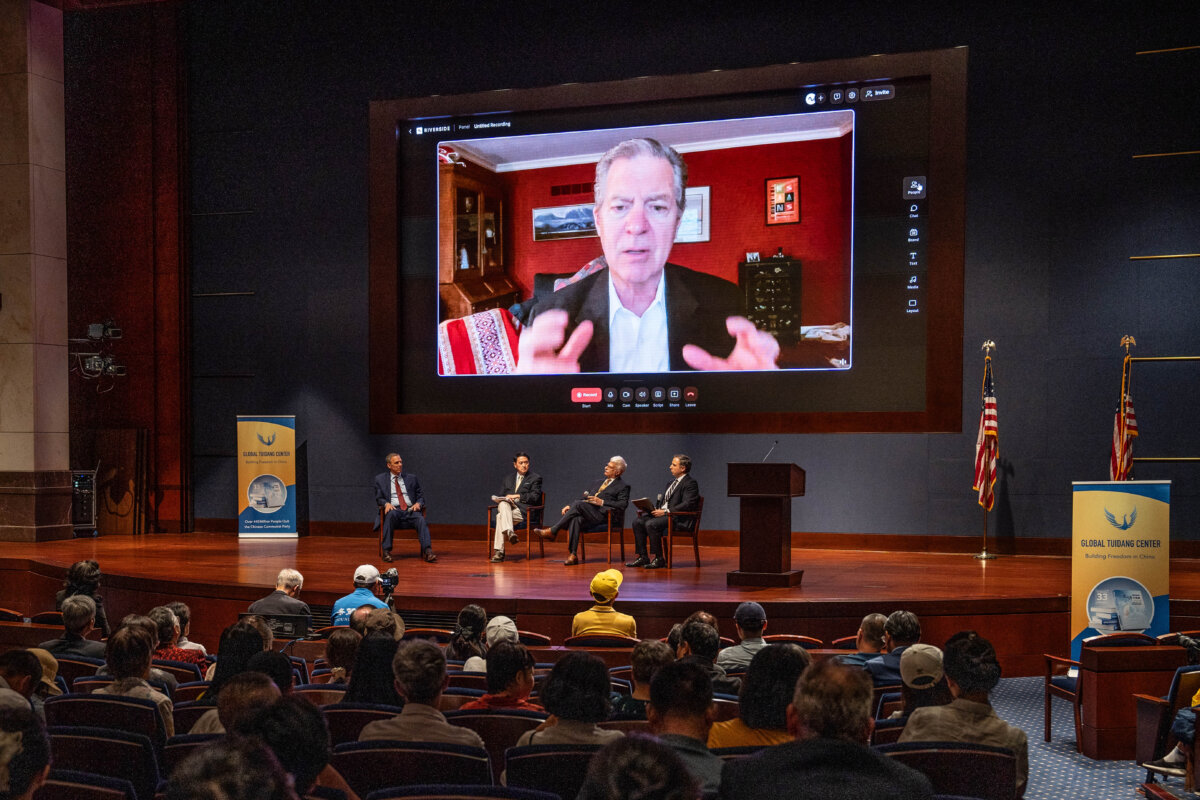
Nothing illustrates the harm more than forced organ harvesting—the state-sanctioned program of extracting organs from detained prisoners of conscience for sale on the transplant market.
Rep. Chris Smith (R-N.J.), also present at the event, described it as an “industrial-sized atrocity that is very reminiscent of Josef Mengele in Nazi Germany, using … so-called medicine as a way to make huge profits, billions.”
The victims usually die in the process, and their bodies are cremated right away. As the first known forced organ harvesting survivor, Cheng Peiming was a rare exception.
After he arrived in the United States in 2020, he underwent a series of medical examinations that confirmed his suspicion: his organs were stolen.
He lost a part of his left liver and left lung at a nonconsensual surgery at a prison-affiliated hospital in northeastern China in November 2004. The operation left a 14-inch (35-centimeter) scar around the left side of his chest.
When the prison guards took him to another hospital in March 2006 for another surgery, he managed to escape the hospital after using the restroom. In 2015, he fled China to a third country and arrived in the United States in 2020, with the help of Robert Destro, the then-Assistant Secretary of State for Democracy, Human Rights, and Labor.
Destro recalled that he faced “enormous resistance” inside the State Department during his rescue effort of Cheng, despite having the authority as an assistant secretary.
“Remember, this is a chop shop we’re talking about. You’re actually worth more in pieces than you are as a person, and that’s the government that our country is dealing with,” he said.
“And so if you don’t understand that as you start to think about foreign policy, you’re missing the point.”
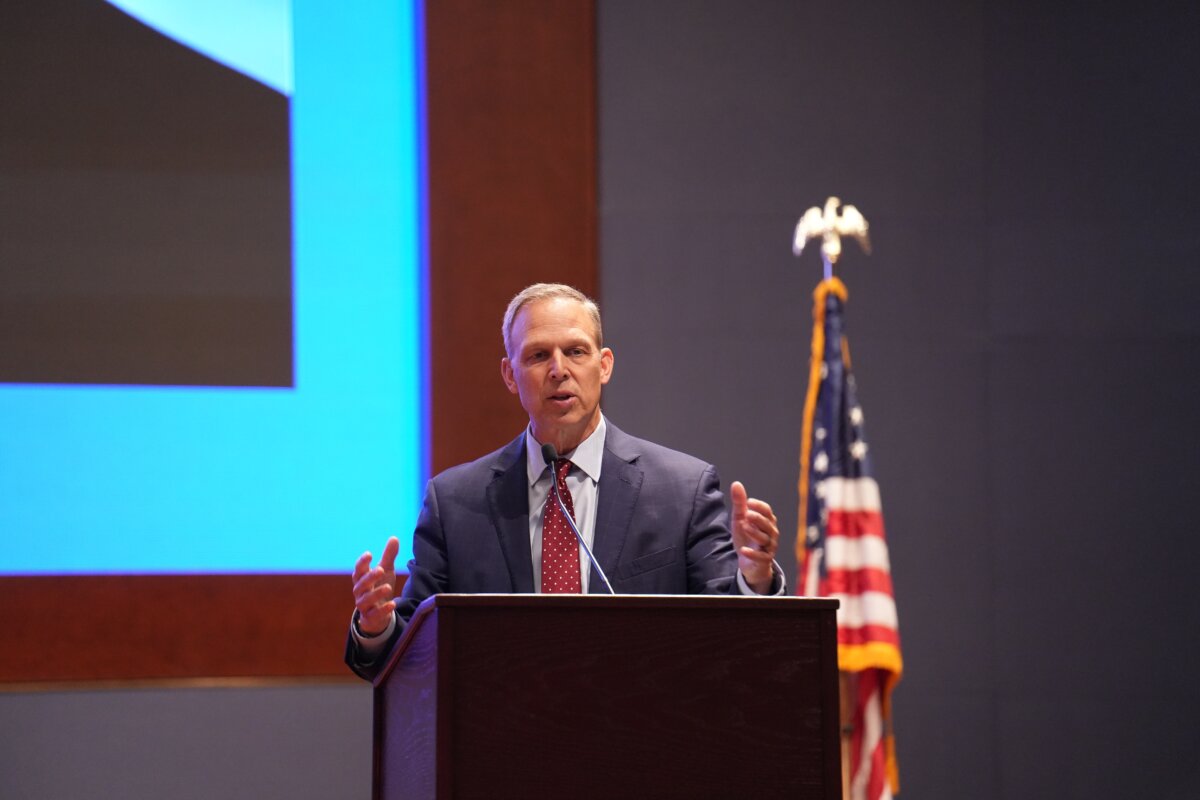
He joined Smith and Rep. Scott Perry (R-Pa.), who introduced the Falun Gong Protection Act that passed the House in May, in congratulating a dozen Chinese people for publicly quitting the CCP organizations at the same forum.
They represent a small portion of the nearly 450 million Chinese people who have denounced the Party. One of them thanked Falun Gong practitioners for their decades of efforts in raising awareness of the CCP’s true nature and building software to enable Chinese people to circumvent China’s Internet firewall and obtain uncensored information.
Perry called Falun Gong practitioners “brave souls” and shared his vision of how freedom would prevail.
“Where there’s one of you, there’s 10 of you. And where there’s 10, there’s 100. And where there’s 100, there’s 1000. And where there’s 1000, there’s 10,000,” he said.
“And that’s how Falun Gong and all the people who want to be free win this struggle against the communist party.”
Brownback is another who noticed Falun Gong’s power of change.
He urged the U.S. government to support all faiths in China, particularly Falun Gong, “because of their incredible importance to changing China, to getting it back to be the cultural beauty and free society… that can be a great contributor to the world, instead of the most really oppressive regime in the world today.”
 Friends Read Free
Copy
Facebook
Tweet
Friends Read Free
Copy
Facebook
Tweet