
U.S. homeowners are shopping for more than just open floor plans, granite countertops, and curb appeal these days.
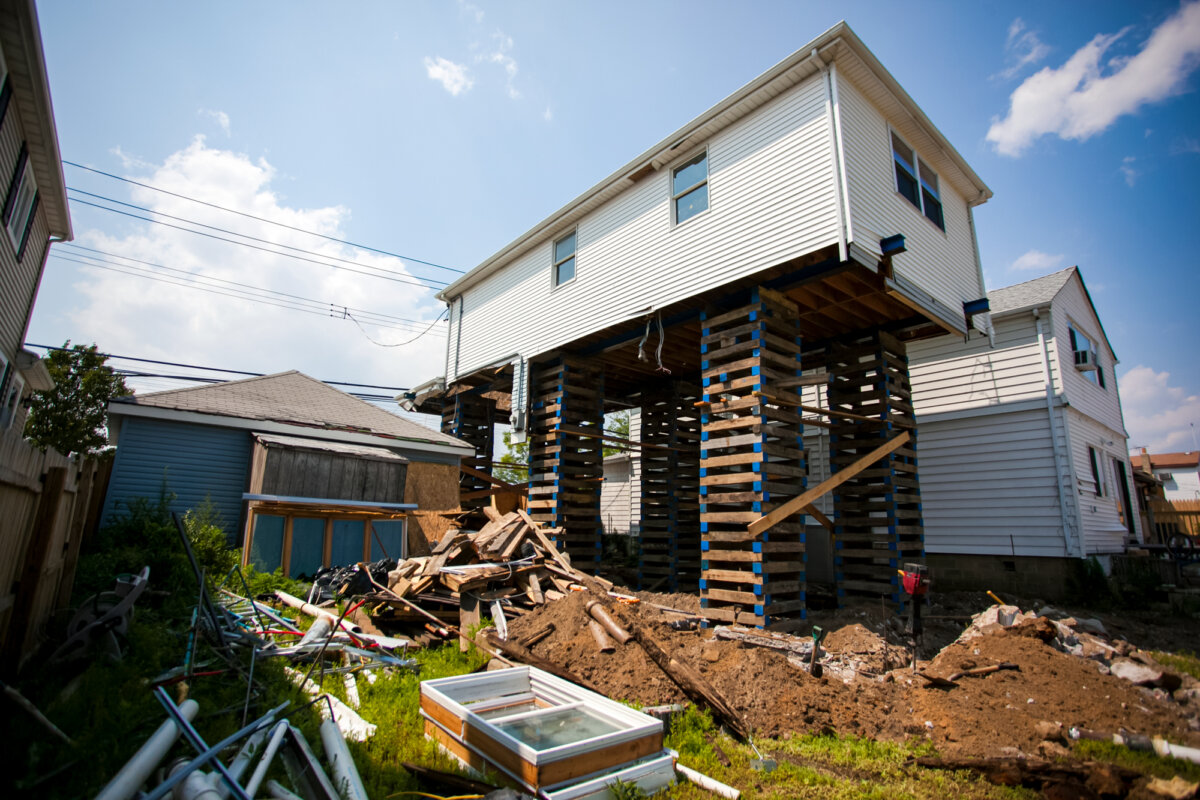
Following multiple billion-dollar weather-related disasters and wildfires over the past few years, a growing number of U.S. residents are prioritizing homes that incorporate more features designed to be resilient against cataclysmic events.
Experts working inside this booming trend say it is about more than saving money on insurance premiums; it is about having peace of mind when the next storm, flood, or uncontrolled blaze arrives.
Across the country, homeowners are embracing an approach known as “resilient design.”
That includes building or retrofitting homes with materials, layouts, and even furniture that can withstand nature’s worst events.
Government research from 2004 to 2013 showed that $392 billion worth of damage was attributed to hurricanes, $46 billion to tornadoes and severe storms, and $30 billion to storm-related flooding.
In 2024, 27 weather events caused at least $1 billion in damages each. These events resulted in losses of $182.7 billion, according to data from the National Oceanic and Atmospheric Administration’s National Centers for Environmental Information.
“We’ve seen a noticeable shift in homeowner behavior, particularly in high-risk regions like Florida, California, and coastal Texas,” Max Coupland, CEO of Insuranceopedia, told The Epoch Times.
“The recent hurricanes, wildfires, and flash floods have made these risks feel personal rather than hypothetical.”
Coupland said that with the intensified weather events of the past several years, insurance companies are tightening their underwriting guidelines. And homes built or retrofitted with disaster resilience in mind are increasingly becoming not just safer, but also more insurable.
Others in the insurance industry have noticed the rising trend of building or adapting existing homes with components that can resist severe weather, such as reinforced or fire-resistant roofing, impact-proof windows, and moisture-resistant exteriors.
“Homeowners, more than ever, are becoming aware of the growing severity of the weather events [such as] wildfires, floods, and hurricanes,” Rami Sneineh, vice president of Insurance Navy Brokers, told The Epoch Times. “Many want homes that have been upgraded to weather these dangers.
“It is clear that homeowners understand long-term protection has value, and they are more than willing to pay for properties that contain the best features. The trend is no longer about comfort or luxury, but about providing a safe home environment.”
Recent surveys support these findings.
In July, the National Association of Home Builders listed disaster-resilient design as one of the top architectural trends of 2025.
According to consumer data published by Hippo Insurance in May, more than half of surveyed U.S. homeowners say resistance to climate risks is a top priority when shopping for a home.
According to Zillow’s forecast of 2025 home trends, features such as impact-resistant windows and fire-safe materials are now marketing points for real estate listings.
Home sellers are also highlighting features that offer some amount of protection against severe weather events, and Zillow said buyers are in the market for those features. The analysis found that 86 percent of homebuyers believe that it is very important to own a home with at least one “climate resilient” feature.
Moreover, the number of listings on Zillow that mention flood barriers is up by 22 percent compared with 2024.
Listings that include “seismic retrofitting” are up by 20 percent, and references to “water catchment systems” are up by 19 percent.
Drought-resistant turf yards are also showing a 14 percent increase compared with last year.
Upgrades That Pay Off
Few people think of Illinois as “hurricane country.” Yet Steve Mlynek, CEO and founder of HomeBuild Window, Siding and Door Replacement Company, told The Epoch Times that demand for impact-resistant windows in the state has surged by 60 percent in the past two years.
“After those severe windstorms in 2023 that shattered hundreds of windows, homeowners started asking specifically about hurricane-grade protection,” Mlynek said.
He said laminated-glass window systems can withstand debris at wind speeds of up to 130 mph.
These windows tend to cost 25 percent to 30 percent more than standard models, but are able to stop a two-by-four missile fired at them at 50 feet per second during tests, according to Mlynek.
He said the windows also block more than 99 percent of ultraviolet rays and reduce noise by an additional 40 percent to 50 percent.
Another bonus is that the insurance industry is rewarding these investments, according to Mlynek.
“Many of my customers are seeing 5 [percent] to 15 percent reductions in their homeowner’s premiums, and some insurers are starting to require impact-resistant features in high-wind areas,” he said.
When it comes to savings on homeowner’s insurance, Coupland said upgrades such as roof replacements with class 4 impact-resistant shingles can result in discounts of up to 25 percent in hail-prone states.
Other types of home features that could offer insurance savings include storm shutters, reinforced doors, elevated HVAC units, flood barriers, and moisture-resistant insulation, he said.
In some states, these upgrades may be required by insurance companies for new policies, especially in flood-prone areas.
Mlynek said that after factoring in the additional energy savings from better insulation, most homeowners break even within eight years on the initial investment.
But he emphasized that the upgraded windows could offer decades of additional protection to homeowners.
Interior designers are also seeing a surge in clients wanting to incorporate disaster-resistant designs into homes and commercial spaces.
“I’m seeing clients completely rethink their home layouts around disaster preparedness,” Cheryl Hucks, an interior designer in High Point, North Carolina, for more than 30 years, told The Epoch Times.
“Last year alone, I redesigned three basements into dual-purpose spaces that function as family rooms but can serve as safe rooms during severe weather events.”
One of the biggest design shifts for homeowners that she has noticed is the move away from heavy pieces of furniture, which can become dangerous projectiles or trap people during storms.
“I’m specifying modular, lightweight furniture that can be quickly moved to interior rooms, and built-in storage solutions that keep emergency supplies accessible but hidden,” Hucks said.
She recalled one example in which interior design met utility: “One client specifically requested all window treatments be cordless and easily removable after a tornado warning last spring.”
Hucks said her commercial clients are even more concerned about design that incorporates disaster preparedness.
“I just completed an office design where the conference room doubles as a storm shelter, with reinforced interior walls and emergency communication systems built into the design,” she said.
“The investment was 40 percent higher than traditional commercial design, but their insurance company offered premium reductions that offset the cost within two years.”
Safety features don’t have to make a home or business look like a doomsday bunker, Hucks said. Specially designed ottomans can hold emergency supplies, she said, and furniture can create natural pathways to interior safe spaces without sacrificing what she called “sophisticated comfort.”
Strategic Renovations
In its 2024 Housepower Report, Hippo Insurance noted that 28 percent of surveyed U.S. homeowners expressed worry over being prepared for extreme weather events. That represents an increase from 25 percent in 2023.
Research also showed that from a pool of 2,000 homeowners, 88 percent said they’d be willing to pay more for a home with “climate resilient” aspects.
As a homeowner who is also in the insurance industry, Sneineh said it’s understandable that resilient design has become a priority for Americans.
“It is very reassuring to know that the home is secured from extreme weather. … I would definitely pay more for a home that had these types of features,” he said.
“The value is the knowledge that the home would be better suited to withstand future weather events and protect my family.”
For existing homeowners who want to increase their structure’s resistance to incidents such as fires, hurricanes, and flooding, upgrades are possible.
Jeff Lexvold, founder of Tropic Renovations, told The Epoch Times that he has seen a “dramatic shift” in his clients’ priorities since Hurricane Ian hit southwest Florida in 2022.
Lexvold said: “We installed thousands of sheets of drywall after that storm, and the conversations completely changed. Homeowners stopped asking about aesthetics first and started with ‘how will this hold up in the next hurricane?'”
He said the biggest demand spike that he has seen is for comprehensive exterior sealing and moisture prevention systems.
“After finding widespread mold behind walls from tiny cracks in stucco during routine bathroom renovations, I now lead every consultation with exterior inspections,” Lexvold said.
The materials used in renovations to create more weather-resilient homes tend to be more expensive, but customers don’t mind, he said.
“We’re using GE’s Paintable Silicone All-Weather Exterior Sealant exclusively at $13 per tube, instead of the cheap $3 versions that fail within two years. Clients gladly pay the premium after seeing water damage photos from other properties,” Lexvold said.
Impact-resistant window installations have also become standard rather than optional, based on what he has seen in Florida’s Sarasota and Charlotte counties.
Coupland said other upgrades that can make a difference when severe weather strikes are fire-resistant roofing materials, such as metal tile, or asphalt shingles with high fire ratings.
He advised homeowners to consider hurricane straps and reinforced garage doors as well.
 Friends Read Free
Copy
Facebook
Tweet
Friends Read Free
Copy
Facebook
Tweet