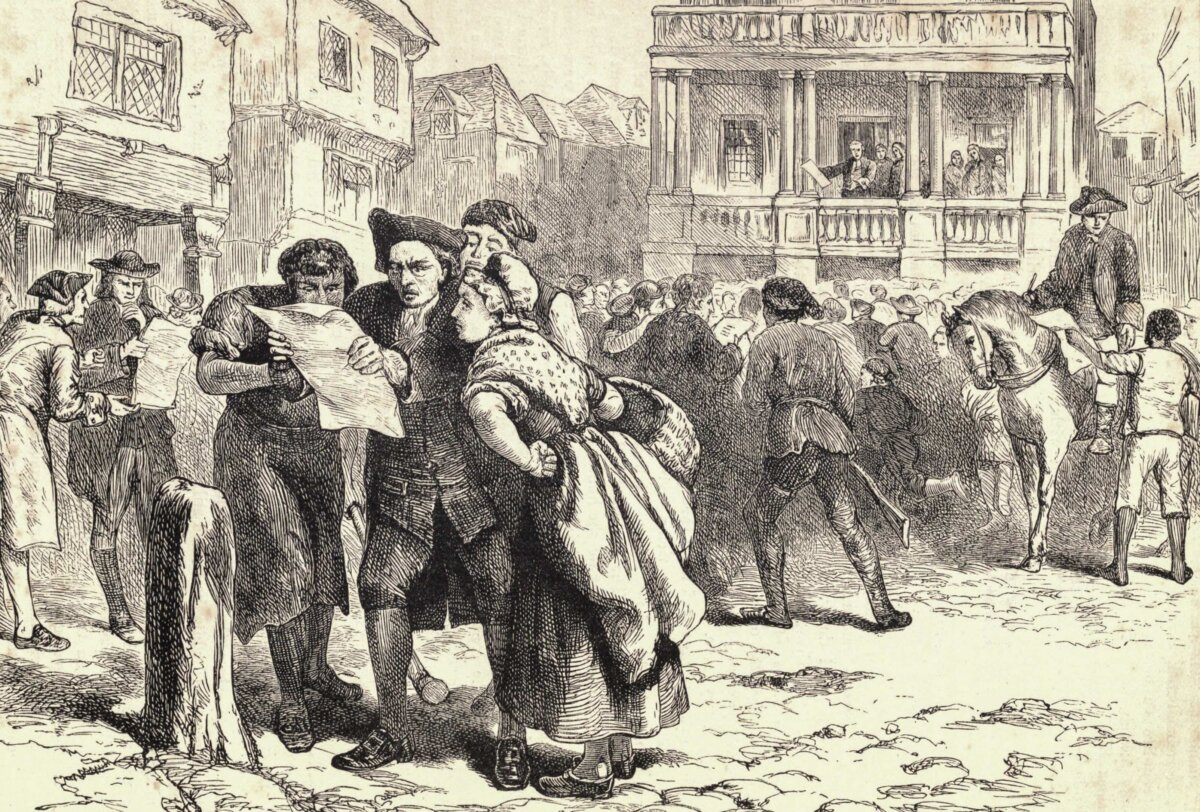
1776 has become more than the year that marks our country’s birth. It has become the symbol that represents the principles behind America’s founding—the principles of liberty and equality.
This year marks America’s 250th birthday. It has been a quarter of a millennium since the Founders proclaimed that “all men are created equal”—the revolutionary principle upon which the country was built. Of course, this idea of equality was voiced by the Colonists well before the Second Continental Congress gathered in Philadelphia to make such sociopolitical claims concrete in the Declaration of Independence.
Gordon Wood, the 92-year-old Pulitzer Prize- and Bancroft Prize-winning professor emeritus of history at Brown University, points to the familiar refrain of “no taxation without representation” demanded by the Colonists during the early 1760s. The Colonists had enjoyed the privilege of being considered British subjects, a station in life that ensured they possessed the same rights as subjects living in London. With Great Britain hemorrhaging from the immense war debt after the Seven Years’ War (known in the Colonies as the French and Indian War), Parliament decided it expedient to tax the wealthy Colonists in America to help pay the debt. King George III agreed. The problem for the Colonists was not taxation. The difference was that the Colonists, who had always had a say in taxation matters, no longer did.
“That became the central debate between the Parliament and the Colonists,” Wood said in an interview with American Essence. “The taking of property without consent was the principal issue that drove the push for independence.”

Irreconcilable Differences
Wood noted that when the Colonists protested the Stamp Act of 1765, leading to its repeal, Parliament simply “shifted the debate from consent to sovereignty.” It then passed another bill in 1766 called the Declaratory Act. This act declared that Parliament had the authority to pass laws “to bind the colonies and people of America … in all cases whatsoever” and that any resistance by the Colonists by way of “resolutions, votes, orders, and proceedings” was “utterly null and void to all in purposes whatsoever.”
Wood said the Colonists had been abiding by the Navigation Acts, the first of which had been passed in 1651 and regulated their trade. He noted that London rested its argument on the basis that if the Colonists had accepted “one iota of Parliament’s authority,” then they had “to accept all.” Wood explained, “With that kind of confrontation, the Colonists said, by 1774, ‘We’re not under Parliament’s authority at all—we’re just tied to the king.’”
The issue of taxation was not about money, but about principle. The Colonists “probably had a higher standard of living than anywhere else in the world.” Nonetheless, he noted, the principles of consent and sovereignty proved to be “the two irreconcilable differences.”
Those differences led to a revolution based on the idea that “all men are created equal”—an idea that Wood called “a radical statement” and “the five most important words in the Declaration.”
Embodying the Enlightenment
The revolution and America’s founding document originated during the Age of Enlightenment. It was a time when “a whole host of Westerners were thinking about changing things.” With the Declaration of Independence articulating these Enlightenment ideas, the Americans had stepped beyond the pale. They embodied these ideas, putting them fully into action.
“It’s not simply a Colonial rebellion,” Wood said. “They were throwing off monarchy and becoming republics—13 republics. Republicanism was a radical move in a world dominated by monarchies.”
Each state now felt emboldened to implement various Enlightenment reforms, ranging from education, inheritance, and criminal punishment to religious liberty and slavery. Wood acknowledged that these Colonists-turned-revolutionaries believed in a “sort of Lockean epistemology” that “everyone was born with the same blank slate.”
“Of course, they weren’t blind to the differences between people, but those were all the products of experience, of upbringing, and so on. In other words, it was all nurture, not nature,” he said.
‘A Strange Kind of History’
Two hundred and fifty years after embodying the radicalism of a republican form of government, America has held true to those founding principles.
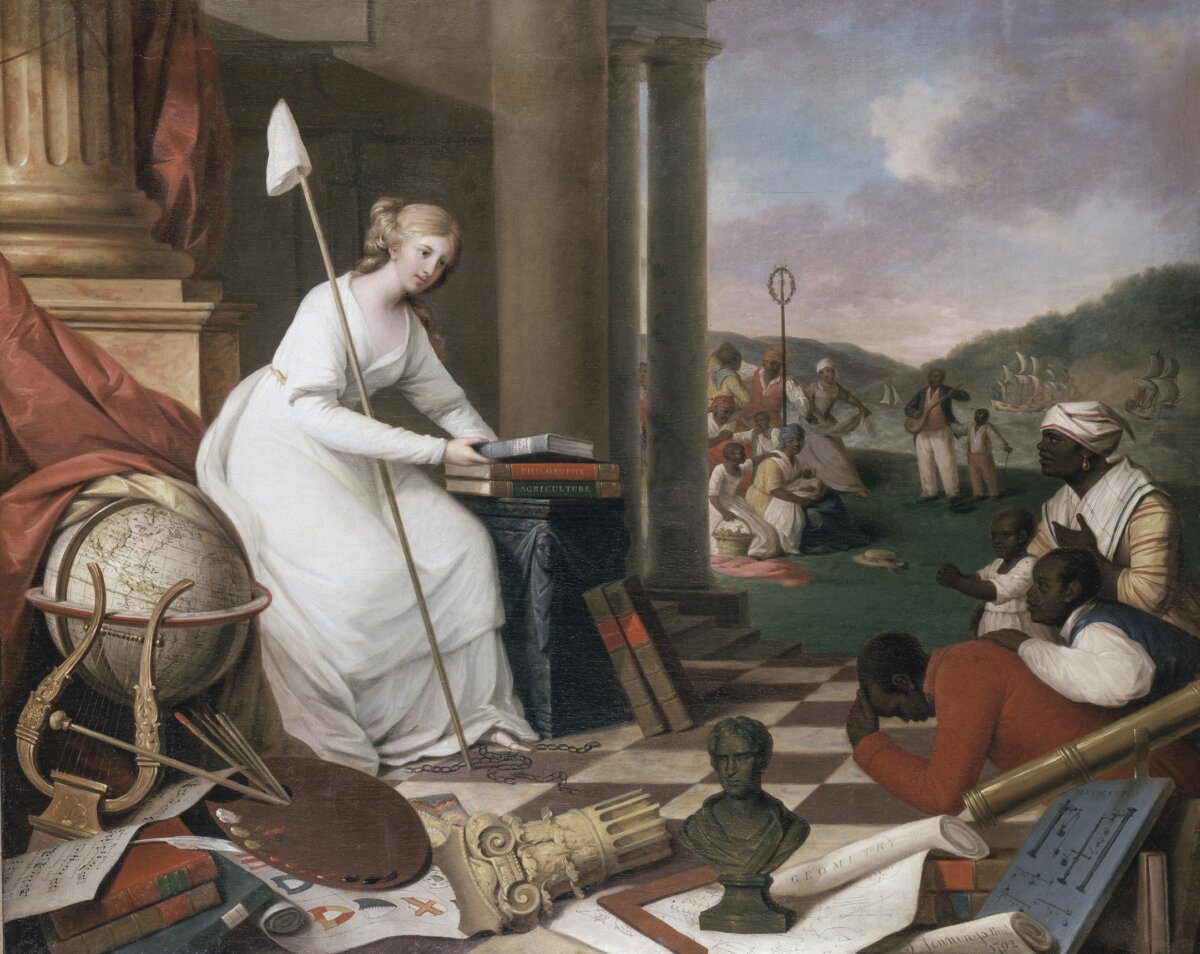
“We were born with this claim that we were going to promote liberty and equality, and we tried to live up to that, but of course, we had real faults there,” Wood said.
Those faults include the retention of slavery, specifically in the Southern states; the forced removal of the indigenous populations; and the denial of women’s right to vote. But even regarding those glaring issues, Wood noted that modern Americans should not be anachronistic in their views of the country’s history. These views dressed up as historicisms “are just ideologies imposed on the past.” The latest ideology, known as settler-colonialism, was most famously (or infamously) demonstrated in The New York Times Magazine’s 1619 Project, a work that Wood, among many other historians, has refuted.
Concerning the geographic clash between the Americans and native tribes, Wood explained that this mass migration was hardly an anomaly. As one example, he referenced Europe when the Germanic tribes overwhelmed the Celts and pushed them toward the fringes.
“That kind of demographic movement had been going on for centuries,” he said. “The Americans tried to deal with it, and they thought they were dealing with it. They thought they were buying the land; but there’s just no doubt that the indigenous people lost their land. You really can’t redeem that experience.”
Similarly, slavery was an institution that stretched back thousands of years. Wood was quick to note that history’s first anti-slavery convention took place in Philadelphia in 1775. He added that it was here, in America, that slavery was first abolished.
“It’s not coincidental that it should take place there,” Wood said. “I think we have to see things in larger terms. It’s the American Revolution that makes slavery a problem. It took a long time to eliminate it with the Civil War, but it was put on the defensive in 1776.”
Regarding suffrage, Wood noted that America was comparable to its fellow nations coming into the 20th century, but it was soon far ahead of everywhere else in the world. He pointed out that France, known for its hyper-radicalized revolution, didn’t allow women to vote until after World War II.
At the end of the 18th century, “we had the largest electorate in the world. Two out of three white males could vote. The only other place in the world that had voting for natives was Great Britain, and they had one out of six males voting. So, it’s silly to try and go back and condemn us for not being democratic. That’s just [an] anachronism. It [creates] a strange kind of history.”
Staying True to the Founding Principles
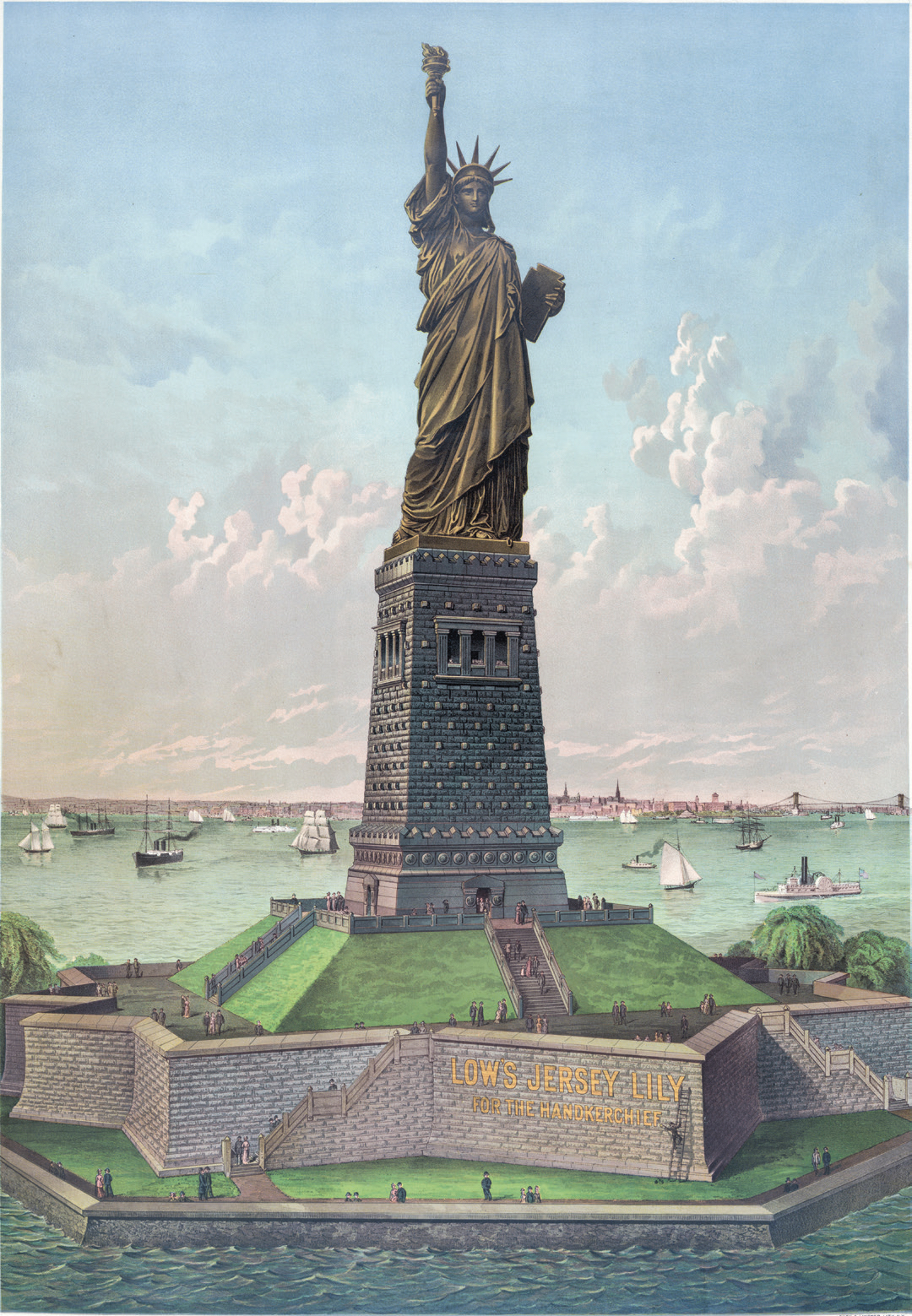
Wood explained that despite America’s faults, the country has tried to live up to its self-imposed, radical, and very lofty ideals.
“There is no doubt that we were doing everything in the names of liberty and equality. Those were our standards, our ideals. Of course, that’s what creates the ironies,” he said.
Wood went further with regard to America’s efforts to maintain its foundational principles. He believes the Founders would be proud to see where America is today. He went even further back in the country’s history to qualify that claim, well before it ever declared its independence. The descendants of the English settlers who arrived in Virginia in 1607 fended off starvation to become the world’s wealthiest and most powerful nation. This is nothing less than a great saga that arguably surpasses two of history’s greatest empires: Rome’s and Britain’s.
“It’s one of the great events of the world. There’s just nothing like it,” he said. “And it’s all based on the preservation of liberty, which in itself is extraordinary.”
America’s history is extraordinary in so many different ways: geographically, economically, politically, militarily, religiously, educationally, and scientifically. It seems even more extraordinary considering that the Founders doubted the new nation’s ability to persevere and survive. Along with being grateful and proud of America’s longevity, Wood believes the Founders would be surprised.
“When they looked at America in the 1820s—those who lived long enough—they were a little appalled at what was happening,” he said.
“[John] Adams and [Thomas] Jefferson, who both died on July 4, 1826—exactly 50 years after the Declaration of Independence, which seemed to be a providential miracle to people at the time—they weren’t all that happy with what America had become. We had become much too money-making.”
Remaining the ‘Empire of Liberty’
America, known for its wealth and power, remains known most for what Wood called its high degree of freedom. According to the author of “Empire of Liberty,” among his many books, America remains that empire of liberty. He said that is the reason that “the whole world, generally, wants to come here.”
“It’s an extraordinary story with all of its missteps and mistakes,” he said. “[But] what are you comparing it to? I don’t see where you can compare us to other states. There’s just no doubt that this is an extraordinary society that’s been created over the past 400 years. It’s just extraordinary.”
This article was originally published in American Essence magazine.