
“G.K. Chesterton, considering his life in retrospect, said that he had always had the almost mystical conviction of the miracle in all that exists, and of the rapture dwelling essentially within all experience,” Josef Pieper wrote in “Happiness and Contemplation.”
The German philosopher saw profound wisdom and truth in G.K. Chesterton’s observation.
He continued, “Within this statement lie three separate assertions: that everything holds and conceals at bottom a mark of its divine origin; that one who catches a glimpse of it ‘sees’ that this and all things are ‘good’ beyond all comprehension; and that, seeing this, he is happy.”
Yet it can be difficult to “catch a glimpse” of this miracle existing in all things. We become familiarized with life, and it loses its luster. Routine dampens our attentiveness to the marvelous.
To help rekindle that sense of awe, that awareness of the extraordinary in the ordinary, here are 25 facts that will awaken wonder.
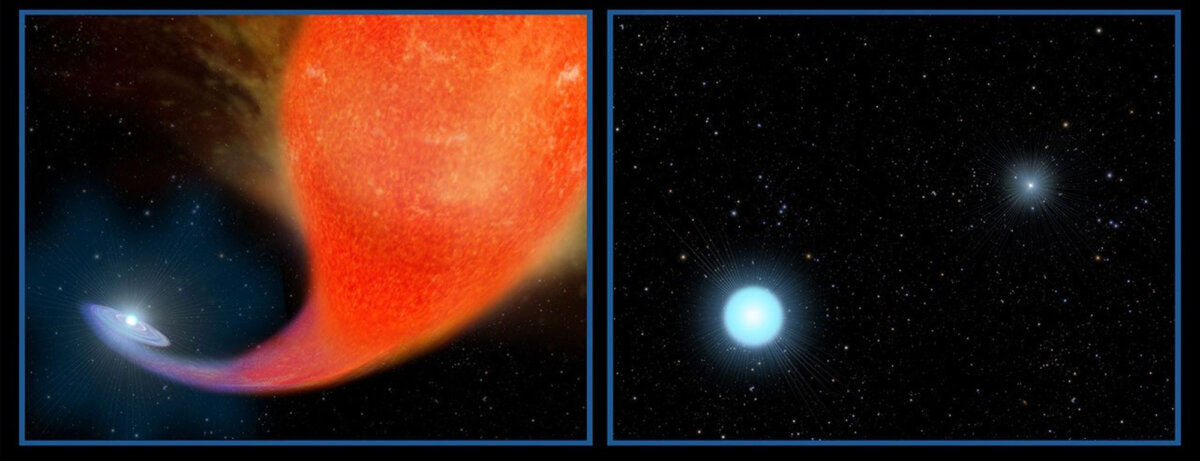
Dying Stars Get Reborn
The implosion and merging of stars trigger fusion reactions that release masses of precious metals and heavy elements into interstellar space. Dying stars provide the raw materials needed to create everything we see in the universe. It’s a cosmic process of death and rebirth. In essence, we are stardust.
Earth Is Fine-Tuned for Life
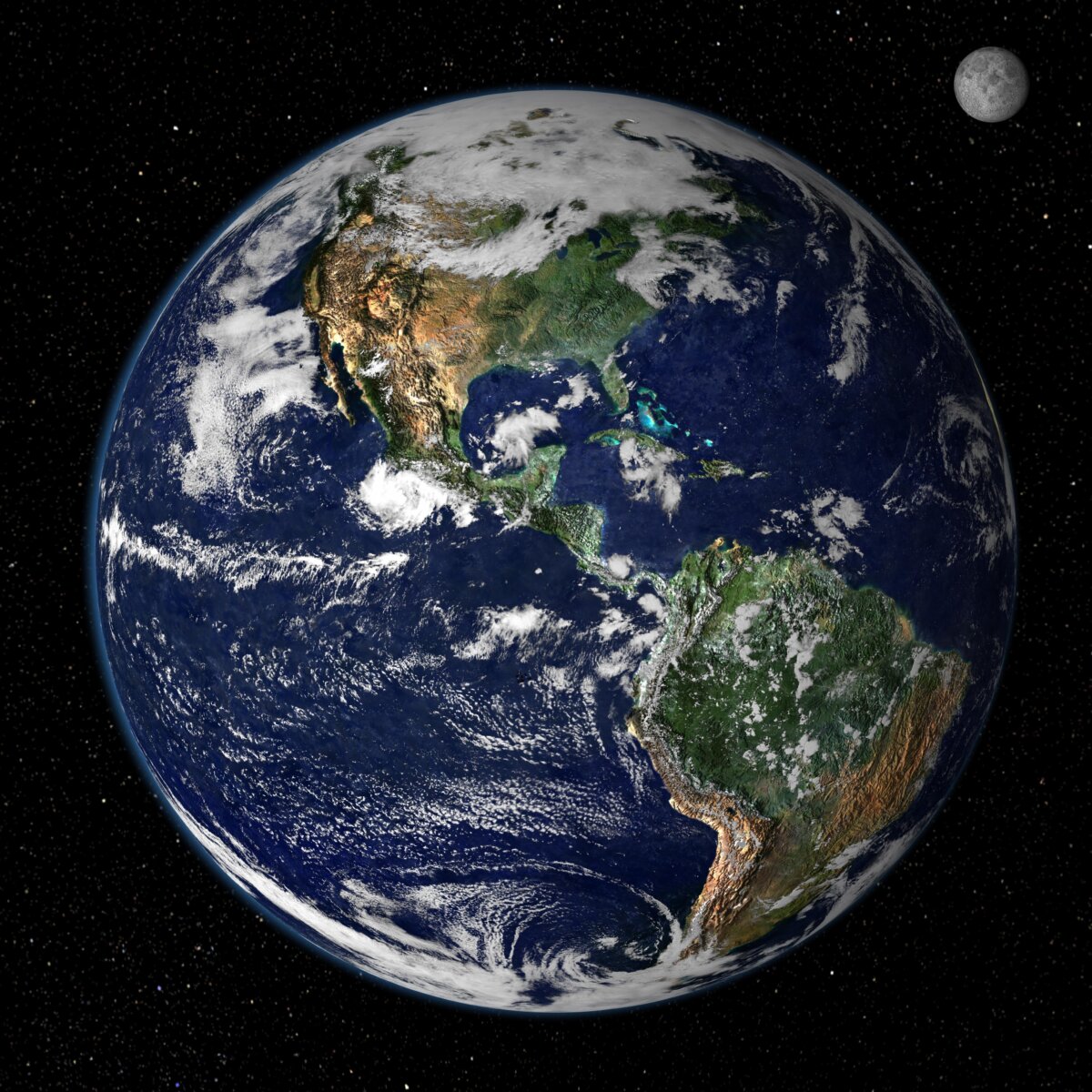
Earth is fine-tuned for life in many complex ways. When the Earth was forming, it had just the right conditions to ensure that nitrogen and phosphorus were available on the planet’s crust in the right amounts to support life. The Earth’s core also produces a magnetic field that protects it from harmful solar particles and cosmic radiation.
Earth also has the magical liquid known as water (not as common as you might think), which is necessary for the chemical processes that undergird life. Finally, it exists in the so-called Goldilocks zone in relation to the sun, a star’s habitable zone that is neither too hot nor too cold.
The Universe Has a Soundtrack
The ancients believed in a beautiful and harmonious music emanating through space as an expression of the universe’s order. Turns out, the so-called music of the spheres is not just a poetic idea or a mere myth. Many resonances and radio waves—inaudible to the human ear—do travel through space.
Modern scientific equipment can transform some of these waves into audible sound. The deepest sound ever detected (57 octaves below middle C) comes from the supermassive black hole at the core of NGC 1275, a galaxy in the Perseus cluster.
Earth Has a Heartbeat
Objects in space aren’t the only things producing cosmic sounds. The Earth also sings.
The Schumann resonance is a set of electromagnetic resonances generated by lightning in the Earth’s cavity and ionosphere. It’s sometimes described as “Earth’s heartbeat.” Some preliminary research even suggests that the Schumann resonance may have a beneficial effect on human health.
Similarly, scientists have managed to get protons to “ring like a bell” in a “particle hymn,” as they would have just after the big bang. Every morning, the sun rises, and we experience a miniature resurrection when we emerge from a state of altered unconsciousness to fresh life.
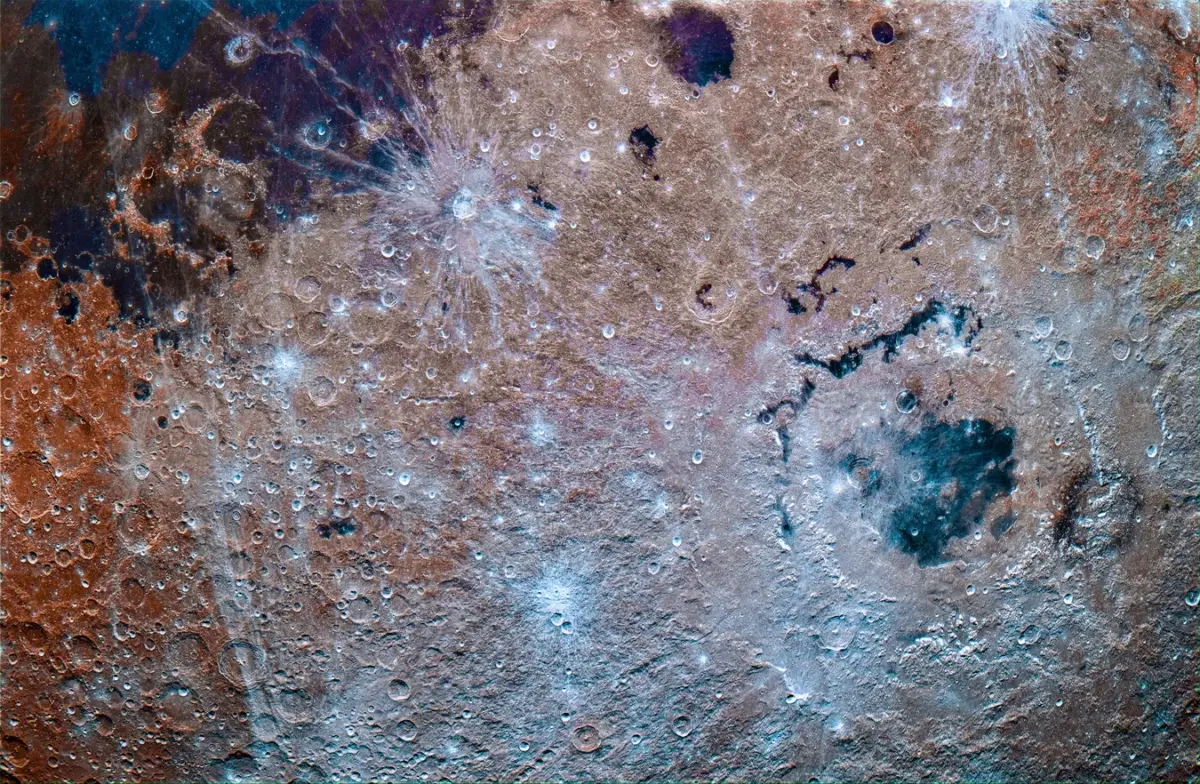
The Moon Isn’t Gray
The moon has more colors on its surface than the human eye can perceive.
Earth’s Tilt Causes the Seasons
The seasons derive from Earth’s 23.5-degree axial tilt, which results in sunlight hitting some portions of the globe more directly than others, with that affected area shifting as the Earth moves.
There’s an Immortal Jellyfish
When injured or starving, the “Turritopsis dohrnii,” also known as the immortal jellyfish, reverts to an earlier stage of life instead of dying.

Hummingbirds Exist
The ruby-throated hummingbird flaps its wings about 50 times per second, while its heart beats 20 times per second. The tiny birds, weighing about as much as a penny, can fly forward, backward, and upside down. And they’re not daunted by long flights: They migrate up to 500 miles without stopping.
Trees Talk
It isn’t just a hauntingly beautiful notion from J.R.R. Tolkien’s The Lord of the Rings series: Trees really do talk to one another. Ecologist Suzanne Simard discovered that trees exchange information and nutrients through an underground network of latticed fungi. In some cases, the trees use the network to send “warnings,” search for kin, or transfer nutrients to other trees before they die.

Light Makes Flowers Bloom
Temperature and light cues activate a plant hormone called florigen, which is produced in leaves and then transported to shoot tips to start forming flower buds.
Octopuses Are Like Aliens
Octopuses don’t have bones. What they do have are three different hearts, copper-based blue blood, and mini-brains in their tentacles.

Photosynthesis Turns Light Into Energy
All around us, the process of photosynthesis is constantly at work as green plants transform light energy into chemical energy, producing carbohydrates from carbon dioxide and a hydrogen source.
Trees Outnumber the Stars
There are more trees on Earth than stars in the galaxy, all of them working to purify our air.
Our Oldest Restaurant Is Older Than 300
The oldest restaurant in the world, Sobrino de Botín in Madrid, has kept its oven fire burning continuously for 300 years. Napoleon Bonaparte, the Spanish Civil War, and the COVID-19 pandemic have come and gone, but the flame still burns.

Underdogs Can Win
In June 1694, at the Battle of Hodów, 400 Polish soldiers used cobbled-together fortifications to defeat 40,000 attacking Ottomans. It’s one of the most lopsided victories in history.
Babies Are Miracles
Babies grow billions of times larger from conception to birth. Somehow, all the multiplying cells in an infant’s body know how to align themselves to form a heart, brain, eyes, kidneys, hands, feet, and all the rest.
Despite not being a marine creature, the baby survives in amniotic fluid for nine months before coming into the light and immediately starting to breathe oxygen through his or her lungs. It’s an impossibly complex process that has occurred billions of times.

The Organization of the Human Body
It takes 7 octillion atoms—all in their proper place—to form your body.
Brains Are Better Than Technology
The 86 billion neurons in your brain process more information in 30 seconds than the Hubble Space Telescope processes in 30 years. And the brain can store 200 exabytes of information.
Your DNA Stretches for Galaxies
If all the DNA in your body were stretched out from end to end, it would extend for 10 billion miles.
Bill Bryson wrote in “The Body: A Guide for Occupants”: “There is enough of you to leave the solar system. You are in the most literal sense cosmic.”
Music Heals
Music activates the entire brain, releases endorphins, alleviates pain, and can restore access to lost memories.
Benedick says in William Shakespeare’s “Much Ado About Nothing,” referring to a common material for musical instrument strings, “Is it not strange that sheeps’ guts should hale souls out of men’s bodies?”

Good Relationships Bring Health and Happiness
The biggest predictor of a happy and healthy life isn’t fame or money—it’s the quality of your relationships, according to the longest study ever conducted on human happiness.

Our Hearts Can Synchronize
When two lovers stare into each other’s eyes, their heart rates synchronize. And gazing at a picture of a loved one reduces physical pain.
There Might Be Something to NDEs
Near-death experiences (NDEs) are reported by about 15 percent of people in intensive care. NDEs have been compared and scientifically analyzed, revealing common characteristics such as sense perception apart from the physical body, a sense of passing through a tunnel, an encounter with mystical light, a review of one’s past life, and meeting deceased loved ones. People reporting NDEs often witness events that they couldn’t possibly have known about unless separated from their physical bodies.

Awe Is at Our Fingertips
According to Dacher Keltner’s book “Awe: The New Science of Everyday Wonder and How It Can Transform Your Life,” experiences of awe are not hard to come by.
“People experience awe two to three times a week,” he wrote of the participants in his research. “That’s once every couple of days. They find the extraordinary in the ordinary: a friend’s generosity to a homeless person in the streets; the scent of a flower; looking at a leafy tree’s play of light and shadow on a sidewalk; hearing a song that transported them back to a first love. … Everyday awe.”
Feeling Awe Makes Us Happier
Experiencing awe—an overwhelming emotion of wonder, fear, and exhilaration in the face of something beautiful and powerful—actually has demonstrable physiological effects. Research indicates that experiences of awe make you happier, healthier, and more socially connected. It can even help us act more altruistically.
As the final point on this list indicates, awe is a crucial facet of human life. Being moved and lost in ourselves by the wondrous and beautiful—whether it’s a flower, a star, someone we love, or the universe itself—what could be more profoundly human than that? What is more fulfilling?