In May and June 1776, American and allied Canadian volunteer forces in Quebec were in full retreat as a reinforced British army advanced upstream along the St. Lawrence River. Montreal and Fort Chambly quickly fell to the advancing redcoats. At Fort Saint-Jean, a riverside outpost less than a day’s march from the New York border, evacuation boats lined the shore as soldiers hastily loaded wounded men, weapons, and equipment. Supplies too heavy to move were smashed or burned to keep them out of British hands.
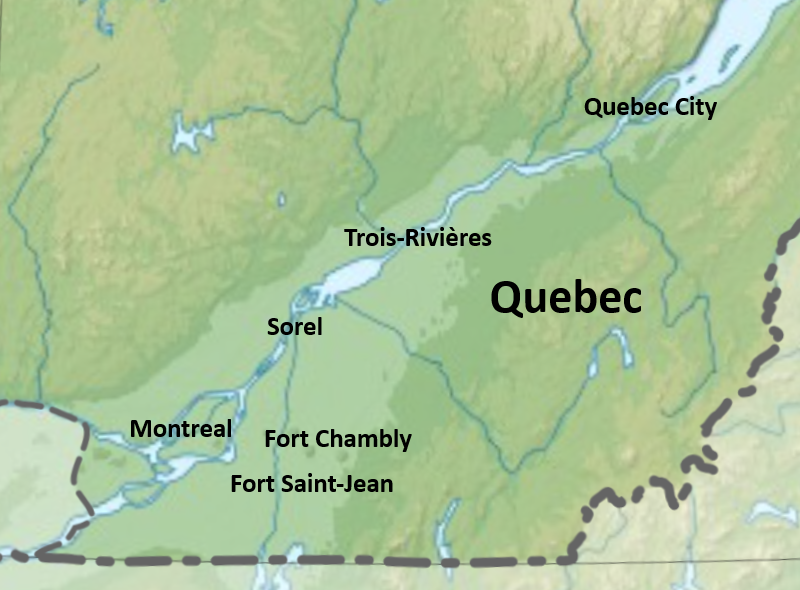
Most of the retreating army had already fled south along the Sorel River, now known as the Richelieu, toward fallback positions at Île-aux-Noix, Quebec, and New York’s Lake Champlain. Among them were remnants of Gen. David Wooster’s Montreal garrison and units led by Gen. John Sullivan, Col. Anthony Wayne, and Col. Arthur St. Clair.
In the late afternoon of June 18, British forces were rapidly closing on Fort Saint-Jean. Their vanguard was believed to be only minutes away, and the last evacuation boat—a flat-bottomed, shallow-draft bateau—was ready for departure. But Gen. Benedict Arnold, who had been overseeing the evacuation, wanted one final look at the enemy’s position.
With his aide-de-camp, Capt. James Wilkinson, Arnold mounted his horse and rode north. After roughly 2 miles, they emerged from the woods and found themselves staring at a mile-long column of 1,300 heavily armed redcoats advancing directly toward them.
Arnold and Wilkinson had stumbled upon Gen. John Burgoyne’s advance corps, the shock troops spearheading his expeditionary force. Having assessed the danger they were in, the pair swung their horses around and raced back to Fort Saint-Jean.
As the sounds of the approaching British echoed through the forest, Arnold and Wilkinson stripped the saddles and bridles from the horses and loaded them into the bateau. Witnessing the scene unfold was Caughnawaga tribal leader Col. Louis Atayatoharongwen, a Jesuit-educated chief of African and Abenaki ancestry. He gave a sad farewell to Arnold before he and several warriors vanished west into the wilderness.
The horses posed a final problem. Loading them onto the bateau was impossible, and releasing them meant handing them over to the enemy. With time running out, Arnold and Wilkinson shot them.
By then, redcoats with fixed bayonets could be seen emerging from the woods and rushing toward them. Arnold ordered everyone aboard, shoved the bateau away from shore, and climbed aboard just seconds before the British reached the water’s edge. As the exhausted men rowed south, their narrow escape underscored some grim realities: America’s hopes of adding Quebec as a 14th colony had failed and a large British army was poised to invade New York.
Stalemate in Quebec
By the end of 1775, the Continental Army had been on the verge of conquering Quebec. British and Canadian Loyalist forces—along with Quebec Gov. Guy Carleton—were besieged within the walls of Quebec City. But on Dec. 31, 1775, a failed assault on the city proved to be a disastrous setback for the Continental Army: Gen. Richard Montgomery was killed, Arnold was badly wounded, and more than 400 Continental soldiers were captured, among them Capt. Daniel Morgan.
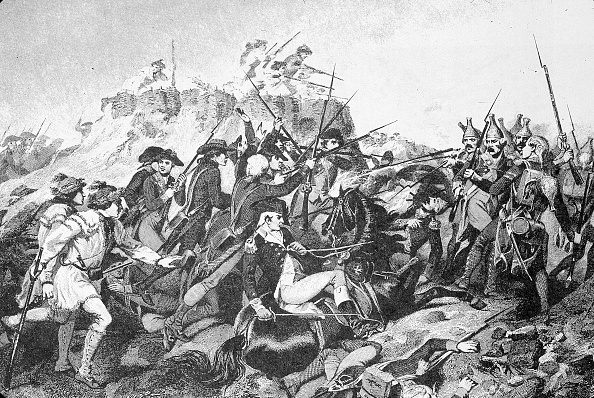
Despite the defeat, between 600 and 700 Continental soldiers under Arnold maintained the siege through the winter of 1776. Many, however, were weakened by exposure, disease, and malnutrition. Reinforcements often arrived sick. Then, smallpox ravaged the crowded camps and quickly spread, incapacitating more than half the force.
Wooster arrived on April 2 to relieve Arnold and assume command. His cautious leadership style soon clashed with Arnold’s aggressive temperament, leading to Arnold’s reassignment to Montreal days later.
On April 29, Arnold welcomed a congressional delegation to Montreal, including Benjamin Franklin, Samuel Chase, and Charles Carroll. Their mission was to convince French Canadians to send delegates to Philadelphia and join the rebellion as the 14th colony. The delegation was met with hostility from the Catholic clergy and political elite who remained loyal to Britain, in part because the Quebec Act guaranteed religious protections for Catholics.
The British by Sea
As the spring thaw cleared the waterways, Quebec City became accessible by sea. On May 6, relief for the besieged city began arriving aboard British warships loaded with fresh soldiers. Continental soldiers observing from outside the city walls panicked and fled southwest along the St. Lawrence River, abandoning artillery, ammunition, baggage, and bedridden soldiers. During the chaotic retreat, Gen. John Thomas, who had relieved Wooster on May 1, contracted smallpox and died a few weeks later.
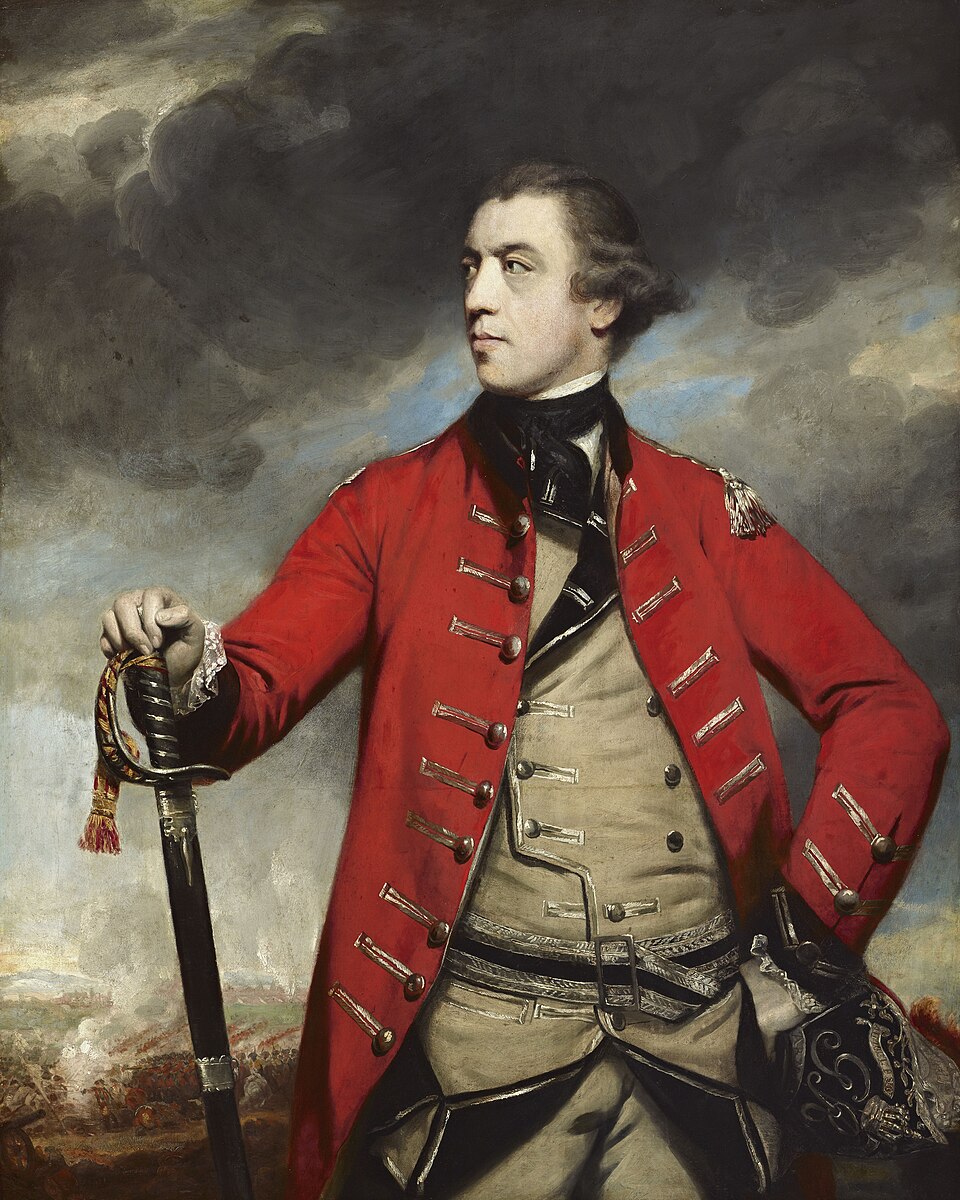
Throughout May and early June, nearly 12,000 British and German reinforcements under Gen. John Burgoyne arrived by sea. Carleton remained the overall commander, though tensions between the two men soon emerged. Carleton favored a more cautious strategy and viewed the rebels as misguided British subjects who could be reconciled with the Crown. Conversely, Burgoyne preferred a rapid, aggressive campaign designed to destroy the rebellion. Despite their differences, they unleashed an offensive juggernaut that proved devastatingly effective.
Seeing the imminent collapse of the Continental Army and that their mission to Quebec had failed, Franklin left Montreal on May 11 to avoid being captured. Chase and Carroll stayed behind to assist with the retreat before departing on May 29.
On June 8, Gen. John Sullivan, headquartered at Sorel, ordered Gen. William Thompson to launch an attack at Trois-Rivières with 2,000 Continental soldiers. The operation quickly unraveled after the troops conscripted a local farmer, Antoine Gautier, for guidance. Gautier deceptively suggested a shortcut that led them into a waist-deep swamp. When they finally emerged from the bog, disoriented and far behind schedule, alert British soldiers and naval gunners opened fire. The Continental force was completely routed, and hundreds were captured, including Thompson.
With Trois-Rivières secured, a large British fleet sailed toward Sorel on June 14. Facing total obliteration, Sullivan abandoned the town and retreated south. In Montreal, Arnold lost contact with Sullivan and dispatched Wilkinson to gather information, unaware that Sorel had already fallen.
During his journey northeast toward Sorel, Wilkinson encountered the same British fleet, now heading toward Montreal, and barely escaped capture. He rode back and warned Arnold of the approaching navy. Fearing that his entire force would be trapped, Arnold ordered the evacuation of Montreal. By then, all American and allied Canadian units were abandoning Quebec, retreating south, and setting in motion the final dramatic exit at Fort Saint-Jean.
On June 29, 1776, the Continental Army abandoned Ile-aux-Noix and crossed the border into New York, officially ending the disastrous Quebec Campaign. No further invasions of Canada occurred until the War of 1812.
Planning the Next Campaign
Even in victory, Burgoyne grew frustrated with Carleton. Rather than invade New York immediately, Carleton halted the campaign and began constructing a naval fleet for operations on Lake Champlain. Burgoyne believed New York was vulnerable and wanted to press the advantage at once.
Arnold, meanwhile, knew that the border region was a vast wilderness without functional roads. Any British invasion, therefore, would likely advance south through Lake Champlain. Drawing upon his experience as a merchant sea captain, Arnold began building a Continental fleet to oppose such an invasion. He led the construction of gunboats and galleys near Fort Ticonderoga and trained inexperienced crews for naval warfare. Arnold’s foresight was proven on Oct. 11, 1776, off Valcour Island.
While all was quiet on the northern front, Gen. George Washington was fortifying New York City for an impending attack by a massive British expeditionary force led by Adm. Lord Howe and his brother, Gen. William Howe. Anchored off Cape Fear, North Carolina, another large British force led by Commodore Sir Peter Parker, Gen. Henry Clinton, and Gen. Lord Charles Cornwallis threatened the Carolinas.
Despite these ominous perils, the growing independence movement continued gaining momentum throughout the 13 colonies. On June 7 in Philadelphia, Richard Henry Lee of Virginia introduced before the Second Continental Congress what came to be known as the Lee Resolution:
“Resolved, That these United Colonies are, and of right ought to be, free and independent States, that they are absolved from all allegiance to the British Crown, and that all political connection between them and the State of Great Britain is, and ought to be, totally dissolved.
“That it is expedient forthwith to take the most effectual measures for forming foreign Alliances.
“That a plan of confederation be prepared and transmitted to the respective Colonies for their consideration and approbation.”
John Adams of Massachusetts Bay immediately seconded the motion.
The die had been cast. The historic Lee Resolution officially launched the contentious congressional debate that finally tackled the question of independence. It also triggered the formation of a committee to draft a Declaration of Independence and forced a final, binding vote on complete separation from Britain in early July 1776.
What arts and culture topics would you like us to cover? Please email ideas or feedback to features@epochtimes.nyc