After the Revolutionary War began on April 19, 1775, British soldiers in Massachusetts Bay repeatedly clashed with Patriot militias. But following Gen. George Washington’s arrival in July to assume command of those forces, a stalemate settled over Boston and dragged on through the winter.
The British retained control of the city and strengthened their defenses with additional troops and heavy artillery. Washington initially planned to assault Boston and force the British out before his soldiers’ enlistments expired on Dec. 31. He was forced to abandon those plans, however, after discovering that his army faced a critical shortage of gunpowder and lacked artillery powerful enough to break the British position.
Guns and Powder
In 1774, Britain imposed an embargo on weapons and powder to the 13 colonies. With few iron mills capable of producing arms in large quantities, Americans began seizing British weapons from ships, magazines, and armories. They also turned to Britain’s enemies.
Merchant and ship owner Jeremiah Lee appealed to Spain’s Diego de Gardoqui, who secretly shipped 900 muskets and pistols to New England in the spring of 1775. In July, Founding Father Elbridge Gerry followed with a request for “good pistols” and powder. France also dispatched secret agents to Philadelphia to assess the rebels’ intentions and needs.
Spain and France established clandestine networks to maintain their neutrality and avoid war with Britain, but these methods were slow. Fortunately for Washington, Henry Knox proposed an ambitious plan to transport nearly 60 tons of captured artillery from Fort Ticonderoga to Boston.
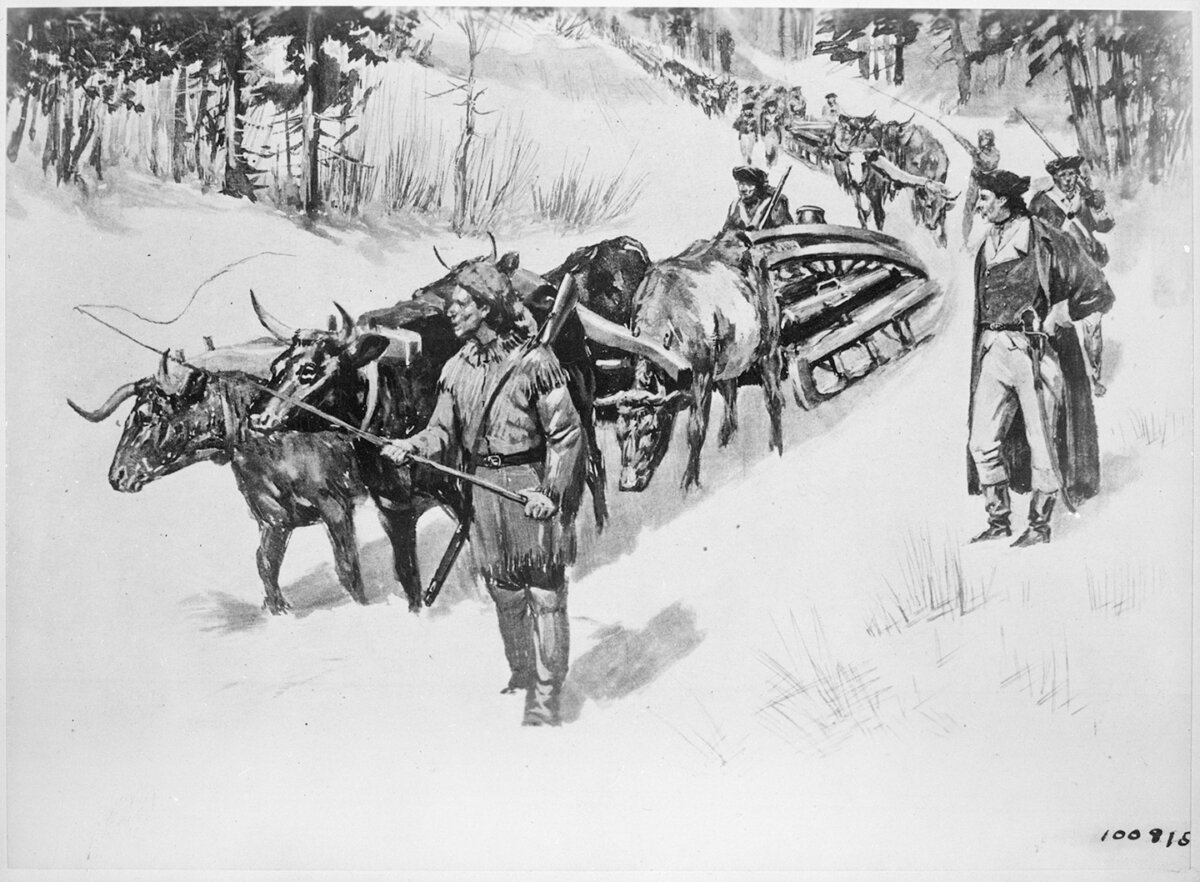
Washington approved the plan, and, on Nov. 17, the newly promoted Col. Knox departed Cambridge. Though he reached Fort Ticonderoga on Dec. 5, Knox and his “Noble Train of Artillery” still faced a journey of more than 300 miles across frozen lakes, rivers, and wilderness. By late January 1776, the artillery would reach Boston—and, by March, it would decisively alter the balance of power.
Civil War Spreads
While Washington waited for Knox, Britain’s North American colonies slipped deeper into civil war—not only in New England, New York, and North Carolina, but beyond the 13 colonies themselves. In East Florida, Bermuda, and the Canadian provinces, Patriots acted wherever British authority appeared weak. These were not large-scale battles fought between uniformed armies, but quick raids and skirmishes to seize arms, powder, and strategic positions.
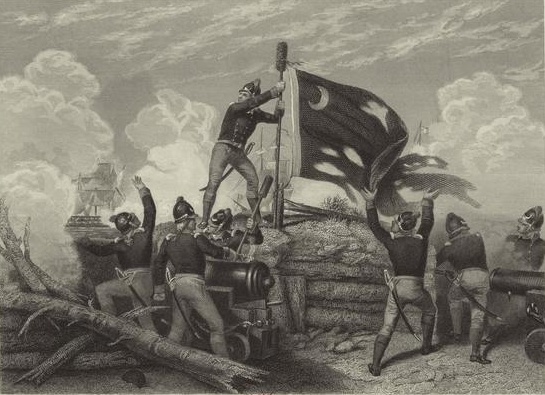
In South Carolina, clashes between Patriots and Loyalists hardened into vendettas between neighbors and families. On July 17, a raid in the town of Ninety Six signaled a dangerous escalation. Fighting followed in August at Seneca Town and New Richmond as both sides sought to control settlements and supply routes.
Throughout the summer and fall, violence intensified along the Congaree River, at Mine Creek, and, once again, at Ninety Six. Battles erupted in coastal areas as well—Fort Charlotte, Fort Johnson, Sullivan’s Island, Cumming’s Point, and along Rebellion Road. In late November, Patriot militias launched the “Snow Campaign,” sweeping through multiple counties to crush Loyalist resistance. On Dec. 22, they won at Great Cane Brake; a week later, they had effectively secured the South Carolina backcountry.
Royal Navy Terror
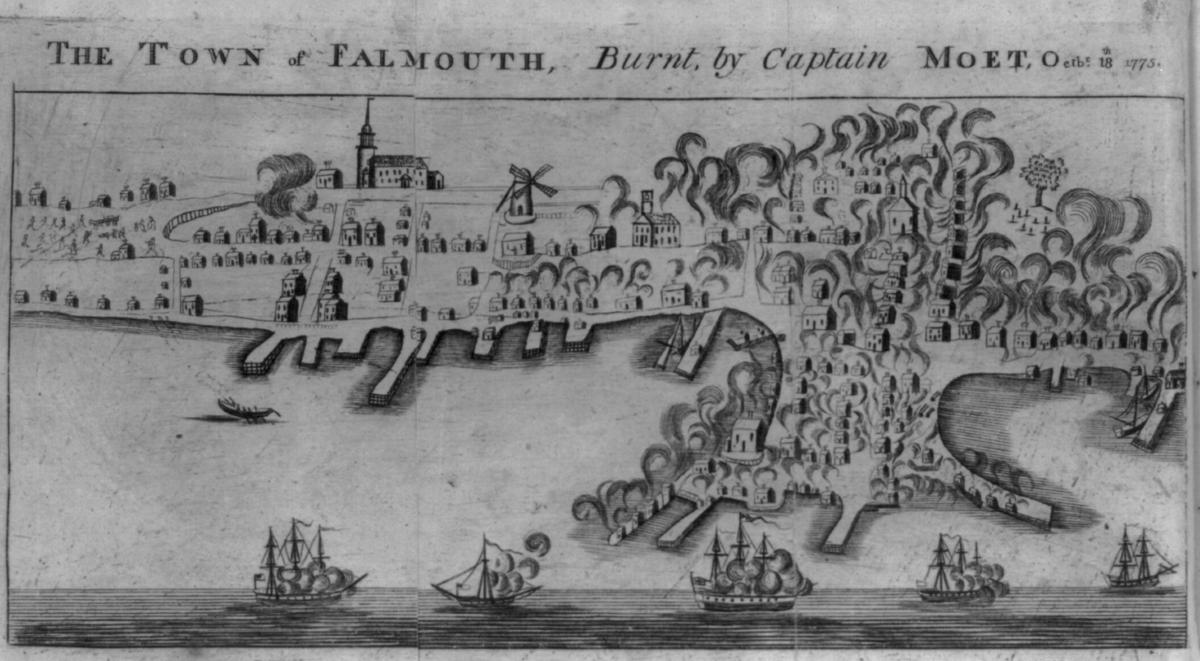
As inland communities fractured, the Royal Navy carried the war directly to coastal towns. On Aug. 30, British warships shelled Stonington, Connecticut, in retaliation for local resistance, and they hit Bristol, Rhode Island, on Oct. 7.
The most notorious attack occurred on Oct. 18 at Falmouth, in present-day Portland, Maine. After his surrender ultimatum was ignored, British Capt. Henry Mowat ordered his squadron to bombard the town. Homes, warehouses, and wharves were set ablaze, destroying much of Falmouth and delivering a clear warning: Towns that defied imperial authority could share the same fate. The attack only deepened American resentment toward Britain.
Not every naval encounter favored the British. From Oct. 24 to Oct. 25, Patriot riflemen—including those from the Culpeper Minutemen—picked off British sailors attempting to destroy Hampton, Virginia. It marked the first significant American victory over the Royal Navy.
Civil War in Virginia
After Patrick Henry’s thunderous “give me liberty” speech in March, Gov. Lord Dunmore ordered Capt. Henry Collins of HMS Magdalen to seize the colony’s gunpowder from Williamsburg’s Powder Magazine on the night of April 20 to the early morning hours of April 21.
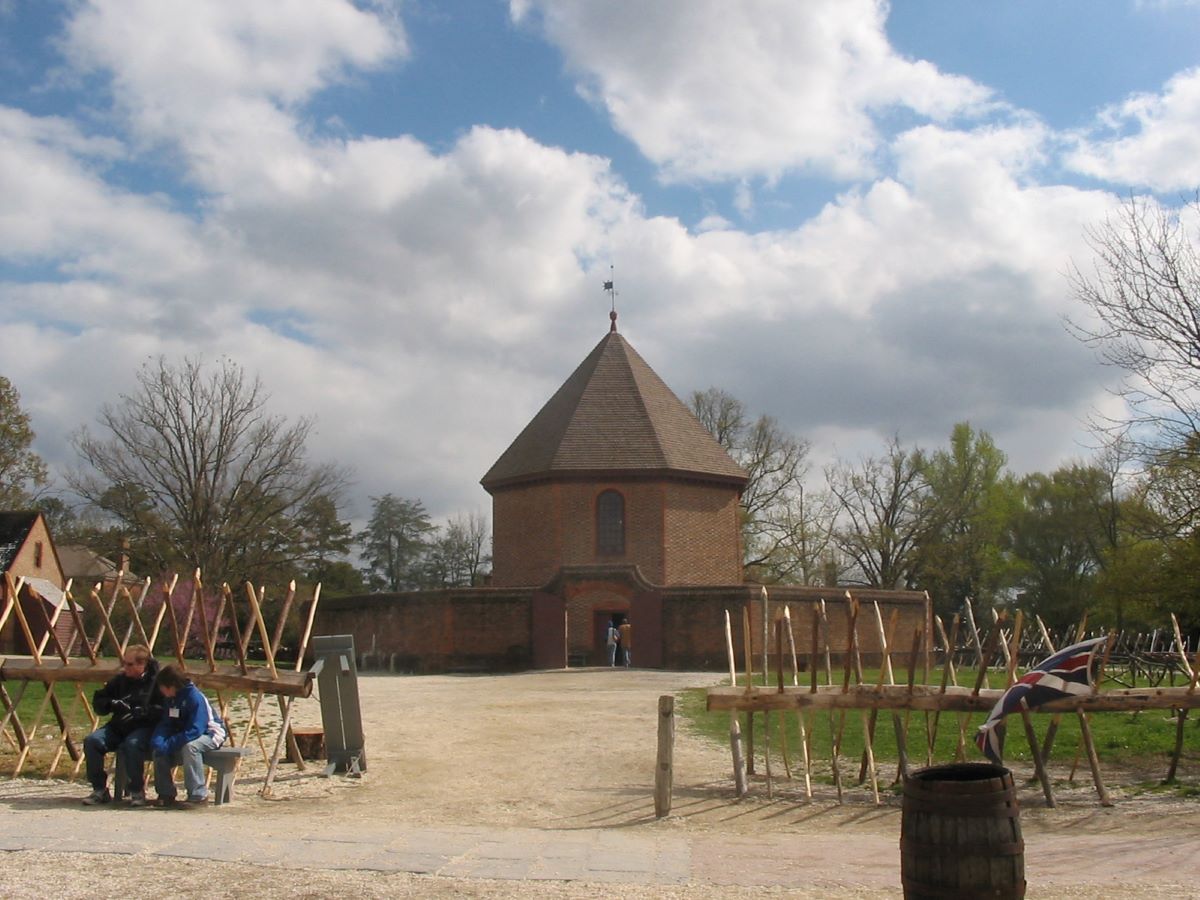
Armed townspeople assembled upon hearing news of the powder raid. Peyton Randolph, speaker of the House of Burgesses, and other Patriot leaders calmed the crowd—but not before Dunmore threatened to free Virginia’s enslaved population.
Tensions escalated further when news of Lexington and Concord reached Virginia. As his authority crumbled, Dunmore fled Williamsburg on June 8 and took refuge aboard HMS Fowey. On Nov. 7, he carried out his earlier threat, declaring martial law and offering freedom to enslaved people owned by Patriots who were “willing to bear arms” for the Crown. No such offer was extended to those enslaved by Loyalists.
The proclamation sent shockwaves through the colony. Within a month, Patriot forces crushed Dunmore’s troops at the Battle of Great Bridge on Dec. 9 and occupied Norfolk on Dec. 14. Dunmore and his Loyalist supporters fled to British ships offshore, effectively ending royal rule in Virginia.
The Continental Navy and Marines Are Born
As militias and royal governors clashed, the Continental Congress took decisive steps to build national armed forces. On Nov. 10, Congress authorized tavern owner Samuel Nicholas to raise two battalions of Marines. Working with fellow tavern keeper Robert Mullan, Nicholas began recruiting at Philadelphia’s Tun Tavern—an alehouse that became the Marines’ traditional birthplace.
On Oct. 13, Congress approved the creation of what would become the Continental Navy, following advocacy led by John Adams. Together, these actions laid the foundation for a coordinated national war effort.
Across the Atlantic, British leaders were also making changes. On Nov. 10, Lord Dartmouth was replaced as secretary of state for the colonies by Lord George Germain, a hardliner intent on crushing the rebellion through decisive military force. His appointment signaled a broader and more brutal strategy.
Assault on Quebec City
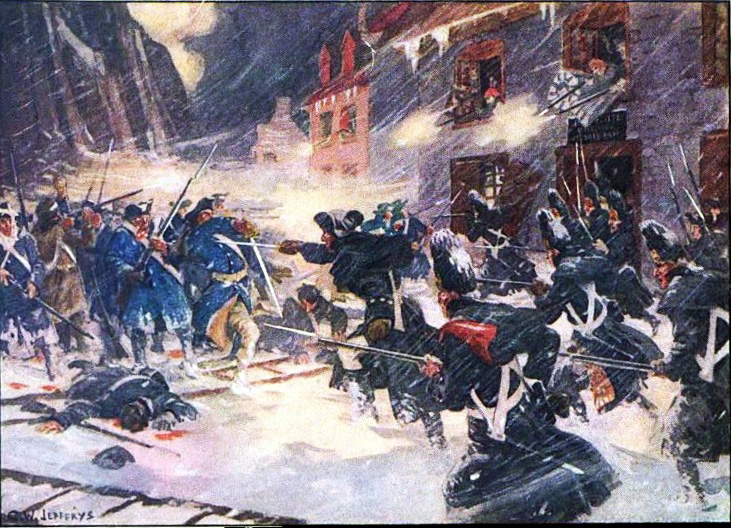
Arnold’s column is shattered in fierce street fighting during the Battle of Quebec. (Public Domain)
In December, the war’s focus shifted north to Quebec.
Col. Benedict Arnold, who had staggered out of the Maine wilderness in early November with the remnants of his starving expedition, spent weeks blockading Quebec City in a failed attempt to compel its surrender. He was later joined by Gen. Richard Montgomery and Col. James Livingston, whose combined American and Canadian forces captured Montreal and Fort Chambly, respectively. Together, they planned a nighttime assault on Quebec City before year’s end and before their soldiers’ enlistments expired.
Under cover of a fierce snowstorm, the attack began in the early hours of Dec. 31—and quickly unraveled. Montgomery and two aides were killed within minutes as they advanced from the west through the icy Lower Town. His second-in-command, Col. Donald Campbell, ordered a retreat.
Arnold, leading a separate column from the east, was struck in the leg by a musket ball and reluctantly carried from the field. Command fell to Capt. Daniel Morgan, who rallied his men and pushed deeper into the Lower Town.
Morgan then waited for Montgomery before proceeding to the Upper Town, unaware that Montgomery had been killed and that his column had already retreated. During the delay, Gen. Guy Carleton repositioned his defenses. When Morgan finally advanced, his force was overwhelmed and compelled to surrender.
By dawn, the assault had failed. The British held Quebec, and the northern offensive reached its high-water mark. Arnold and Gen. David Wooster remained in Canada until they were forced to retreat in May 1776 following the arrival of Gen. John Burgoyne and 4,000 British troops.
1775 Comes to an End
The year closed on a mixed note. Virginia’s royal governor, Lord Dunmore, had been driven into exile. Massachusetts Bay’s military governor, Gen. Thomas Gage, had been recalled to Britain. Yet the British still held Boston and Quebec.
America’s coastal towns bore scars, and communities were deeply divided. But the 13 colonies now possessed their own armed forces, led by Gen. George Washington.
The war had begun not for independence, but for the restoration of rights. Bloodshed and ignored petitions, however, were changing minds.
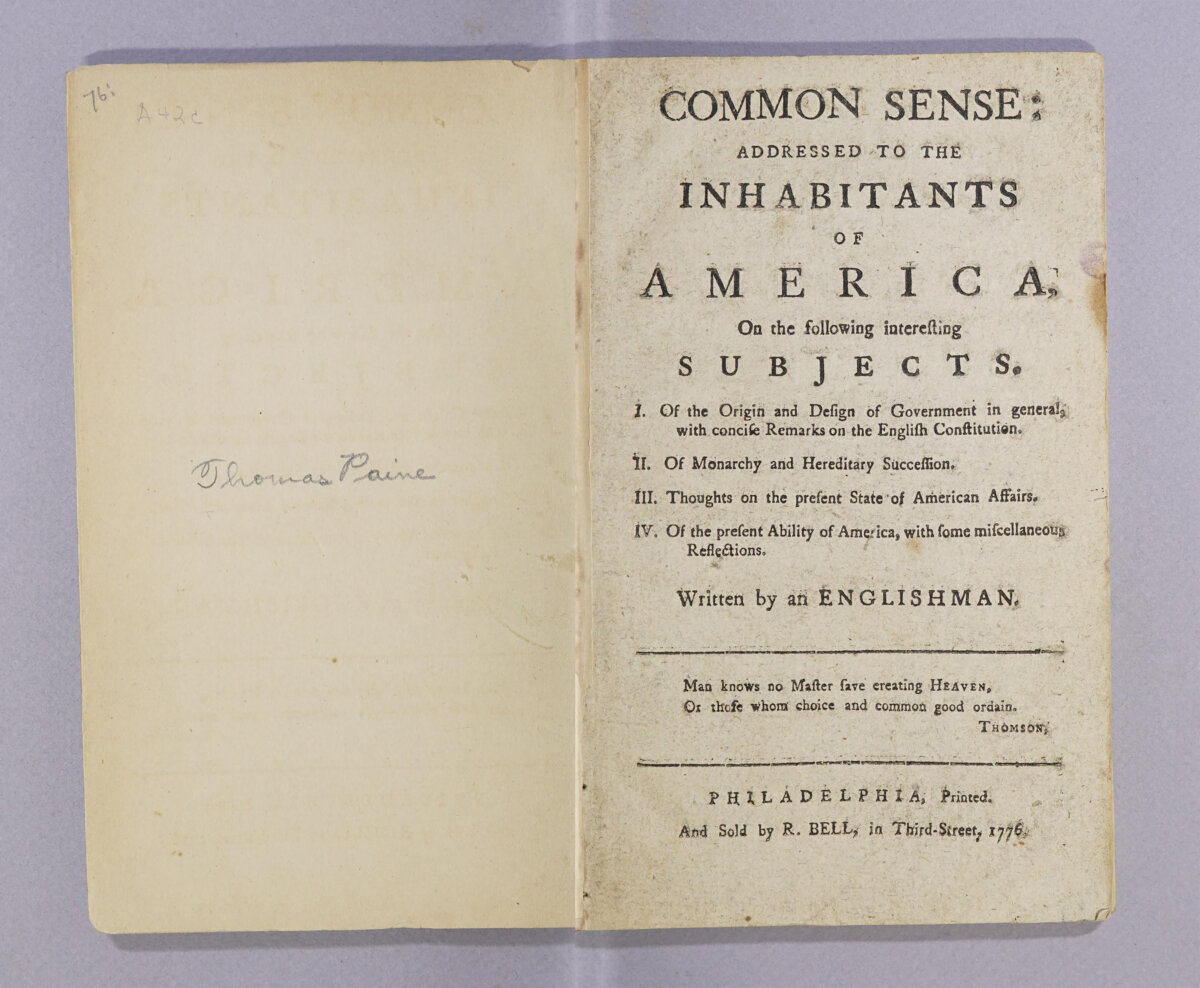
In January 1776, a pamphlet appeared that reshaped how Americans viewed government itself. With a bit of “Common Sense,” 1776 would become the year most colonists stopped calling themselves British subjects.
What arts and culture topics would you like us to cover? Please email ideas or feedback to features@epochtimes.nyc