



From one health fad to the next, it can seem near impossible to sort fact from fiction within the multi-billion-dollar health and wellness industry. And for those of us getting older, the stakes can feel that much higher. With his New York Times bestselling books, Dr. Michael Greger seeks to bring clarity into the confusion on preventing aging and illnesses that are the leading causes of death.
For his most recent book, “How Not to Age: The Scientific Approach to Getting Healthier as You Get Older,” the physician spent three years poring over 20,000 peer-reviewed medical papers on the topic of aging. He set aside the pills and procedures offered by Big Pharma and instead focused on the underlying causes of common illnesses and diseases that come with aging. His solution is not a conventional vegetable-and-water diet but is all about how good nutrition can counter aging processes, including cell inflammation and enzyme depletion, thereby decreasing the individual’s risk of age-related diseases.

Most importantly, he noted, the right nutrition and diet can help slow down the aging process and preserve function and well-being. To that end, Dr. Greger also published a cookbook featuring the principles in his “How Not to Age” book. Each recipe features nutrient-packed ingredients. In the following recipes, rainbow chard is nitrate-rich (which enhances heart health and blood flow); potatoes are high in spermidine (which is correlated with reduced blood pressure); and strawberries can improve cognition.
Deviled Potatoes

Makes: 6 servings (3 potato halves per serving)
Difficulty: Moderate
Enjoy these tasty potatoes as a snack, appetizer, or part of a meal. They’re especially fun as picnic fare. Try to find small oval potatoes of a similar size so they resemble deviled eggs when halved and filled. If you don’t have a piping bag with a large star tip to fill the potatoes, you can just use a large sandwich bag with one of the bottom corners snipped off. (Or use a spoon to fill them, if you prefer.)
12 small white or Yukon Gold potatoes
2 tablespoons nutritional yeast
1 tablespoon white miso paste
1 1/2 teaspoons apple cider vinegar
1 teaspoon fresh lemon juice
1/4 teaspoon ground turmeric
1/4 teaspoon onion powder
Unsweetened soy milk, if needed
Smoked paprika, for garnish
Bring a large pot of water to a boil. Add the potatoes and cook for 15 to 20 minutes, or until fork tender. Do not overcook.
Drain the potatoes, then transfer them to a bowl with enough cold water to cover. Set aside for 5 minutes to cool, then drain again.
Choose nine of the potatoes that are closest in size to one another. On a flat work surface, cut each of the nine potatoes in half lengthwise. Use a melon baller or teaspoon to scoop out a ball of potato, just off center, leaving a hollow indentation in each potato half. Place the scooped-out portion of the potatoes into a bowl. Set the potato halves aside.
Peel the remaining three cooked potatoes and place them in the bowl containing the scooped-out potato pieces. Add the nutritional yeast, miso paste, vinegar, lemon juice, turmeric, and onion powder. Use a fork or a potato masher to mash the mixture until very smooth. Taste to adjust the seasonings, if needed. If the mixture seems too dry, add a little soy milk, 1 tablespoon at a time, until the desired consistency is reached.
Spoon the filling mixture into a piping bag with a large star tip. Fill the indentation in each potato half with the filling. Arrange the filled potato halves on a plate and sprinkle with a little smoked paprika. The potatoes are best eaten at room temperature on the day they are made. If not serving right away, cover and refrigerate up to 3 days, and bring them to room temperature before serving to allow the flavors to come through.
Millet Brunch Cake With Strawberries
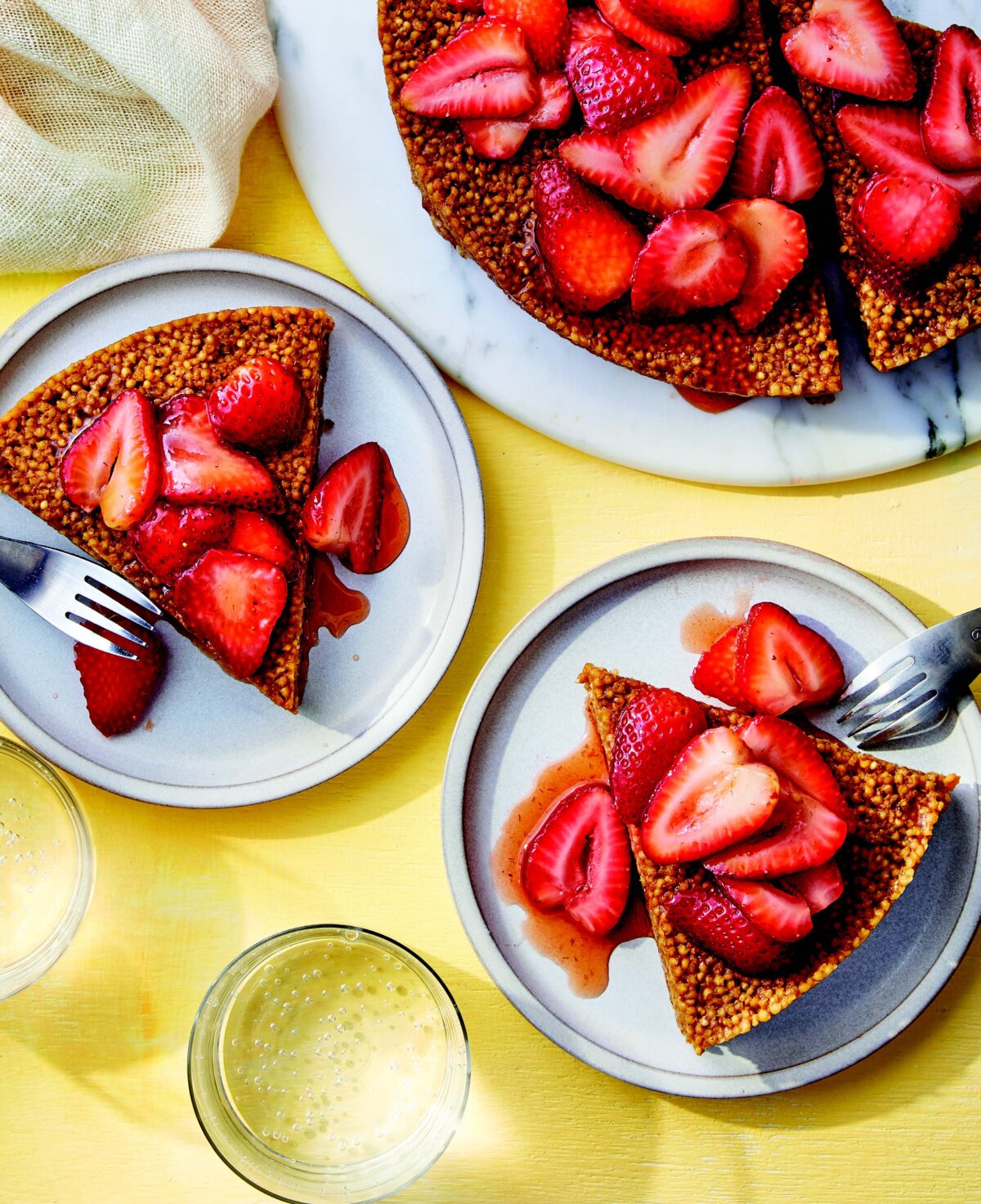
Makes: 6 servings
Difficulty: Moderate
This cake is pretty enough to present as a dessert and nutritious enough to enjoy for brunch. Make it ahead of time so it has time to firm up in the refrigerator before serving. You can also make a crustless version by simply bypassing the crust ingredients and instructions and pressing the millet mixture directly into the pan. If ripe strawberries are unavailable, you can substitute blackberries, raspberries, or blueberries.
Crust
1 cup (120g) raw cashews
1 cup (140g) pitted dates
1/2 cup (55g) walnut pieces
Cake
1 cup (190g) whole-grain millet, rinsed well and drained
1/2 cup plus 1 teaspoon (125ml) date syrup
1/2 teaspoon ground cinnamon
3 cups (375g) hulled and sliced ripe strawberries
For the Crust:
In a heatproof bowl, combine the cashews and enough boiling water to cover. Set aside to soak for at least 3 hours. Drain well.
If your dates are not soft, place them in a separate heatproof bowl and cover with boiling water for 10 minutes. Drain well.
Line the bottom of a 9-inch (23-cm) round springform pan with parchment paper, then set aside.
In a food processor, combine the cashews, dates, and walnuts, and process until finely minced and crumbly. Press a bit of the mixture between your thumb and index finger to see if it holds together. If the mixture is too dry, add 2 to 3 teaspoons (10 to 15ml) of water and process to combine.
Transfer the mixture to the prepared pan. Use the bottom of a measuring cup to press it into the bottom of the pan. Set aside or refrigerate until needed.
For the Cake:
In a saucepan, bring 2 1/4 cups (530ml) of water to a boil. Add the millet, 1/2 cup (120ml) of the date syrup, and the cinnamon. Lower the heat to low, then cover and simmer until the millet is tender and the water is absorbed, 20 to 25 minutes. Remove from the heat and set aside to cool slightly.
Use a rubber spatula to press the millet mixture evenly into the prepared crust. Cover and refrigerate for at least an hour to firm up.
In a bowl, combine the remaining 1 teaspoon of date syrup with the strawberries. Stir to mix well. Set the macerated strawberries aside at room temperature for 30 minutes.
To Serve:
Run a knife around the edge of the springform pan to loosen the cake, then remove the sides of the pan. Cut the cake into six wedges. Top each slice with some of the macerated strawberries and serve.
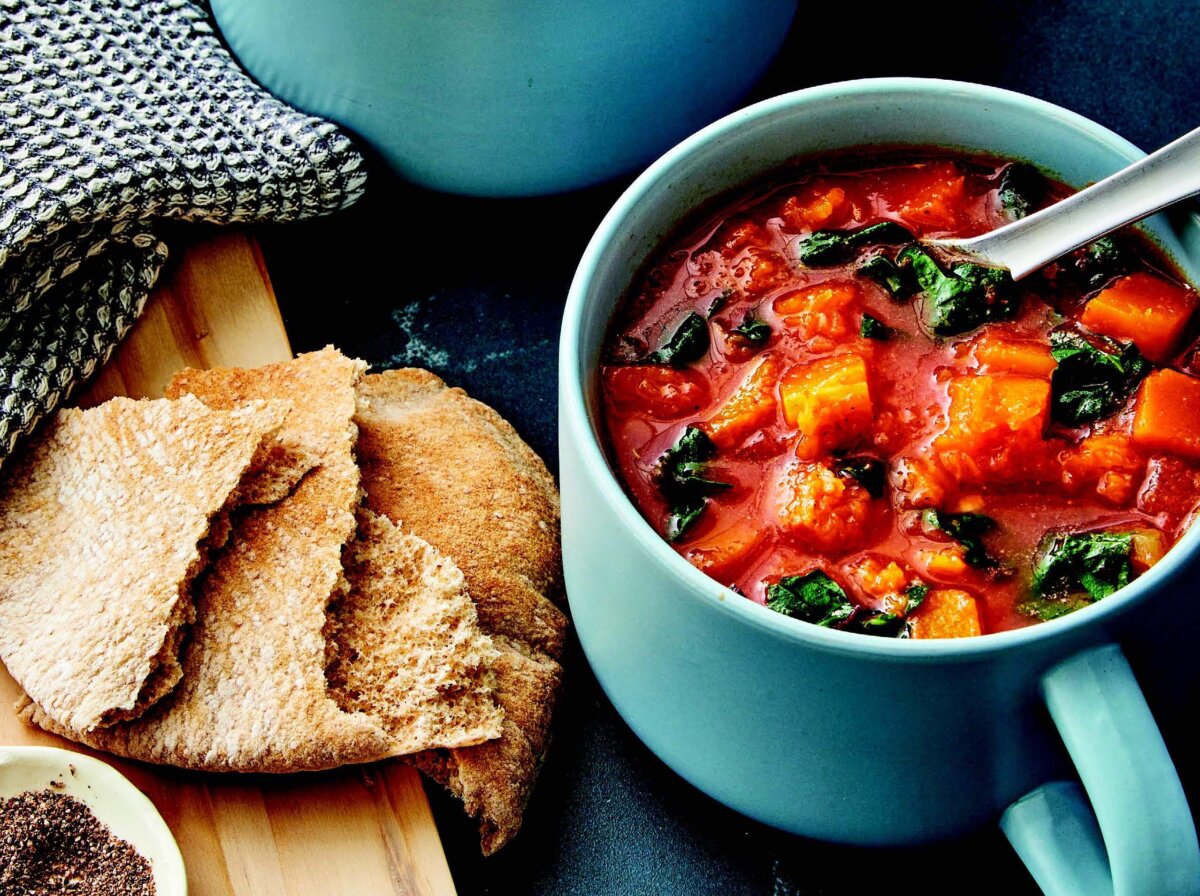
Curried Butternut Soup With Rainbow Chard
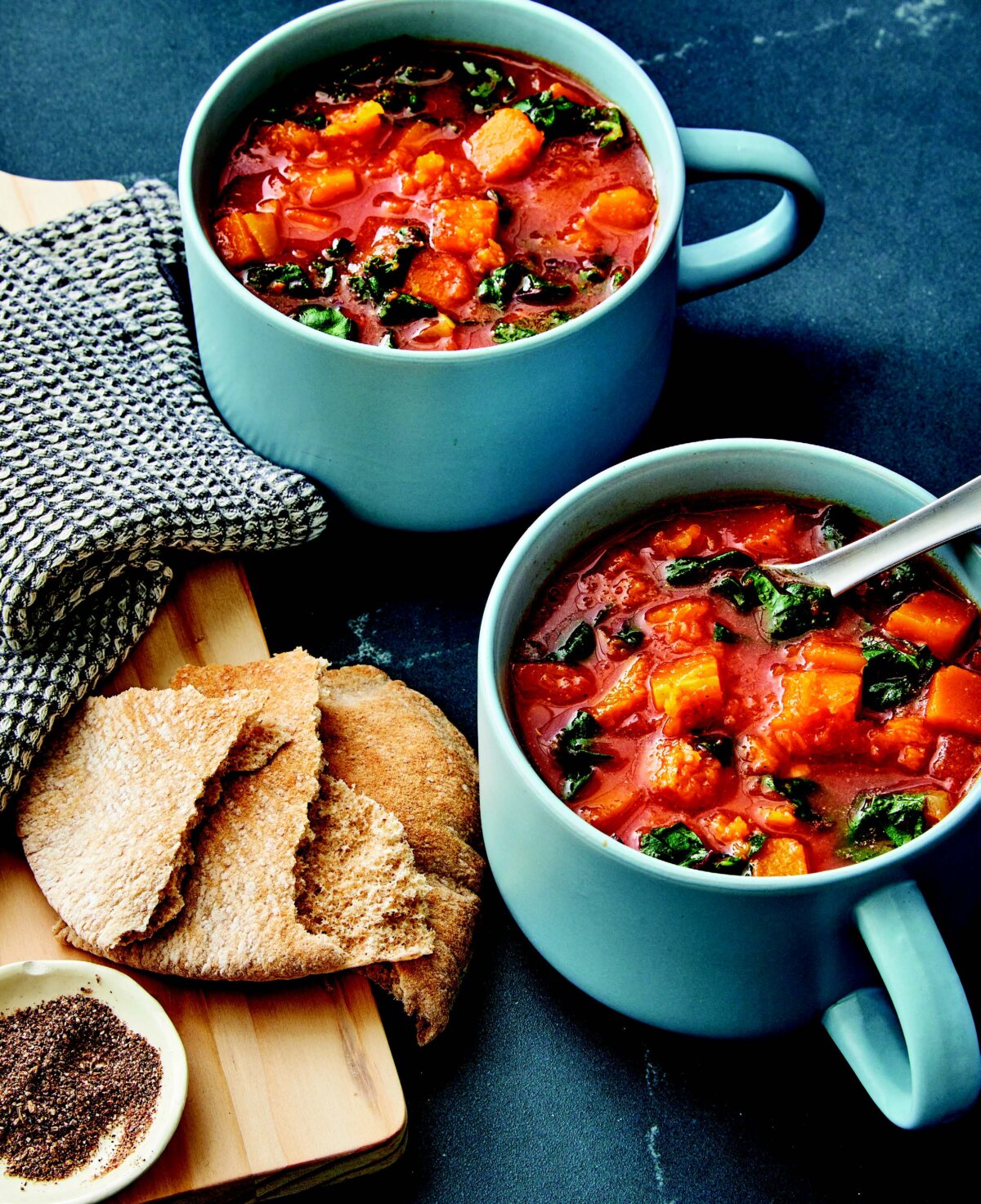
Makes: 4 to 6 servings
Difficulty: Easy
This simple soup has a rich complexity of flavor that tastes like it took all day to make. To save time, you can buy already diced squash in the produce section of most supermarkets. Want an even heartier soup? Add your favorite beans. If rainbow chard is unavailable, you can use kale or another dark leafy green.
5 cups (1.2L) vegetable broth or water
1 small yellow onion, chopped
1 large butternut squash, peeled, seeded, and diced
1 large garlic clove, minced
1 1/2 tablespoons curry powder
1 tablespoon finely grated fresh ginger
1 (14.5-ounce) BPA-free can or Tetra Pak (400g) salt-free crushed tomatoes
1/4 teaspoon ground pippali or black pepper
4 cups (180g) chopped rainbow chard
2 tablespoons white miso paste
In a large pot, heat 1 cup (235ml) of vegetable broth in a large pot over medium heat. Add the onion, squash, and garlic. Cover and cook until softened, about 10 minutes.
Stir in the curry powder and ginger, then add the tomatoes, pippali, and the remaining broth. Bring to a boil, then lower the heat to low and simmer until the vegetables are tender, stirring occasionally, about 45 minutes. About 15 minutes before you’re ready to serve, stir in the chard and continue to cook until it’s tender. Before serving, ladle 1/2 cup (120ml) of broth into a small bowl, add the miso paste, and stir to blend. Pour the miso mixture into the soup, stir well, then serve.
This article was originally published in American Essence magazine.
