



TV-14 | 1h 15m | Documentary | 2026
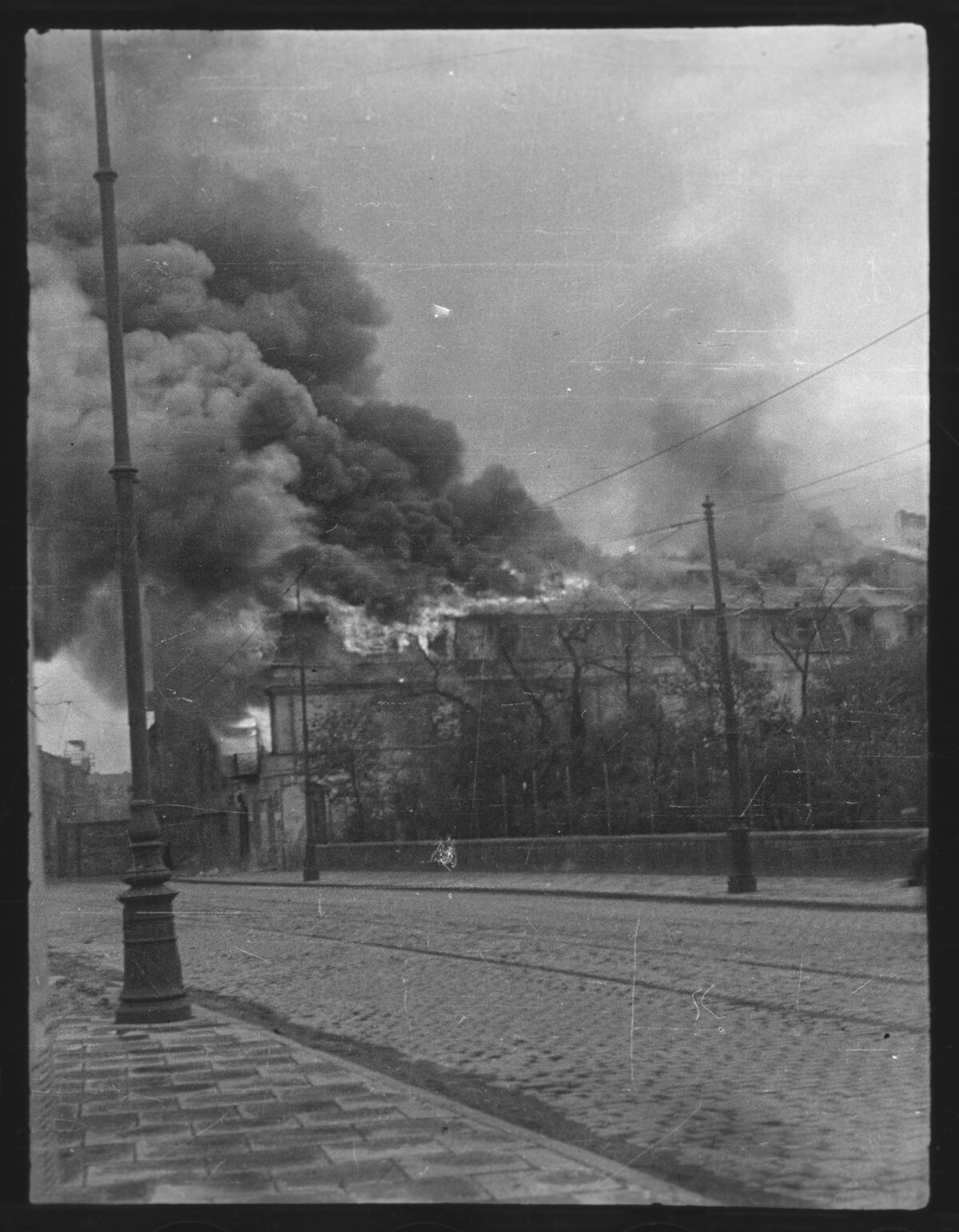
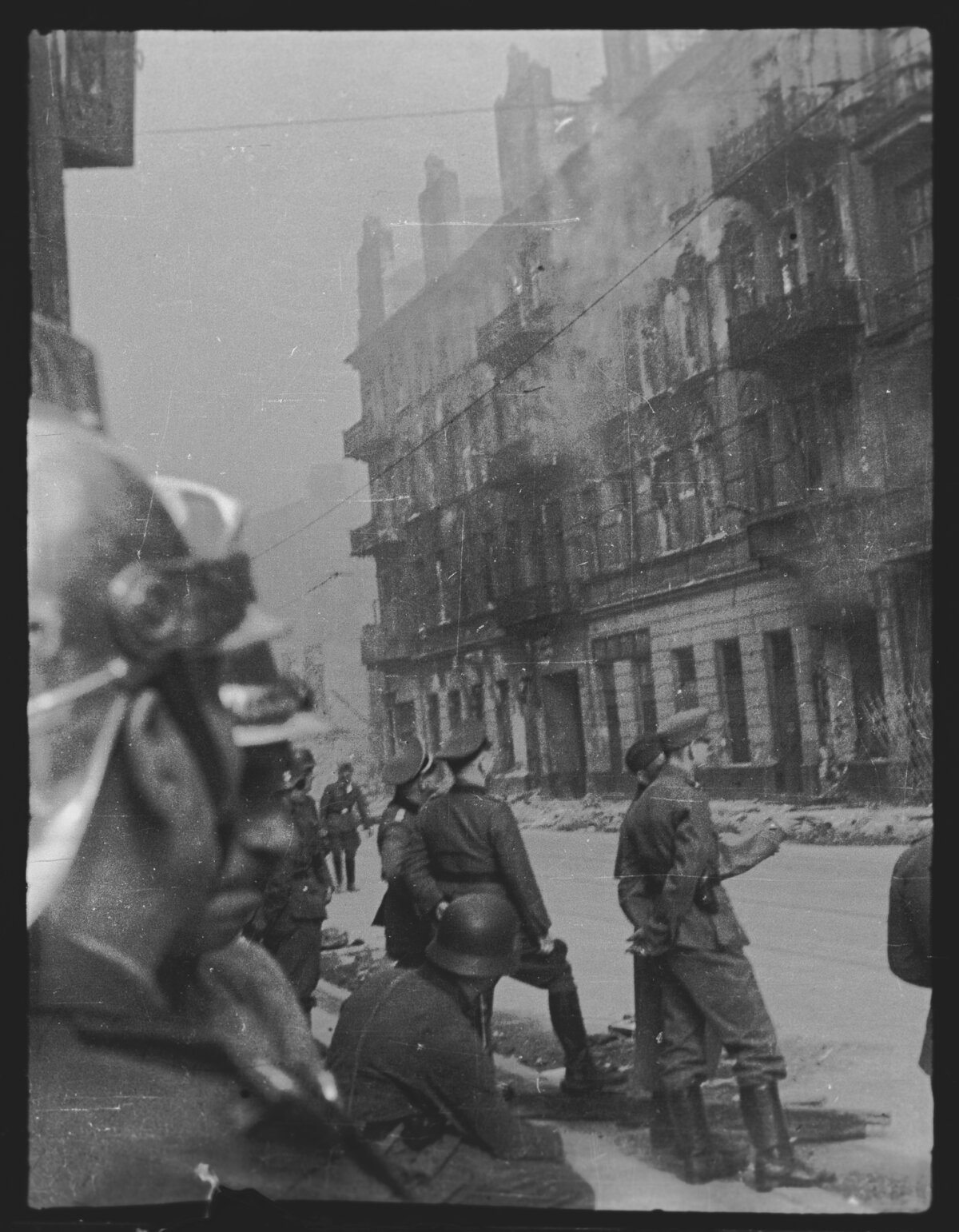
Zbigniew Leszek Grzywaczewski was a firefighter who wasn’t allowed to do his job when he was most needed. During the Warsaw Uprising in 1944, the occupying National Socialists forced the city’s fire department to passively watch as the regime burned down entire buildings just to murder the Jewish resistance fighters barricaded inside.
The firemen were present only to prevent the flames from spreading to certain buildings the Germans wished to preserve. However, instead of idly standing by, Grzywaczewski (an amateur photographer) surreptitiously snapped over 30 photographs of the Nazis’ atrocities.
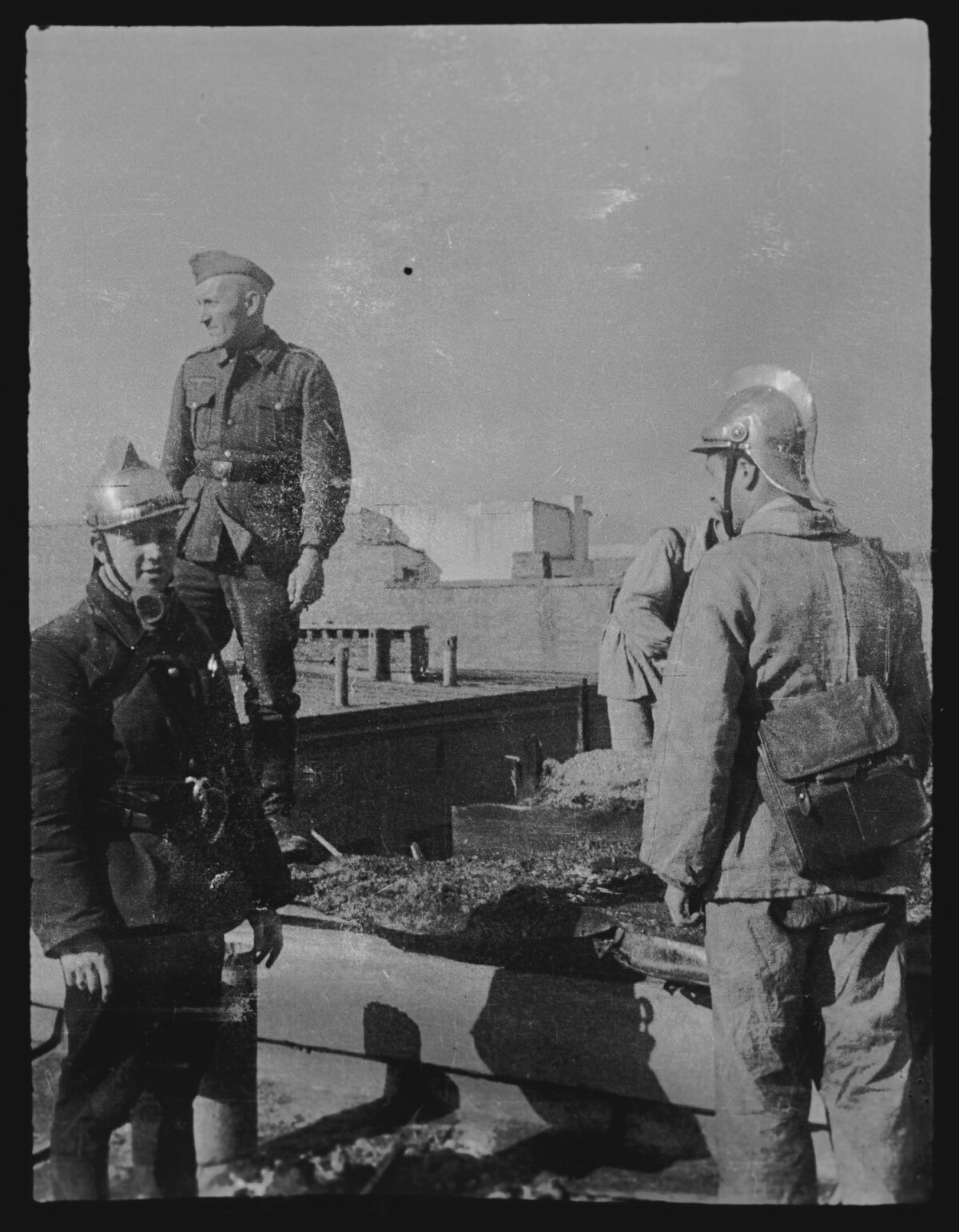
Largely unseen for decades, they remain the only images of the Warsaw Uprising not produced by the SS to valorize their brutal crackdown. Polish filmmaker Jan Czarlewski chronicles the history of the pictures and the man who secretly shot them in the new documentary, “33 Photos From the Ghetto.”
Grzywaczewski wasn’t Jewish, but he had empathy for his fellow Poles who were. He also intuitively understood that the National Socialists’s brutal oppression of Jewish Poles boded poorly for the future of his nation.
He joined an underground resistance faction within the Warsaw fire department. They smuggled food and supplies into the Jewish ghetto, which was now an open-air prison. The German occupiers had walled-off and harshly segregated the ghetto from the rest of the city, which they referred to as the “Aryan Quarter.”
Grzywaczewski secretly documented the ruthless suppression of the uprising with a pocket-sized Kochmann Korelle K camera. After immigrating to post-War America, Hilary Laks served as the custodian for about a dozen of these photos, covertly sent by Grzywaczewski for safe-keeping.
Given his underground activities, sheltering Jewish fugitives was exceptionally dangerous for Grzywaczewski. He hid Hilary Laks and his family, all of whom eventually survived the war. That alone would make Grzywaczewski worthy of a documentary.
Such subject matter would have been subject to strict censorship during Poland’s communist years. The Grzywaczewski family was often subject to harassment due to the son Maciej’s activism with Solidarity.
Photographic Memorial
Grzywaczewski stipulated his photos were not to be sold for a mere publication fee. He wanted them unveiled at a point when memories of the Holocaust were starting to dim. Sadly, our current times increasingly fit Grzywaczewski’s criteria.
Until recently, Maciej Grzywaczewski knew nothing of his late father’s uprising photos. He only learned through his daughter’s chance encounter regarding the photos. Those entrusted to Laks had found their way into the U.S. Holocaust Memorial Museum’s holdings. This prompted him to search his late father’s effects, where he unearthed all 33 negatives.
The images Grzywaczewski captured are featured prominently throughout the film and their haunting power is undeniable. The chilling images of Jewish prisoners being led off the Umschlagplatz, the notorious collection depot for transports to the Treblinka extermination camp, represent concrete evidence of genocide—real genocide. This isn’t the spurious use of the term as it has been recently redefined and weaponized by ideological extremists.
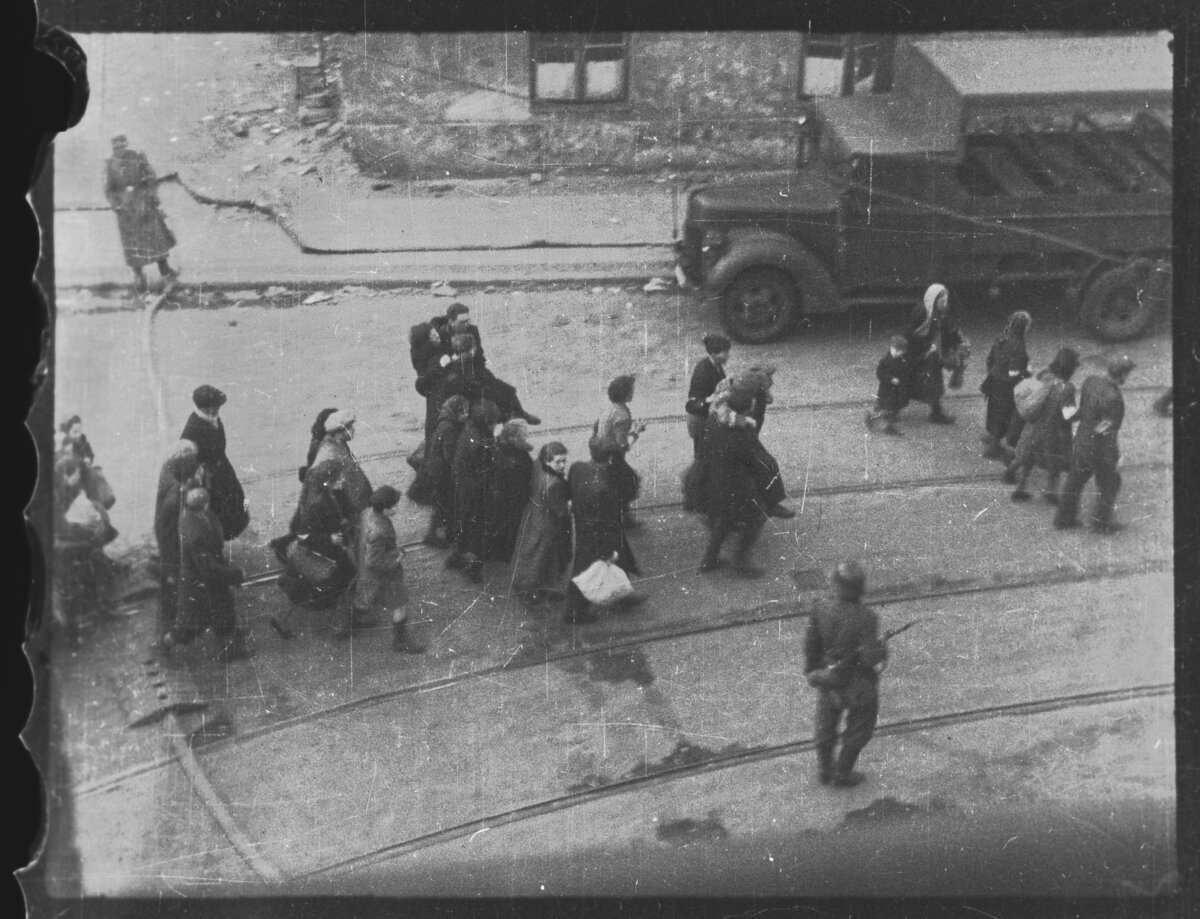
Czarlewski’s film is distinguished by its thoughtful tone and rigorous formal analysis. His battery of on-camera experts meticulously break down Grzywaczewski’s photos, using surviving architectural landmarks to pinpoint the location where each one was taken. They fully explain the context of each shot and explain the horrific consequences that the actions captured.
Czarlewski’s talking heads get granular. They explain how the torn sprockets on the Uprising negatives indicate Grzywaczewski advanced the film in haste, because he was shooting guerrilla-style at great personal risk. Their measured presentation fully establishes the enormity of the war crimes he witnessed.
The film is a reminder of the traditionally physical nature of photography and its potential to capture the truth, either as art or journalism. Grzywaczewski’s photography starkly contrasts with the current state of the medium, debased by cheap selfies and dubious AI-enhanced click-bait. “33 Photos From the Ghetto” is a stark reminder that a photograph can still serve as a crucial primary source for historians.
Yet, Czarlewski and company never lose sight of the human dimensions of the events under discussion. The film culminates when Grzywaczewski’s daughter, Dorota Pawlak (born after World War II), finally meets Hilary Laks’s nonagenarian daughter, Roma Laks Kaplan; they discuss their fathers and share a hardcover edition of Grzywaczewski’s photographs.
Czarlewski hits all the expected inspiring emotional notes. The film documents great tragedies, as well as extraordinary acts of personal courage. It always maintains an intellectually probing and thought-provoking tone. Highly recommended for its compassion and timeliness.
“33 Photos from the Ghetto” streamed on HBO Jan. 27.
‘33 Photos from the Ghetto’
Director: Jan Czarlewski
Documentary
MPAA Rating: TV-14
Running Time: 1 hour, 15 minutes
Release Date: Jan. 27, 2026
Rated: 4 stars out of 5
What arts and culture topics would you like us to cover? Please email ideas or feedback to features@epochtimes.nyc
